RTB Updates: Maximize Ad Performance & Reduce CPA by 10% in 6 Months

In the fast-evolving landscape of digital advertising, staying ahead means constantly optimizing your strategies. Real-Time Bidding (RTB) has long been a cornerstone of programmatic advertising, enabling advertisers to bid on ad impressions in milliseconds. However, the game is always changing. New technologies, data privacy regulations, and evolving consumer behaviors demand a proactive approach to RTB performance optimization. This comprehensive guide will delve into the latest RTB updates, offering actionable insights and strategies designed to maximize your ad performance and achieve a significant 10% reduction in Cost Per Acquisition (CPA) within the next six months. We will explore how leveraging advanced analytics, artificial intelligence, and a deep understanding of market dynamics can transform your advertising outcomes.
The Evolving Landscape of Real-Time Bidding: Why RTB Performance Optimization is Crucial
Real-Time Bidding (RTB) revolutionized digital advertising by introducing an auction-based model for buying and selling ad impressions. Instead of pre-negotiated deals, RTB allows advertisers to bid on individual ad placements as they become available, ensuring that the right ad reaches the right user at the right time. This dynamic process, facilitated by demand-side platforms (DSPs), supply-side platforms (SSPs), and ad exchanges, has become the backbone of modern programmatic advertising. However, the initial promise of RTB – efficiency and precision – is constantly challenged by increasing competition, rising ad fraud, and the ever-present need for greater transparency and control.
The digital advertising ecosystem is in a perpetual state of flux. Privacy concerns, exemplified by the deprecation of third-party cookies and stringent regulations like GDPR and CCPA, are reshaping how data is collected and utilized. Advertisers must adapt to these changes by adopting privacy-centric RTB performance optimization strategies that still deliver effective targeting and personalization. Furthermore, the proliferation of new ad formats, channels (CTV, DOOH, audio), and measurement methodologies adds layers of complexity. Simply participating in RTB is no longer enough; robust RTB performance optimization is essential for competitive advantage and sustained ROI.
Our goal with this article is to provide you with a roadmap to navigate these complexities. We’ll outline how to harness the latest advancements in RTB, from enhanced data utilization to sophisticated AI-driven bidding algorithms, to not only maintain but significantly improve your ad campaign performance. A 10% reduction in CPA might seem ambitious, but with the right strategies and consistent application, it’s an entirely achievable goal that can dramatically impact your bottom line.
Understanding the Core Mechanics of RTB and Its Evolution
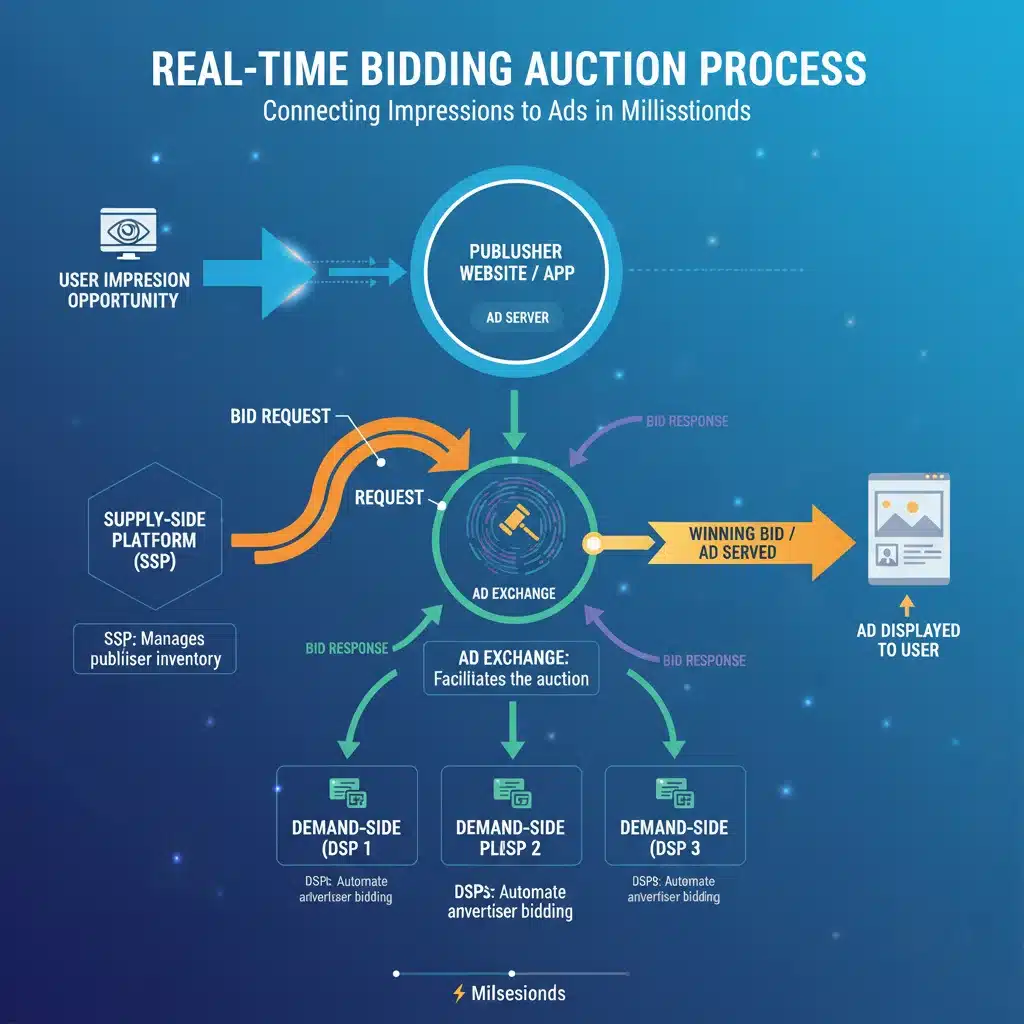
At its heart, RTB is a lightning-fast auction. When a user visits a webpage or opens an app, an ad impression opportunity is created. This opportunity is sent to an ad exchange, which then broadcasts a bid request to multiple DSPs. Each DSP, acting on behalf of an advertiser, evaluates the impression based on its target audience, budget, and campaign goals, and then submits a bid. The highest bidder wins the impression, and their ad is displayed – all within milliseconds. This process ensures that advertisers are only paying for impressions that meet their specific criteria, theoretically leading to better targeting and reduced waste.
Over the years, RTB has evolved beyond basic impression buying. Early RTB focused primarily on display ads, but it now encompasses a wide array of formats including video, native, audio, and even connected TV (CTV) and digital out-of-home (DOOH). The data points available for targeting have also grown exponentially, moving from simple demographics to complex behavioral patterns, purchase intent signals, and contextual relevance. This evolution necessitates continuous RTB performance optimization to leverage these new capabilities effectively.
The introduction of header bidding, server-to-server (S2S) integrations, and advanced programmatic guaranteed deals has further refined the RTB ecosystem, offering publishers more control and advertisers greater access to premium inventory. For advertisers, this means a more competitive landscape but also more opportunities for precise targeting and efficient spend. Understanding these foundational mechanics and their continuous development is the first step towards mastering RTB performance optimization.
Leveraging Advanced Data Analytics for Superior RTB Performance Optimization
Data is the lifeblood of RTB. The ability to collect, analyze, and act upon vast amounts of data in real-time is what differentiates successful campaigns from underperforming ones. To achieve a 10% CPA reduction, you must move beyond basic demographic targeting and embrace advanced data analytics. This involves a multi-faceted approach to understanding your audience, predicting performance, and refining your bidding strategies.
First-Party Data: Your Most Valuable Asset
With the impending demise of third-party cookies, first-party data has become paramount. This includes data collected directly from your customers through your website, CRM systems, email lists, and direct interactions. Leveraging first-party data allows for highly accurate targeting, personalized messaging, and stronger customer relationships, all of which contribute significantly to RTB performance optimization. Strategies include:
- CRM Integration: Connect your CRM data with your DSP to create highly specific audience segments for retargeting and look-alike modeling.
- Website Analytics: Use detailed website behavior data (pages visited, time on site, conversion paths) to inform bidding decisions and ad creative.
- Email Lists: Segment your email subscribers and use these lists for targeted campaigns, especially for re-engagement or upselling.
Contextual Targeting and Semantic Analysis
Beyond audience demographics, understanding the context in which your ad appears is critical. Contextual targeting uses AI and machine learning to analyze the content of a webpage or app in real-time and match it with relevant ads. This approach is privacy-friendly and highly effective, as it ensures your ad is seen when users are most receptive to your message. Semantic analysis goes a step further, understanding the nuances and sentiment of the content to ensure brand suitability and higher engagement. Integrating robust contextual targeting into your RTB performance optimization strategy can lead to more relevant impressions and improved click-through rates (CTRs).
Predictive Analytics and Look-Alike Modeling
Predictive analytics uses historical data to forecast future outcomes. In RTB, this means predicting which impressions are most likely to lead to a conversion at the lowest CPA. Machine learning algorithms can identify patterns in user behavior, ad performance, and contextual factors to optimize bids. Look-alike modeling, a powerful application of predictive analytics, allows you to find new audiences that share similar characteristics with your existing high-value customers, expanding your reach while maintaining high relevance. Implementing these advanced analytical techniques is a cornerstone of effective RTB performance optimization.
The Role of Artificial Intelligence and Machine Learning in Modern RTB
Artificial Intelligence (AI) and Machine Learning (ML) are no longer just buzzwords; they are indispensable tools for achieving superior RTB performance optimization. These technologies enable advertisers to process vast datasets, identify complex patterns, and make instantaneous bidding decisions with a level of precision impossible for humans. To reduce CPA by 10%, harnessing the power of AI and ML is non-negotiable.
AI-Driven Bidding Algorithms
Modern DSPs increasingly rely on AI-driven bidding algorithms. These algorithms continuously learn from campaign performance, adjusting bids in real-time based on a multitude of factors, including user demographics, browsing history, device type, time of day, geographic location, and predicted conversion probability. Unlike manual bidding or rule-based systems, AI can adapt to subtle changes in the market and optimize for specific KPIs like CPA or ROAS (Return on Ad Spend) with unprecedented accuracy. Ensure your DSP offers sophisticated AI capabilities and that you are utilizing them to their full potential for RTB performance optimization.
Dynamic Creative Optimization (DCO)
AI also plays a crucial role in Dynamic Creative Optimization (DCO). DCO platforms use machine learning to automatically generate personalized ad creatives in real-time, based on user data, context, and past performance. This means an ad can feature different headlines, images, calls-to-action, or even product recommendations tailored to each individual viewer. By presenting the most relevant ad creative, DCO significantly boosts engagement, CTRs, and ultimately, conversion rates, directly impacting CPA. Integrating DCO into your RTB performance optimization strategy can yield substantial improvements.
Fraud Detection and Brand Safety
Ad fraud remains a significant challenge in programmatic advertising, leading to wasted spend and inflated CPAs. AI and ML are at the forefront of combating ad fraud by identifying suspicious patterns, bot traffic, and non-human interactions in real-time. Similarly, AI-powered brand safety tools ensure that your ads do not appear alongside inappropriate or harmful content, protecting your brand reputation and ensuring your ad spend is directed towards valuable impressions. Investing in robust fraud detection and brand safety solutions is a vital part of comprehensive RTB performance optimization.

Strategic Bidding and Budget Allocation for CPA Reduction
Beyond advanced technology, strategic bidding and intelligent budget allocation are fundamental to achieving a 10% CPA reduction. This requires a deep understanding of your campaign goals, audience value, and the competitive landscape.
Optimizing Bid Strategies
While AI handles much of the heavy lifting in bidding, understanding different bid strategies and when to apply them is crucial. Common strategies include:
- Target CPA Bidding: Automatically adjusts bids to help you get as many conversions as possible at or below your target CPA.
- Maximize Conversions: Aims to get the most conversions possible within your budget.
- Target ROAS Bidding: Optimizes for conversion value, aiming to achieve a specific return on ad spend.
- Value-Based Bidding: Assigns different values to different types of conversions, allowing the system to optimize for the most valuable actions.
Experiment with these strategies and monitor their impact on your CPA. The key to RTB performance optimization is continuous testing and refinement.
Granular Audience Segmentation and Personalization
Generic campaigns yield generic results. To reduce CPA, you need to segment your audience into highly specific groups based on demographics, interests, behaviors, and purchase intent. The more granular your segmentation, the more personalized your ad messaging can be, leading to higher relevance and better engagement. For example, instead of targeting “sports fans,” target “avid marathon runners who have recently searched for running shoes.” This level of precision, powered by rich data, is critical for RTB performance optimization.
Budget Allocation Across Channels and Formats
Your budget should be dynamically allocated to the channels and ad formats that deliver the best CPA. This requires cross-channel attribution modeling to understand the true impact of each touchpoint on the customer journey. For example, you might find that while display ads have a lower direct conversion rate, they play a crucial role in initial awareness and driving users to your site, where they convert via search or social. Intelligent budget allocation, informed by attribution, ensures your spending is optimized for overall campaign goals, contributing to RTB performance optimization.
Measurement, Attribution, and Continuous Optimization
Achieving a 10% CPA reduction in six months is not a set-it-and-forget-it endeavor. It requires rigorous measurement, accurate attribution, and a commitment to continuous optimization. Without these elements, even the most sophisticated RTB strategies will fall short.
Beyond Last-Click Attribution
Traditional last-click attribution models often misrepresent the true value of different ad channels and impressions. In a complex customer journey, multiple touchpoints contribute to a conversion. Embrace multi-touch attribution models (e.g., linear, time decay, position-based, data-driven) to gain a more holistic view of your campaign performance. This understanding is vital for making informed decisions about budget allocation and further RTB performance optimization efforts.
A/B Testing and Experimentation
Continuous A/B testing is paramount. Test different ad creatives, headlines, calls-to-action, landing pages, targeting parameters, and even bidding strategies. Document your hypotheses, run controlled experiments, and analyze the results to identify what works best for your audience and campaign goals. Iterative testing is the engine of RTB performance optimization.
Real-Time Reporting and Analytics Dashboards
Access to real-time data and comprehensive analytics dashboards is essential. You need to be able to monitor key metrics (CPA, CTR, conversion rate, impressions, reach) at a glance and identify trends or anomalies quickly. Many DSPs offer robust reporting features, but integrating this data with a centralized analytics platform (like Google Analytics 4 or a custom BI tool) can provide a more unified view of your overall marketing performance. Regular review of these dashboards will allow you to make timely adjustments, which is critical for ongoing RTB performance optimization.
Feedback Loops and Iterative Improvement
Establish strong feedback loops between your campaign managers, data analysts, and creative teams. Performance insights should inform creative development, and new creative should be tested and measured. This iterative process of planning, executing, measuring, and refining is the cornerstone of effective RTB performance optimization and will be key to hitting your CPA reduction target.
Overcoming Challenges in RTB: Privacy, Transparency, and Brand Safety
While RTB offers immense opportunities, it also presents challenges that must be addressed for effective RTB performance optimization. Navigating these obstacles responsibly is crucial for long-term success.
Adapting to a Privacy-First World
The phasing out of third-party cookies and increased privacy regulations are forcing advertisers to rethink their targeting strategies. Embrace privacy-preserving technologies and methodologies such as:
- First-Party Data Activation: As discussed, this is your most valuable asset.
- Contextual Targeting: Focus on content relevance rather than individual user tracking.
- Data Clean Rooms: Secure environments where multiple parties can collaborate on data analysis without sharing raw, identifiable information.
- Privacy-Enhancing Technologies (PETs): Explore emerging solutions like federated learning or differential privacy.
Proactively adapting to these changes ensures your RTB performance optimization efforts remain compliant and sustainable.
Ensuring Transparency and Combating Ad Fraud
Transparency in the programmatic supply chain is vital. Work with trusted DSPs and SSPs that provide clear reporting on where your ads are served and how your budget is spent. Utilize tools like ads.txt, sellers.json, and OpenRTB 3.0 to verify inventory sources and reduce the risk of fraud. Continuous monitoring for invalid traffic (IVT) and suspicious activity, often facilitated by AI-powered fraud detection, is a non-negotiable aspect of RTB performance optimization.
Maintaining Brand Safety and Suitability
Brand safety tools and strategies are essential to protect your brand reputation. Implement pre-bid and post-bid brand safety solutions that use AI to analyze content for keywords, categories, and sentiment, ensuring your ads only appear in suitable environments. Define clear brand suitability guidelines and communicate them to your programmatic partners. Proactive brand safety measures contribute to a positive brand image and more effective ad spend, enhancing overall RTB performance optimization.
Future Trends in RTB and What They Mean for Your CPA Goal
The RTB landscape is dynamic, with several emerging trends poised to further reshape how impressions are bought and sold. Staying informed about these trends is key to maintaining your edge and continuing your RTB performance optimization efforts.
The Rise of Retail Media Networks
Retail media networks, powered by vast amounts of first-party purchase data from major retailers, are becoming powerful programmatic channels. These networks offer advertisers unparalleled insights into consumer buying habits and direct access to high-intent audiences. Integrating retail media into your broader RTB strategy can open up new avenues for precise targeting and potentially lower CPAs for specific product categories.
Increased Adoption of CTV and DOOH Programmatic
Connected TV (CTV) and Digital Out-of-Home (DOOH) advertising are increasingly becoming programmatic. This means advertisers can apply RTB principles to these traditionally linear or static channels, benefiting from data-driven targeting and real-time optimization. As these channels mature, integrating them into a holistic RTB performance optimization strategy will be crucial for reaching audiences across all touchpoints.
Further Integration of AI and Predictive Analytics
Expect even more sophisticated AI and ML models to emerge, offering deeper insights, more accurate predictions, and hyper-personalized campaign execution. These advancements will continue to refine bidding strategies, creative optimization, and fraud detection, making RTB performance optimization even more precise and efficient. Investing in platforms that are at the forefront of AI development will be a significant advantage.
Enhanced Identity Solutions
As cookie-based tracking diminishes, new identity solutions (e.g., universal IDs, data clean rooms, contextual signals) are gaining traction. Understanding and adopting these new methods for audience identification and targeting will be critical for maintaining effective RTB performance optimization in a privacy-first world. Staying abreast of the latest developments in this space is essential.
Conclusion: Achieving Your 10% CPA Reduction Through RTB Performance Optimization
The journey to maximizing ad performance and reducing CPA by 10% in the next six months through RTB performance optimization is an ongoing one. It requires a strategic blend of advanced technology, data-driven insights, and continuous experimentation. By embracing first-party data, leveraging AI and machine learning for bidding and creative optimization, adopting multi-touch attribution, and staying vigilant against fraud and brand safety risks, you can significantly enhance the efficiency and effectiveness of your programmatic campaigns.
Remember, the digital advertising landscape is constantly evolving. What works today might need adjustment tomorrow. Commit to continuous learning, iterative testing, and a proactive approach to adapting to new trends and technologies. With a well-executed RTB performance optimization strategy, a 10% CPA reduction is not just a lofty goal but an achievable reality that will drive substantial value for your business. Start implementing these strategies today and watch your ad performance soar.