Blockchain for Ad Fraud: Secure Your Marketing Spend by 20% by 2026

The digital advertising landscape, for all its innovation and reach, remains plagued by a persistent and costly adversary: ad fraud. This pervasive issue drains billions of dollars annually from marketing budgets, distorting campaign performance metrics and eroding advertiser trust. As we look towards 2026, the imperative to combat ad fraud has never been more critical. Enter blockchain technology, a revolutionary distributed ledger system poised to transform the fight against fraudulent advertising practices. This comprehensive guide delves into how leveraging blockchain ad fraud prevention mechanisms can secure a significant portion of your marketing spend, potentially up to 20%, by 2026, offering a new paradigm of transparency, trust, and efficiency in digital advertising.
The Alarming Reality of Ad Fraud: A Multi-Billion Dollar Problem
Before we explore the solutions, it’s crucial to understand the scale of the problem. Ad fraud encompasses a wide array of deceptive practices designed to siphon money from advertisers by generating fake impressions, clicks, or conversions. This can range from sophisticated bot networks mimicking human behavior to domain spoofing, where ads are made to appear on premium websites when they are actually displayed on low-quality, illicit sites. The consequences are dire: wasted ad spend, inaccurate data for optimization, damaged brand reputation, and a general erosion of confidence in the digital advertising ecosystem.
Industry reports consistently highlight the massive financial burden of ad fraud. Estimates vary, but many suggest that advertisers lose tens of billions of dollars each year to fraudulent activities. This isn’t just about lost money; it’s about lost opportunities, distorted market insights, and a fundamental breakdown of trust between advertisers, publishers, and intermediaries. The complexity of the programmatic advertising supply chain, with its numerous intermediaries, often provides fertile ground for fraudsters to operate undetected. Traditional fraud detection methods, while evolving, often struggle to keep pace with the ever-increasing sophistication of these malicious actors.
The urgency to address this issue is growing. As digital ad spending continues its upward trajectory, so too does the potential for fraud. Companies that fail to implement robust fraud prevention strategies risk falling behind, misallocating resources, and ultimately undermining their marketing effectiveness. The promise of blockchain ad fraud solutions lies in their ability to introduce an unprecedented level of transparency and immutability, fundamentally altering the economics of ad fraud by making it significantly harder and less profitable to execute.
Why Traditional Ad Fraud Prevention Falls Short
Current ad fraud prevention measures typically rely on a combination of signature-based detection, behavioral analysis, and IP blacklisting. While these methods offer some protection, they often operate reactively, identifying fraud after it has occurred. This reactive approach means that a certain percentage of ad spend is always lost before the fraud is detected and mitigated. Moreover, the centralized nature of many ad tech platforms creates single points of failure and opportunities for data manipulation, making it challenging to establish an undeniable chain of custody for ad impressions.
The opacity of the programmatic supply chain is another significant hurdle. Advertisers often lack clear visibility into where their ads are being displayed, who is seeing them, and whether the engagement is genuine. This lack of transparency makes it difficult to pinpoint fraudulent activities and hold responsible parties accountable. The intricate web of ad exchanges, demand-side platforms (DSPs), supply-side platforms (SSPs), and data management platforms (DMPs) can obscure the true path of an ad impression, allowing fraudsters to hide in the shadows.
Furthermore, the siloed nature of data within different ad tech vendors means that a holistic view of potential fraud across the entire ecosystem is often unattainable. Each vendor might have its own fraud detection algorithms, but without a unified, immutable record, discrepancies can arise, and sophisticated fraud schemes can slip through the cracks. This fragmented approach underscores the need for a more integrated and universally verifiable solution, which is precisely where blockchain ad fraud prevention shines.
Blockchain’s Core Principles: The Foundation for Ad Fraud Prevention
To understand how blockchain can revolutionize ad fraud prevention, it’s essential to grasp its fundamental principles:
- Decentralization: Unlike traditional centralized systems, blockchain operates on a distributed network of computers, eliminating the need for a central authority. This makes it highly resistant to censorship, manipulation, and single points of failure. In the context of ad fraud, decentralization means no single entity can unilaterally alter transaction records.
- Immutability: Once a transaction is recorded on the blockchain, it cannot be altered or deleted. Each new block of transactions is cryptographically linked to the previous one, forming an unbreakable chain. This immutability ensures the integrity of ad impression data, providing an unchangeable audit trail.
- Transparency: While individual identities can be pseudonymous, all transactions on a public blockchain are visible to all participants. This inherent transparency allows for verification of ad impressions, clicks, and payments by any authorized party, fostering trust and accountability.
- Cryptographic Security: Blockchain uses advanced cryptographic techniques to secure transactions and maintain the integrity of the network. This makes it incredibly difficult for fraudsters to tamper with data or forge records.
- Smart Contracts: These are self-executing contracts with the terms of the agreement directly written into code. Smart contracts automatically execute when predetermined conditions are met, eliminating the need for intermediaries and reducing the potential for human error or malicious intervention.
These principles combine to create a robust framework that can significantly disrupt the business model of ad fraud. By providing a transparent, immutable, and verifiable record of every ad impression and interaction, blockchain makes it exponentially harder for fraudsters to operate undetected and for legitimate parties to shirk responsibility. The application of blockchain ad fraud solutions represents a fundamental shift from reactive detection to proactive prevention and verifiable truth.
How Blockchain Tackles Ad Fraud: A Detailed Overview
The integration of blockchain technology into the ad tech stack can address various forms of ad fraud at different stages of the advertising lifecycle:
1. Verifiable Impression and Click Tracking
One of the most immediate applications of blockchain in ad fraud prevention is the creation of a verifiable, immutable record of every ad impression and click. When an ad is served and a user interacts with it, this event can be recorded as a transaction on a blockchain. Each transaction would include crucial metadata such as the ad ID, publisher ID, timestamp, user agent details, and geographic location. Because these records are immutable, they provide an undeniable proof of delivery and interaction.
This approach directly combats bot traffic and impression fraud. If a bot network attempts to generate fake impressions, the discrepancies in the recorded data (e.g., impossible click-through rates from a single IP address, rapid successive impressions from the same user agent without actual engagement) would become glaringly obvious and undeniable on the blockchain. Advertisers can then audit these records, ensuring they only pay for legitimate, verifiable impressions.
2. Combating Domain Spoofing and Inventory Misrepresentation
Domain spoofing is a sophisticated fraud where an ad is served on a low-quality website but reported as appearing on a premium site. Blockchain can effectively combat this by creating a transparent and verifiable registry of publisher inventory. Publishers can register their legitimate domains and ad slots on the blockchain. When an ad is served, the actual domain where it appeared can be cryptographically verified against this registry.
Furthermore, smart contracts can be employed to ensure that ads are only displayed on pre-approved domains and contexts. If an ad impression is recorded on a domain not whitelisted for a particular campaign, the payment for that impression can be automatically withheld or flagged for review. This brings unparalleled transparency to the ad supply chain, allowing advertisers to see exactly where their budget is being spent and preventing misrepresentation of inventory.
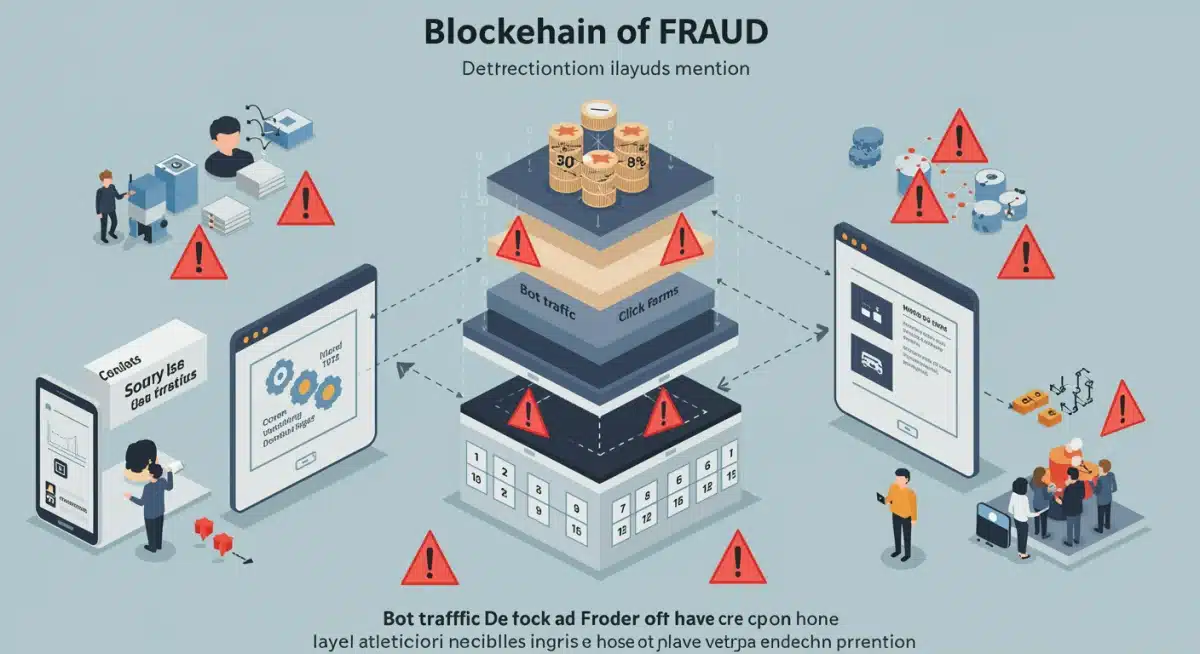
3. Enhanced Transparency in the Programmatic Supply Chain
The programmatic ecosystem is notoriously complex, involving multiple intermediaries that can obscure the true path of an ad impression and introduce opportunities for fraud. Blockchain can act as a single, shared source of truth for all participants in the supply chain – advertisers, agencies, DSPs, SSPs, and publishers. Every step of the ad delivery process, from bid request to impression, can be recorded on the blockchain.
This level of transparency allows advertisers to track their ad spend in real-time, verifying that their budget is being allocated as agreed and that impressions are indeed reaching their target audience on legitimate platforms. It also enables better auditing and reconciliation, reducing disputes and fostering greater trust among all parties involved. This comprehensive visibility is a cornerstone of effective blockchain ad fraud prevention.
4. Smart Contracts for Automated Payments and Refunds
Smart contracts are a game-changer for automating payment processes and enabling conditional refunds. Instead of manual invoicing and reconciliation, which can be prone to errors and delays, smart contracts can automatically release payments to publishers only when predefined conditions are met. These conditions could include a certain number of verified impressions, specific viewability metrics, or even post-click conversion events.
If fraudulent activity is detected (e.g., bot traffic, domain spoofing), the smart contract can be programmed to automatically withhold payment or initiate a refund to the advertiser. This significantly reduces the financial incentive for fraudsters, as their fraudulent activities would not result in payment. Moreover, it streamlines the payment process for legitimate publishers, ensuring they are paid promptly for valid ad placements, thereby fostering a healthier ecosystem.
5. Identity Verification and Publisher Reputation Systems
Blockchain can facilitate robust identity verification for publishers and other entities in the ad supply chain. By leveraging decentralized identity solutions, publishers can establish a verifiable and immutable reputation on the blockchain. This reputation can be built over time based on the quality of their inventory, their track record of legitimate traffic, and compliance with industry standards.
Advertisers can then use these on-chain reputation scores to make more informed decisions about where to place their ads, favoring publishers with a strong, verifiable history of legitimate engagement. This system makes it harder for fraudulent publishers to operate by preventing them from easily creating new identities or re-entering the ecosystem after being blacklisted. It builds a foundation of trust that is currently lacking in many parts of the digital advertising world.
Challenges and Considerations for Blockchain Ad Fraud Implementation
While the potential of blockchain ad fraud prevention is immense, its widespread adoption faces several challenges:
- Scalability: Public blockchains, such as Ethereum, can face scalability issues, processing a limited number of transactions per second. The sheer volume of ad impressions generated daily (trillions globally) poses a significant challenge. However, advancements in layer-2 solutions, sidechains, and purpose-built enterprise blockchains are continuously improving scalability.
- Integration Complexity: Integrating blockchain technology into existing ad tech stacks, which are often legacy systems, can be complex and require significant technical expertise and investment. It necessitates collaboration across various industry players to establish common standards and protocols.
- Data Privacy: While blockchain offers transparency, it must also comply with data privacy regulations like GDPR and CCPA. Ensuring that personally identifiable information (PII) is not permanently stored on an immutable public ledger is crucial. Solutions often involve hashing data, using zero-knowledge proofs, or leveraging private blockchains for sensitive data.
- Cost: Running and maintaining blockchain networks, especially those with high transaction volumes, can incur costs (e.g., gas fees on Ethereum). These costs need to be weighed against the savings gained from fraud prevention.
- Education and Adoption: The ad industry needs to be educated on the benefits and mechanics of blockchain. Widespread adoption will require a concerted effort from leading ad tech companies, industry bodies, and advertisers to champion these new technologies.
Overcoming these challenges will be key to unlocking the full potential of blockchain in securing marketing spend. However, the rapidly evolving nature of blockchain technology suggests that many of these hurdles will be addressed as the technology matures and specialized solutions emerge for the advertising sector.
The Path to 2026: Securing 20% of Your Marketing Spend
The goal of securing 20% of marketing spend by 2026 through blockchain ad fraud prevention is ambitious but achievable. This will require a multi-pronged approach:
1. Industry Collaboration and Standardization
No single company can solve ad fraud alone. Industry-wide collaboration is essential to develop common standards for recording ad transactions on blockchain, defining smart contract parameters, and establishing interoperability between different blockchain-based ad tech solutions. Organizations like the IAB (Interactive Advertising Bureau) and industry consortia will play a vital role in driving this standardization.
2. Pilot Programs and Early Adopter Successes
Successful pilot programs demonstrating tangible ROI from blockchain-based fraud prevention will be crucial for accelerating adoption. Advertisers and publishers who take the lead in implementing these solutions and publicly sharing their success stories will inspire others to follow suit. These early adopters will help refine the technology and build confidence in its capabilities.

3. Development of Specialized Blockchain Solutions
The development of specialized blockchains or layer-2 solutions tailored for the high-throughput demands of digital advertising will be critical. These solutions will need to offer high transaction speeds, low costs, and robust privacy features to handle the vast amounts of data generated in the ad ecosystem. Innovations in areas like zero-knowledge proofs will be vital for balancing transparency with privacy.
4. Integration with Existing Ad Tech Platforms
For widespread adoption, blockchain solutions must seamlessly integrate with existing ad tech platforms (DSPs, SSPs, ad servers). This means developing APIs and connectors that allow for easy data exchange and synchronization, minimizing disruption to current workflows while enhancing fraud detection capabilities.
5. Continuous Innovation in Fraud Detection
Even with blockchain, fraudsters will continue to evolve their tactics. Therefore, continuous innovation in fraud detection algorithms, coupled with the immutable data provided by blockchain, will be essential. Blockchain will serve as a foundational layer of truth, making it easier for AI and machine learning models to identify anomalies and patterns indicative of fraud with greater accuracy.
Real-World Examples and Emerging Platforms
Several companies and initiatives are already exploring and implementing blockchain ad fraud solutions:
- Adledger: A consortium focused on building blockchain solutions for digital advertising, aiming to improve transparency and combat fraud across the industry.
- Basic Attention Token (BAT) and Brave Browser: While primarily focused on user privacy and rewarding attention, BAT leverages blockchain to track user engagement and ensure publishers are compensated fairly, indirectly combating fraud by creating a more transparent value exchange.
- Lucidity: A platform that uses blockchain to provide transparency and eliminate ad fraud in programmatic advertising, offering verifiable impression tracking and real-time campaign audits.
- Kochava’s XCHNG: A blockchain-based platform designed to create an immutable ledger for ad campaign data, helping to verify impressions and clicks and reduce fraud.
These examples demonstrate that the concept is moving from theoretical to practical application. As these platforms mature and gain wider adoption, their impact on reducing ad fraud will become increasingly evident, paving the way for the industry to collectively reclaim a significant portion of its marketing spend.
The Future of Digital Advertising: Trust, Transparency, and Efficiency
By 2026, the digital advertising landscape could look significantly different, largely thanks to the transformative power of blockchain. The widespread adoption of blockchain ad fraud prevention mechanisms promises to usher in an era of unprecedented trust, transparency, and efficiency. Advertisers will gain greater confidence that their budgets are being spent on legitimate impressions and genuine engagement, leading to more effective campaigns and better ROI.
Publishers will benefit from a fairer ecosystem where quality inventory is recognized and rewarded, and fraudulent actors are systematically excluded. Ad tech intermediaries will be able to offer more robust and trustworthy services, building stronger relationships with their clients. Ultimately, a more secure and transparent advertising ecosystem benefits everyone, fostering innovation and allowing the industry to reach its full potential.
The journey to fully integrate blockchain into the intricate fabric of digital advertising will undoubtedly be challenging, but the rewards – a significant reduction in ad fraud and the reclamation of billions in marketing spend – are too substantial to ignore. Companies that embrace this technology early will not only protect their investments but also position themselves as leaders in the next generation of digital advertising.