ESG for US Startups: Driving 10% Investor Interest by 2026

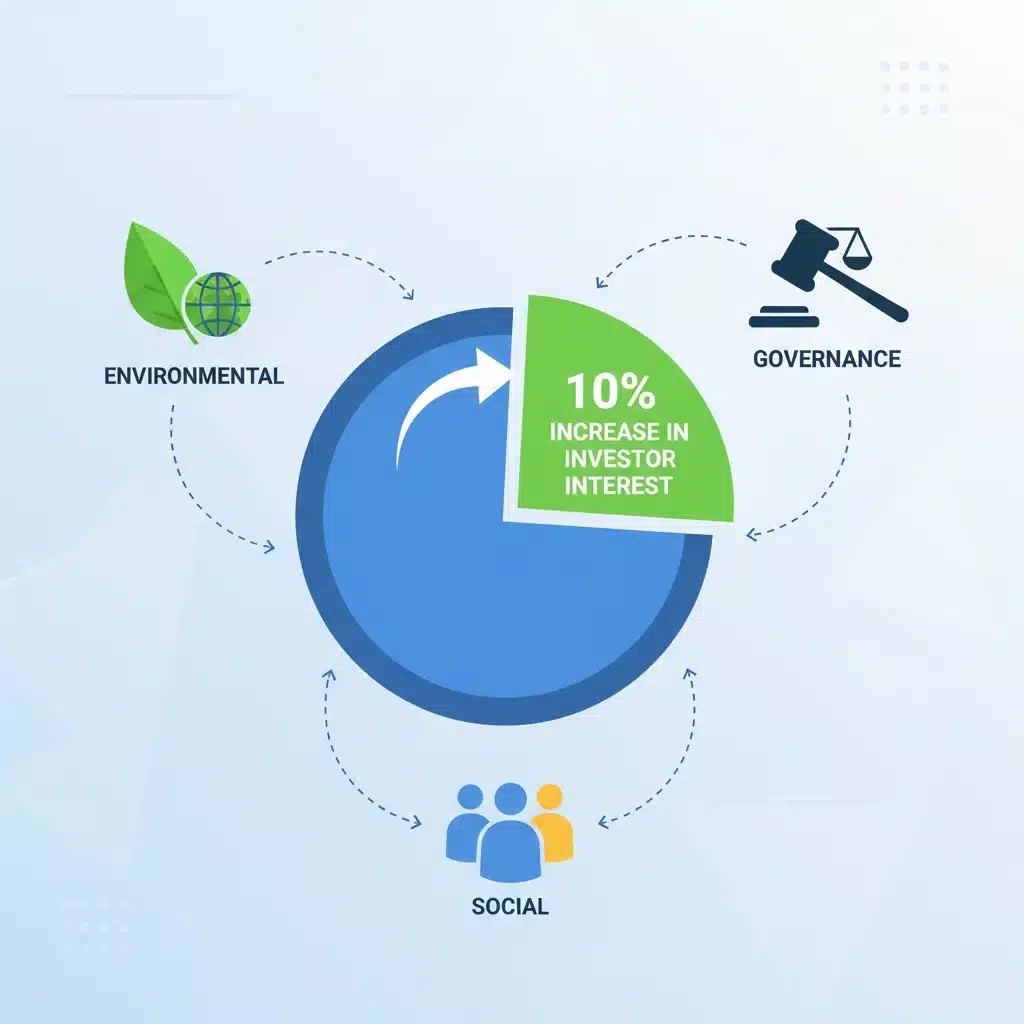
The landscape of investment is undergoing a profound transformation, with environmental, social, and governance (ESG) factors emerging as pivotal considerations for investors worldwide. This shift is particularly impactful for the burgeoning U.S. startup ecosystem, where innovation meets the imperative of sustainability. While once considered a niche concern, ESG startup investment is now a mainstream driver, projected to influence a significant 10% of investor interest by 2026. This article delves into the evolving role of ESG for U.S. startups, exploring why these principles are no longer optional but essential for attracting capital, fostering growth, and building resilient businesses.
The Rising Tide of ESG in the Investment World
For decades, financial returns were the sole monarch of investment decisions. However, a confluence of global challenges—climate change, social inequality, and corporate governance scandals—has irrevocably altered this paradigm. Investors, from institutional giants to individual angels, are increasingly recognizing that non-financial factors profoundly impact long-term value creation and risk mitigation. This realization has propelled ESG into the foreground, making it a critical lens through which investment opportunities are evaluated.
The data unequivocally supports this trend. Reports from major financial institutions consistently highlight the outperformance of ESG-integrated portfolios and the increasing demand for sustainable investment products. Millennials and Gen Z, who represent a growing segment of investors and consumers, exhibit a strong preference for companies that demonstrate genuine commitment to ESG principles. This demographic shift, coupled with regulatory pressures and a heightened awareness of global issues, ensures that ESG is not a fleeting trend but a fundamental recalibration of market values.
For U.S. startups, this means a new playing field. Early-stage companies, often characterized by their agility and potential for disruption, have a unique opportunity to embed ESG principles from their inception. This proactive approach can differentiate them in a crowded market, attract mission-aligned talent, and, crucially, secure the capital needed for scaling. Neglecting ESG, conversely, can lead to missed opportunities, reputational damage, and an inability to meet the evolving expectations of a conscious investor base.
Defining ESG for the Startup Ecosystem
Before diving deeper, it’s essential to understand what ESG entails in the context of a startup. While the core principles remain consistent, their application can vary:
- Environmental (E): This encompasses a startup’s impact on the natural world. For many tech startups, this might involve minimizing their data center’s energy consumption, optimizing supply chains for reduced carbon footprint, or developing products that solve environmental problems (e.g., renewable energy, sustainable agriculture tech). For consumer goods startups, it could mean sustainable sourcing, waste reduction, and eco-friendly packaging.
- Social (S): This refers to how a startup manages relationships with its employees, suppliers, customers, and the communities where it operates. Key aspects include fair labor practices, diversity, equity, and inclusion (DEI) initiatives, data privacy and security, product safety, and community engagement. A strong ‘S’ factor often translates to a positive work culture and strong stakeholder relationships.
- Governance (G): This relates to a startup’s leadership, internal controls, and ethical practices. It includes board diversity, executive compensation, anti-corruption policies, transparency in reporting, and robust data governance. Good governance builds trust with investors and ensures long-term stability and accountability.
For startups, the integration of these factors is not just about compliance; it’s about building a sustainable and ethical business model that resonates with modern values. This is where the concept of ESG startup investment truly shines, as investors seek out companies that are not only innovative but also responsible.
The Compelling Case for ESG Startup Investment: Why 10% by 2026?
The projection of 10% of investor interest being driven by ESG factors by 2026 for U.S. startups is not an arbitrary figure. It reflects a confluence of market forces, regulatory shifts, and a growing understanding of the tangible benefits ESG offers. Let’s explore the key drivers behind this significant forecast.
Enhanced Access to Capital and Diversified Investor Pool
One of the most immediate and significant benefits for startups embracing ESG is improved access to capital. A rapidly expanding pool of impact investors, ESG-focused funds, and even traditional venture capital firms are now actively seeking companies with strong ESG credentials. These investors are not just looking for financial returns; they are looking for positive societal and environmental impact alongside financial success.
By aligning with ESG principles, startups can tap into this growing capital pool, which might otherwise be inaccessible. This diversification of potential investors reduces reliance on conventional funding sources and can lead to more favorable terms, as ESG-aligned investors often take a longer-term view.
Risk Mitigation and Resilience
ESG factors are increasingly recognized as indicators of a company’s long-term resilience and ability to navigate future challenges. For instance, a startup with a robust environmental strategy is better positioned to adapt to climate-related regulations or resource scarcity. Similarly, strong social practices reduce the risk of labor disputes, supply chain disruptions, or reputational damage from ethical lapses. Good governance minimizes the likelihood of fraud, mismanagement, and legal issues.
Investors understand that startups, by their very nature, face high risks. Demonstrating a proactive approach to ESG signals a mature and forward-thinking management team capable of identifying and mitigating a broader spectrum of risks, making the investment proposition more attractive.
Improved Brand Reputation and Customer Loyalty
In today’s transparent world, consumers and business partners are more informed and conscientious than ever. Startups that genuinely commit to ESG principles can build a powerful brand narrative that resonates with their target audience. This leads to increased customer loyalty, positive word-of-mouth, and a competitive edge in markets where ethical consumption is on the rise.
A strong ESG profile can also attract top talent. Millennials and Gen Z employees, in particular, prioritize working for companies that align with their values. This enhances recruitment efforts, reduces employee turnover, and fosters a more engaged and productive workforce—all critical for a startup’s success.
Innovation and Operational Efficiency
Paradoxically, focusing on ESG can drive innovation and operational efficiency. For example, efforts to reduce environmental impact might lead to developing more energy-efficient processes or sustainable materials, which can, in turn, reduce costs and create new product opportunities. Implementing fair labor practices often results in higher employee morale and productivity. Robust governance structures can streamline decision-making and improve accountability.
By integrating ESG, startups are encouraged to think creatively about their entire value chain, leading to sustainable competitive advantages and new market opportunities.

Challenges and Opportunities for U.S. Startups in ESG Integration
While the benefits of ESG startup investment are clear, integrating these principles effectively presents its own set of challenges for early-stage companies. However, these challenges often come hand-in-hand with unique opportunities for differentiation and innovation.
Challenges:
- Resource Constraints: Startups typically operate with lean teams and limited budgets. Allocating resources to ESG initiatives, especially in the early stages, can seem daunting when core product development and market penetration are primary concerns.
- Lack of Standardized Reporting: Unlike larger corporations, startups often lack the infrastructure or expertise for formal ESG reporting. The absence of universally adopted metrics for early-stage companies can make it difficult to track progress and communicate impact effectively to investors.
- Perception of Cost vs. Benefit: Some founders may view ESG as an added cost or a ‘nice-to-have’ rather than a fundamental component of their business strategy, especially if the financial returns aren’t immediately apparent.
- Greenwashing Risk: There’s a fine line between genuine ESG commitment and ‘greenwashing’ (making misleading claims about environmental or social impact). Startups must ensure their ESG efforts are authentic and measurable to avoid reputational backlash.
Opportunities:
- Building from the Ground Up: Startups have the advantage of embedding ESG principles from their inception, rather than retrofitting them into existing, complex structures. This allows for a more authentic and integrated approach.
- Agility and Innovation: Their inherent agility allows startups to quickly pivot and innovate to meet evolving ESG standards and investor expectations. They can develop cutting-edge solutions that address specific environmental or social challenges.
- Attracting Mission-Driven Talent: A strong ESG commitment is a powerful magnet for top talent, particularly younger generations who prioritize purpose alongside pay. This can significantly reduce recruitment costs and improve employee retention.
- Creating New Markets: By focusing on sustainable solutions, startups can carve out new market niches and appeal to a growing segment of conscious consumers and businesses.
Practical Strategies for U.S. Startups to Embrace ESG
To capitalize on the growing trend of ESG startup investment, U.S. startups need actionable strategies to integrate these principles effectively. It’s not about being perfect from day one, but about demonstrating a clear commitment and a roadmap for continuous improvement.
1. Define Your ESG Vision Early On
Integrate ESG into your company’s mission and values from the very beginning. What environmental problem are you solving? How are you ensuring a fair and inclusive workplace? What governance structures will ensure ethical operations? A clear, articulated ESG vision provides a compass for all future decisions.
2. Focus on Material ESG Factors
Not all ESG factors will be equally relevant to every startup. Identify the environmental, social, and governance issues that are most material to your industry, business model, and stakeholders. For a SaaS company, data privacy and employee well-being might be more material than a heavy carbon footprint. Prioritize these key areas where your impact can be most significant and measurable.
3. Start Small and Scale Gradually
You don’t need to implement a comprehensive ESG framework overnight. Begin with achievable goals, such as establishing a DEI policy, committing to energy-efficient office practices, or ensuring ethical sourcing for your initial products. As your startup grows, you can expand your ESG initiatives and reporting capabilities.
4. Embed ESG into Operations and Culture
ESG should not be a separate department but an integral part of your daily operations and company culture. Train employees on ESG principles, incentivize sustainable practices, and ensure that decision-making processes consider ESG implications. This top-down and bottom-up approach fosters genuine commitment.
5. Measure and Communicate Your Impact
Even without formal reporting standards, startups can track key ESG metrics. This could include energy consumption, employee diversity statistics, charitable contributions, or customer satisfaction related to ethical practices. Transparently communicate your progress, challenges, and future goals to investors, customers, and employees. This builds trust and demonstrates accountability.
6. Seek Expert Guidance and Partnerships
Consider engaging with ESG consultants, advisors, or incubators that specialize in sustainable business practices. Partnering with non-profits, academic institutions, or other startups focused on similar ESG goals can also provide valuable insights, resources, and credibility.
The Future of ESG Startup Investment: Beyond 2026
The projection of 10% investor interest driven by ESG for U.S. startups by 2026 is merely a stepping stone. As awareness grows, regulations evolve, and the imperative for sustainable development intensifies, this percentage is likely to climb even higher. The future of ESG startup investment is one where these factors are not just a differentiator but a baseline expectation.
We can anticipate several key trends shaping this future:
- Increased Standardization and Reporting: As the market matures, there will likely be greater standardization in ESG metrics and reporting frameworks tailored for startups, making it easier for investors to compare and evaluate companies.
- Integration with AI and Data Analytics: Startups will leverage AI and data analytics to measure, manage, and report their ESG performance more efficiently and accurately, moving beyond manual processes.
- Supply Chain Scrutiny: Investors will increasingly scrutinize the entire supply chain of startups, demanding transparency and ethical practices from suppliers and partners.
- Focus on Social Impact: While environmental concerns have often dominated, there will be a heightened focus on the ‘S’ in ESG, particularly around issues of diversity, equity, inclusion, and community impact.
- Regulatory Pressures: Although the U.S. regulatory landscape for ESG is still developing, it’s expected that more stringent requirements will emerge, pushing startups to adopt robust ESG practices.
For U.S. startups, this future represents both a challenge and an immense opportunity. Those that proactively embrace ESG will not only attract the capital needed to thrive but will also build more resilient, ethical, and ultimately, more successful businesses that contribute positively to the world.
Conclusion
The evolving role of ESG for U.S. startups is undeniable. What began as a moral imperative has rapidly transformed into a financial one, with ESG startup investment poised to capture a significant portion of investor interest by 2026. Startups that strategically integrate environmental, social, and governance principles into their core operations will find themselves with enhanced access to capital, stronger brand reputations, reduced risks, and a more engaged workforce.
While challenges exist, the agility and innovative spirit inherent in the startup ecosystem make these companies uniquely positioned to lead the charge in sustainable business practices. By defining their ESG vision early, focusing on material factors, and continuously measuring their impact, U.S. startups can not only secure vital funding but also build a foundation for long-term success that benefits all stakeholders and contributes to a more sustainable future. The time for ESG is now, and startups are at the forefront of this transformative movement.