Sustainable Marketing Practices: Attracting Eco-Conscious Consumers in the US
In an era defined by increasing environmental awareness and social responsibility, businesses across the United States are facing unprecedented pressure and opportunity to adopt sustainable practices. The shift isn’t just about corporate social responsibility; it’s a fundamental change in consumer behavior. A significant and growing segment of the population, often referred to as eco-conscious consumers, is actively seeking out brands that align with their values. For US brands, embracing robust sustainable marketing practices is no longer optional but a strategic imperative to capture this burgeoning market. Our ambitious goal? To help US brands attract 25% more eco-conscious consumers by Q3 2026. This comprehensive guide will delve into the strategies, benefits, and challenges of implementing effective sustainable marketing practices.
The landscape of consumer expectations has evolved dramatically. Consumers are not just buying products or services; they are investing in the values and ethics of the brands behind them. This is particularly true for eco-conscious consumers who prioritize environmental impact, ethical sourcing, and social equity. Brands that authentically integrate sustainability into their core operations and communicate these efforts transparently through their marketing will be the ones to thrive. This article will provide actionable insights into how to build a credible and compelling sustainable brand narrative that resonates with the target demographic, ultimately leading to significant market growth.
The Rise of the Eco-Conscious Consumer: A Market Overview
Understanding the eco-conscious consumer is the first step towards developing effective sustainable marketing practices. This demographic is characterized by a strong commitment to environmental protection, social justice, and ethical consumption. They are often willing to pay a premium for sustainable products and services, and they actively seek out information about a brand’s environmental and social impact. Research consistently shows a growing trend in this area. Studies indicate that a substantial percentage of consumers, particularly younger generations, are more likely to choose brands that demonstrate strong environmental credentials.
In the US, this segment is expanding rapidly. Factors such as increasing awareness of climate change, plastic pollution, and social inequalities are driving this shift. Consumers are becoming more discerning, moving beyond superficial ‘greenwashing’ to demand genuine commitment and measurable impact. They look for certifications, transparent supply chains, and authentic storytelling. Brands that fail to acknowledge or respond to this trend risk losing market share to more forward-thinking competitors. Therefore, integrating sustainable marketing practices is crucial for long-term business viability and growth.
The economic implications are significant. The global market for sustainable products and services is projected to grow substantially, and the US is a key player in this expansion. Brands that position themselves as leaders in sustainability can tap into this lucrative market, building brand loyalty and attracting new customers. This isn’t just about selling more; it’s about building a brand with purpose, one that resonates deeply with a values-driven consumer base.
Defining Authentic Sustainable Marketing Practices
Authenticity is the bedrock of successful sustainable marketing practices. In an age of skepticism, consumers can quickly spot insincere attempts at ‘greenwashing’ – the practice of making unsubstantiated or misleading claims about the environmental benefits of a product, service, or company. True sustainable marketing goes beyond superficial claims; it reflects a genuine commitment to environmental and social responsibility embedded within the company’s DNA.
Transparency in Supply Chains and Operations
One of the most critical aspects of authentic sustainable marketing is transparency. Consumers want to know where their products come from, how they are made, and what impact they have on the planet and its people. Brands should be open about their supply chains, from sourcing raw materials to manufacturing processes and distribution. This includes:
- Ethical Sourcing: Providing clear information about where raw materials are obtained, ensuring fair labor practices, and avoiding exploitative conditions.
- Environmental Impact: Disclosing data on carbon emissions, water usage, waste generation, and efforts to minimize these impacts.
- Certifications: Obtaining and highlighting reputable third-party certifications (e.g., B Corp, Fair Trade, LEED, USDA Organic) that validate sustainability claims. These certifications serve as independent verification and build trust with eco-conscious consumers.
- Manufacturing Processes: Explaining sustainable manufacturing techniques, such as using renewable energy, closed-loop systems, or reducing hazardous waste.
Transparency fosters trust, which is invaluable in building lasting relationships with eco-conscious consumers. When brands are honest about their challenges as well as their successes, it creates a more relatable and credible narrative. This level of openness is a hallmark of effective sustainable marketing practices.
Purpose-Driven Storytelling
Beyond transparency, effective sustainable marketing practices involve telling a compelling story about your brand’s purpose and its commitment to sustainability. This isn’t just about listing facts and figures; it’s about connecting with consumers on an emotional level. Share your brand’s journey, its motivations, and the people behind its sustainable initiatives.
- Highlighting Impact: Focus on the positive impact your brand is making, whether it’s through reforestation projects, ocean clean-ups, supporting local communities, or reducing your carbon footprint. Quantify these impacts whenever possible (e.g., “We’ve planted X trees,” “We’ve diverted Y tons of waste from landfills”).
- Sharing Values: Clearly articulate your brand’s core values and how they align with sustainability. This helps eco-conscious consumers feel a deeper connection to your brand.
- Engaging with Communities: Showcase your involvement in environmental and social initiatives. This can include partnerships with NGOs, employee volunteer programs, or community-led sustainability projects.
Storytelling makes your sustainability efforts tangible and relatable, moving them beyond abstract concepts to real-world change. This humanizes your brand and makes it more appealing to consumers who want to support businesses that are making a difference.
Key Strategies for Attracting Eco-Conscious Consumers
To achieve the goal of attracting 25% more eco-conscious consumers by Q3 2026, US brands must implement a multi-faceted approach to their sustainable marketing practices. This involves integrating sustainability into every touchpoint of the customer journey, from product development to post-purchase engagement.
1. Product Innovation and Design
The foundation of any successful sustainable marketing campaign lies in the product itself. Sustainable products are designed with environmental and social considerations in mind from conception to end-of-life. This includes:
- Eco-Friendly Materials: Utilizing recycled, renewable, biodegradable, or upcycled materials.
- Durability and Longevity: Designing products that last longer, reducing the need for frequent replacements and minimizing waste.
- Circular Economy Principles: Designing products for easy repair, reuse, or recycling, thereby closing the loop on material resources.
- Reduced Packaging: Minimizing packaging, using recycled or compostable materials, and avoiding single-use plastics.
When your products inherently embody sustainability, marketing them becomes a natural extension of your brand’s purpose. This approach ensures that your sustainable marketing practices are backed by tangible, verifiable product attributes.

2. Digital Marketing for Sustainability
Digital channels offer powerful avenues for communicating your sustainable marketing practices to a broad audience. Social media, email marketing, content marketing, and SEO can all be leveraged effectively.
- Content Marketing: Create informative and engaging content such as blog posts, videos, infographics, and whitepapers that educate consumers about your sustainability efforts, environmental issues, and how your products contribute to solutions. This positions your brand as a thought leader in sustainability.
- Social Media Engagement: Use platforms like Instagram, Facebook, TikTok, and LinkedIn to share behind-the-scenes glimpses of your sustainable operations, highlight product features, and engage in conversations about environmental and social topics. Encourage user-generated content that showcases customers using your sustainable products.
- Search Engine Optimization (SEO): Optimize your website and content for keywords related to sustainability (e.g., “eco-friendly products,” “sustainable fashion,” “ethical brands”). This ensures that eco-conscious consumers searching for such terms can easily find your brand.
- Email Marketing: Build a subscriber list of interested consumers and regularly share updates on your sustainability initiatives, new eco-friendly product launches, and exclusive content related to sustainable living.
- Influencer Marketing: Partner with authentic sustainability influencers and advocates who genuinely believe in your brand’s mission. Their endorsement can significantly boost credibility and reach within the eco-conscious community.
Digital platforms provide an unparalleled opportunity to tell your sustainability story, engage with your audience, and drive traffic to your sustainable offerings. They are essential tools for modern sustainable marketing practices.
3. Partnerships and Collaborations
Collaborating with other sustainable brands, environmental organizations, or non-profits can amplify your message and demonstrate your commitment to a larger cause. These partnerships can take various forms:
- Co-branding: Partner with another sustainable brand on a product or campaign, combining your strengths to reach a wider audience.
- Cause Marketing: Align with environmental charities or social impact organizations, donating a portion of sales or supporting specific projects. Clearly communicate the impact of these partnerships to your consumers.
- Industry Alliances: Join industry groups or certifications that promote sustainability, demonstrating your commitment to collective action and best practices.
Such collaborations enhance your brand’s credibility and expand its reach, showcasing a commitment beyond individual profit and reinforcing your sustainable marketing practices.
4. Measurement and Reporting
To truly achieve the goal of attracting 25% more eco-conscious consumers, it’s crucial to measure the impact of your sustainable marketing practices and report on your progress. This demonstrates accountability and provides valuable data for continuous improvement.
- Key Performance Indicators (KPIs): Track metrics such as website traffic from sustainability-related searches, engagement rates on sustainable content, conversion rates for eco-friendly products, customer reviews mentioning sustainability, and brand sentiment related to environmental efforts.
- Sustainability Reports: Publish annual sustainability reports that detail your environmental, social, and governance (ESG) performance. These reports should be comprehensive, data-driven, and easily accessible to the public.
- Carbon Footprint Tracking: Regularly assess and report on your carbon footprint and efforts to reduce it. This includes emissions from operations, supply chain, and product life cycle.
- Consumer Surveys: Conduct surveys to understand consumer perceptions of your brand’s sustainability efforts and identify areas for improvement.
By rigorously measuring and reporting, brands can not only demonstrate their commitment but also refine their sustainable marketing practices to be even more effective and impactful.
Overcoming Challenges in Sustainable Marketing
Implementing effective sustainable marketing practices is not without its challenges. Brands must navigate issues such as greenwashing skepticism, higher production costs, and the need for consistent messaging.
Combating Greenwashing Skepticism
The prevalence of greenwashing has made consumers wary. To overcome this, brands must:
- Be Genuinely Sustainable: Ensure that your sustainability claims are backed by real actions and measurable results. Authenticity is your strongest defense against skepticism.
- Educate Consumers: Clearly explain the science and processes behind your sustainable products and practices. Help consumers understand why your efforts are meaningful.
- Provide Evidence: Back up claims with certifications, data, and third-party endorsements.
Addressing Higher Costs
Sustainable materials and processes can sometimes incur higher initial costs. Brands can address this by:
- Communicating Value: Highlight the long-term benefits and value of sustainable products (e.g., durability, health benefits, positive impact) to justify a potentially higher price point.
- Efficiency Gains: Invest in sustainable practices that also lead to operational efficiencies and cost savings in the long run.
- Supply Chain Optimization: Work with suppliers to find more cost-effective sustainable materials and processes.
Maintaining Consistent Messaging
All marketing and communication channels must deliver a consistent message about your brand’s sustainability commitment. Inconsistencies can erode trust. This requires internal alignment and clear guidelines for all marketing teams.
The Future of Sustainable Marketing in the US
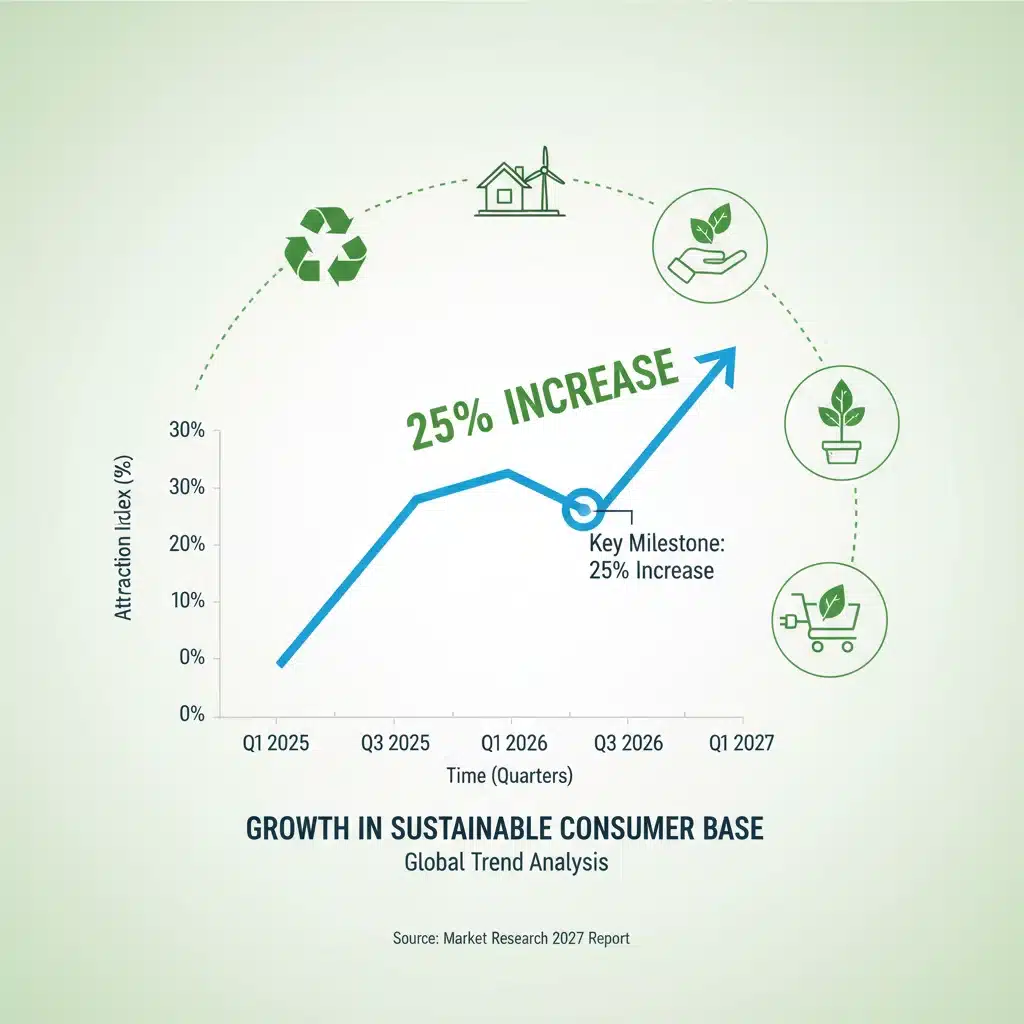
The trajectory for sustainable marketing practices in the US is one of continued growth and sophistication. As environmental challenges become more pressing and consumer awareness deepens, brands that embed sustainability at their core will gain a significant competitive advantage. The goal of attracting 25% more eco-conscious consumers by Q3 2026 is ambitious but entirely achievable for brands that commit to genuine change and effective communication.
Future trends will likely include even greater demand for circular economy models, increased scrutiny of carbon footprints, and a stronger emphasis on social equity within sustainability narratives. Brands that proactively adapt to these evolving expectations will not only capture market share but also contribute to a more sustainable future. This will involve investments in green technologies, further innovations in sustainable product design, and even more transparent reporting on environmental and social impact.
Moreover, regulatory landscapes are also evolving, with increasing pressure for businesses to comply with environmental standards and report on their sustainability efforts. Brands that are already leading in sustainable marketing practices will be better positioned to adapt to these changes and even influence future policy. The integration of AI and data analytics will also play a crucial role in optimizing sustainable supply chains, measuring impact more accurately, and personalizing sustainable marketing messages to individual consumers.
The shift towards sustainability is not a fleeting trend but a fundamental transformation of the global economy. For US brands, embracing and excelling in sustainable marketing practices is an investment in their future, ensuring relevance, resilience, and profitability in an increasingly eco-conscious world. By focusing on authenticity, transparency, and impact, brands can not only meet but exceed the expectations of the growing eco-conscious consumer segment, reaching their growth targets and fostering a positive societal impact.
Conclusion: Driving Growth Through Green Initiatives
The journey towards attracting 25% more eco-conscious consumers by Q3 2026 for US brands hinges on a deep and authentic commitment to sustainable marketing practices. This isn’t merely about adopting a few eco-friendly initiatives; it’s about fundamentally integrating sustainability into every facet of business operations and communicating these efforts with honesty and impact.
From product innovation and transparent supply chains to engaging digital campaigns and meaningful partnerships, every action contributes to building a credible green brand. The market for sustainable products and services is expanding rapidly, driven by a consumer base that is increasingly informed and values-driven. Brands that proactively respond to this shift with genuine sustainable practices and compelling storytelling will not only secure a larger market share but also build stronger, more resilient businesses.
The economic and environmental benefits of adopting robust sustainable marketing practices are undeniable. It fosters brand loyalty, attracts new customers, enhances brand reputation, and contributes to a healthier planet. As the US market continues to prioritize sustainability, brands that lead with authenticity and purpose will be the ones to thrive, setting new benchmarks for responsible business and consumer engagement. The time to act is now, transforming environmental responsibility into a powerful engine for growth and positive change.