Sales Automation: 40% Sales Cycle Reduction by 2025

Achieving a 40% reduction in sales cycle length by early 2025 is a critical objective for modern businesses, driven by advanced sales automation tools and strategic implementation.
The latest in sales automation is revolutionizing how businesses convert leads into loyal customers, with a clear target: achieving a 40% reduction in sales cycle length by early 2025. This ambitious goal is not just a pipe dream; it’s a tangible outcome within reach through strategic adoption of cutting-edge technologies and refined processes. Understanding the recent updates and their financial impact is crucial for any organization aiming to stay competitive.
The Evolution of Sales Automation: Beyond Basic CRM
Sales automation has moved far beyond simple contact management. Today, it encompasses a sophisticated suite of tools designed to streamline every facet of the sales pipeline, from initial lead generation to post-sale follow-up. This evolution is driven by the need for greater efficiency and personalization in an increasingly competitive market.
Early CRM systems laid the groundwork, providing a centralized database for customer information. However, modern sales automation integrates artificial intelligence (AI), machine learning (ML), and advanced analytics to predict customer needs, automate repetitive tasks, and empower sales teams with actionable insights. This shift allows sales professionals to focus on high-value activities that truly drive conversions.
AI-Powered Lead Scoring and Prioritization
One of the most significant advancements lies in AI-powered lead scoring. Instead of relying on manual assessments, AI algorithms analyze vast datasets to identify leads most likely to convert, based on their engagement, demographics, and behavioral patterns. This ensures sales teams spend their time on the most promising opportunities.
- Predictive Analytics: AI models forecast lead conversion probability.
- Behavioral Tracking: Monitors website visits, email opens, and content downloads.
- Demographic Matching: Aligns leads with ideal customer profiles.
The continuous improvement in sales automation tools means businesses can now achieve unprecedented levels of efficiency and effectiveness. By leveraging these technologies, organizations can significantly shorten their sales cycles, leading to faster revenue generation and improved market responsiveness.
Key Technologies Driving Sales Cycle Reduction
The ambition to reduce sales cycles by 40% by early 2025 is fueled by several transformative technologies. These tools work in concert to eliminate bottlenecks, enhance communication, and provide sales teams with the intelligence needed to accelerate deals.
From intelligent chatbots to advanced analytics platforms, the landscape of sales technology is rapidly evolving. Understanding how these innovations integrate into existing workflows is paramount for maximizing their impact and achieving aggressive sales targets.
Intelligent Chatbots and Virtual Assistants
Intelligent chatbots and virtual assistants are no longer confined to customer service. They now play a crucial role in the early stages of the sales cycle, qualifying leads, answering common questions, and even scheduling appointments. This 24/7 availability ensures no lead goes unattended, speeding up initial interactions.
These AI-driven tools can handle routine inquiries, gather essential prospect information, and seamlessly hand off qualified leads to human sales representatives. This automation of initial engagement significantly reduces the time from initial contact to a meaningful sales conversation.
- Instant Lead Qualification: Chatbots identify high-intent prospects.
- Automated Information Gathering: Collects crucial data points efficiently.
- 24/7 Engagement: Ensures continuous interaction with potential customers.
The synergy between human sales expertise and automated tools is key. Automation handles the repetitive and time-consuming tasks, freeing up sales professionals to focus on complex negotiations and relationship building, ultimately accelerating the sales process.
Personalization at Scale: A Game Changer for Sales Efficiency
In today’s market, generic sales approaches fall flat. Buyers expect personalized experiences tailored to their specific needs and challenges. Sales automation now enables personalization at an unprecedented scale, directly contributing to a shorter sales cycle by building rapport and trust more quickly.
Leveraging customer data, automation platforms can dynamically generate personalized content, craft targeted email campaigns, and even suggest relevant product offerings. This level of customization makes prospects feel understood and valued, fostering a more receptive environment for sales conversations.
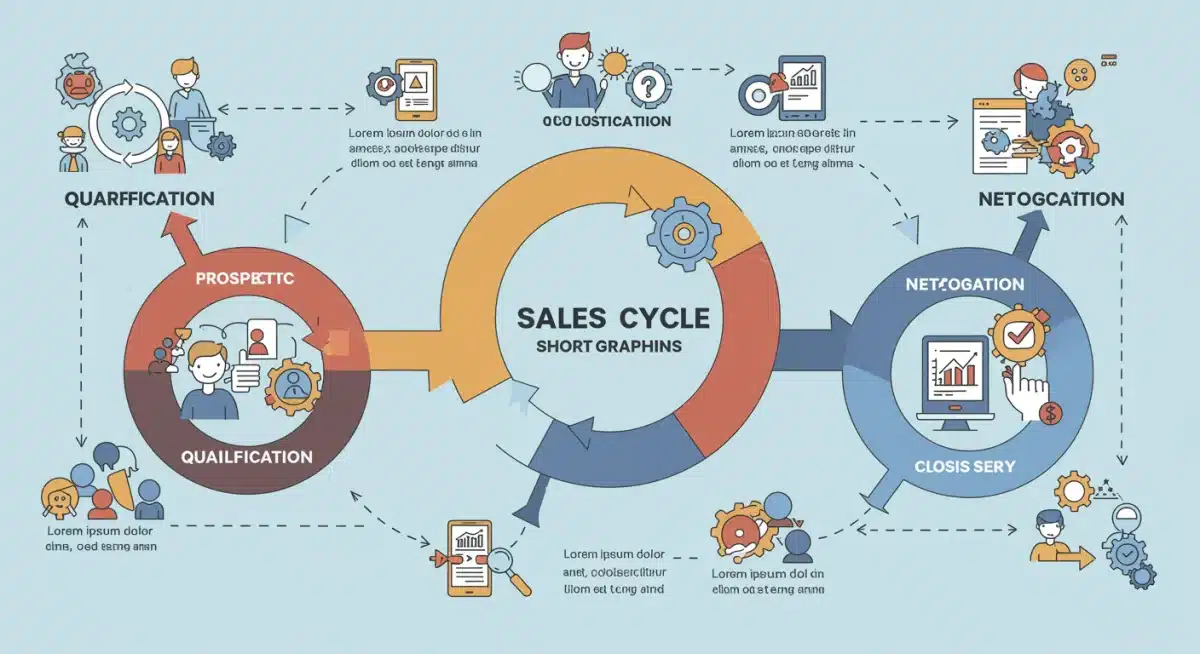
Imagine a system that automatically identifies a prospect’s industry, company size, and pain points, then crafts an email that directly addresses those concerns with relevant case studies. This is the power of personalized automation.
Dynamic Content Generation and Targeted Outreach
Dynamic content generation utilizes AI to create unique versions of marketing and sales materials based on individual prospect data. This ensures that every piece of communication, from initial emails to detailed proposals, resonates deeply with the recipient.
Targeted outreach refers to the automated delivery of these personalized messages through the most effective channels at optimal times. This precision in communication significantly improves engagement rates and accelerates the decision-making process for prospects.
- Tailored Messaging: Delivers content highly relevant to individual prospects.
- Behavioral Triggers: Automates outreach based on specific prospect actions.
- Multi-Channel Personalization: Ensures consistent messaging across email, social, and chat.
By making every interaction feel bespoke, sales automation not only enhances the customer experience but also dramatically reduces the time it takes for prospects to move through the sales funnel, directly supporting the goal of a 40% sales cycle reduction.
Measuring the Impact: Financial Benefits of Reduced Sales Cycles
The drive to achieve a 40% reduction in sales cycle length by early 2025 is fundamentally about financial improvement. A shorter sales cycle translates directly into tangible economic benefits, impacting everything from cash flow to market share.
Quantifying these benefits is essential for justifying investment in new automation technologies and demonstrating a clear return on investment. Businesses need to track key performance indicators (KPIs) to understand the full financial implications of their automation strategies.
Accelerated Revenue Growth and Improved Cash Flow
The most immediate financial benefit of a shorter sales cycle is accelerated revenue growth. When deals close faster, revenue is recognized sooner, leading to improved cash flow and greater financial flexibility. This allows businesses to reinvest in growth initiatives or weather economic uncertainties more effectively.
Furthermore, faster sales cycles mean sales teams can handle a higher volume of transactions within the same period, effectively increasing their productivity and overall sales capacity without necessarily expanding headcount.
- Increased Sales Velocity: More deals closed in less time.
- Enhanced Working Capital: Faster conversion of sales into cash.
- Higher Sales Productivity: Optimized use of sales team resources.
The financial impact extends beyond mere revenue. It also includes reduced operational costs associated with prolonged sales efforts, such as salaries for sales personnel engaged in lengthy negotiations and the cost of maintaining leads over extended periods. This holistic view underscores the significant financial upside of sales automation.
Overcoming Challenges and Ensuring Successful Implementation
While the benefits of sales automation are clear, achieving a 40% reduction in sales cycle length by early 2025 is not without its challenges. Successful implementation requires careful planning, robust training, and a commitment to continuous optimization.
Common hurdles include resistance to change from sales teams, integration complexities with existing systems, and the need for accurate data to feed automation algorithms. Addressing these proactively is crucial for success.
Strategic Planning and Change Management
Effective strategic planning involves clearly defining goals, selecting the right automation tools, and mapping out a phased implementation strategy. It’s not just about installing software; it’s about transforming sales processes.
Change management is equally vital. Sales teams must understand the ‘why’ behind the automation and be actively involved in the transition. Comprehensive training programs and ongoing support can mitigate resistance and foster adoption.
- Phased Rollout: Implement automation in manageable stages.
- Stakeholder Buy-in: Secure commitment from leadership and sales teams.
- Continuous Training: Equip users with the skills to leverage new tools effectively.
Ultimately, successful implementation hinges on a holistic approach that combines technological adoption with human-centric strategies. By addressing potential roadblocks head-on, businesses can unlock the full potential of sales automation and achieve their ambitious cycle reduction targets.
The Future Outlook: Sustaining and Enhancing Sales Automation
As we approach early 2025, the focus will shift from merely achieving a 40% reduction in sales cycle length to sustaining and further enhancing these gains. The future of sales automation involves even deeper integration of AI, predictive analytics, and hyper-personalization, continuously refining the sales process.
Emerging trends suggest a move towards more autonomous sales functions, where AI agents handle an even larger portion of the sales process, allowing human sales professionals to focus on strategic relationships and complex problem-solving.
Hyper-Personalization and Proactive Engagement
The next frontier is hyper-personalization, where automation anticipates customer needs even before they articulate them. This involves leveraging vast amounts of data to offer solutions proactively, further streamlining the buying journey.
Proactive engagement will see sales systems initiating contact with prospects based on subtle behavioral cues or external market changes, ensuring that businesses are always one step ahead in addressing customer requirements and accelerating sales.
- AI-Driven Insights: Uncovering unspoken customer needs and preferences.
- Automated Solution Proposals: Generating tailored offers in real-time.
- Adaptive Sales Workflows: Systems that learn and adjust based on outcomes.
The continuous innovation in sales automation promises not only to maintain the achieved reductions in sales cycle length but also to open new avenues for growth and customer engagement. Businesses that embrace this evolving landscape will be best positioned for long-term success.
| Key Aspect | Brief Description |
|---|---|
| Target Goal | Achieve a 40% reduction in sales cycle length by early 2025 through automation. |
| Driving Technologies | AI, Machine Learning, predictive analytics, intelligent chatbots, and dynamic content generation. |
| Financial Impact | Accelerated revenue, improved cash flow, increased sales productivity, and reduced operational costs. |
| Key Implementation | Strategic planning, change management, continuous training, and robust data integration. |
Frequently Asked Questions About Sales Automation
Sales automation refers to the use of software and technology to automate repetitive sales tasks, streamline workflows, and enhance efficiency throughout the sales cycle. It aims to free up sales professionals to focus on high-value interactions and strategic selling, ultimately accelerating deal closures.
Sales automation reduces the sales cycle by automating lead qualification, personalizing communication at scale, streamlining administrative tasks, and providing sales teams with predictive insights. This minimizes manual effort, eliminates bottlenecks, and accelerates the progression of leads through the sales funnel.
The primary financial benefits include accelerated revenue growth due to faster deal closures, improved cash flow, increased sales team productivity, and reduced operational costs associated with lengthy sales processes. It also allows for more efficient allocation of resources and quicker market response.
Key technologies include Artificial Intelligence (AI) for lead scoring and predictive analytics, Machine Learning (ML) for pattern recognition, intelligent chatbots for instant engagement, and dynamic content generation tools for hyper-personalization. These work together to create a seamless and efficient sales ecosystem.
Businesses may encounter challenges such as resistance to change from sales teams, difficulties integrating new systems with existing infrastructure, and the necessity for high-quality, accurate data. Overcoming these requires strategic planning, comprehensive training, and strong leadership support.
Conclusion
The pursuit of a 40% reduction in sales cycle length by early 2025 is a testament to the transformative power of modern sales automation. By strategically integrating advanced AI, machine learning, and personalization technologies, businesses can not only achieve this ambitious goal but also unlock significant financial benefits, including accelerated revenue and enhanced operational efficiency. Successful implementation hinges on a clear vision, proactive change management, and a commitment to continuous adaptation in a rapidly evolving technological landscape. Embracing these innovations is no longer optional; it is essential for sustained growth and competitive advantage in the modern market.