Sales Team Upskilling: Boost Performance 12% by 2026

Is Your Sales Team Ready for 2026? Implementing a 90-Day Upskilling Program for a 12% Performance Jump
The sales landscape is evolving at an unprecedented pace. What worked yesterday might not work tomorrow. As we hurtle towards 2026, businesses face increasingly complex markets, digitally-native customers, and ever-advancing technologies. The question isn’t just whether your sales team can keep up, but whether they can lead the charge. This comprehensive guide will walk you through implementing a robust 90-day sales team upskilling program designed to deliver a measurable 12% performance increase, ensuring your team is not just ready for 2026, but thriving.
In today’s competitive environment, simply meeting quotas is no longer enough. Sales professionals need to be strategic thinkers, tech-savvy communicators, and empathetic problem-solvers. This requires continuous learning and development. A proactive approach to sales team upskilling isn’t just about training; it’s about cultivating a culture of continuous improvement that directly impacts your bottom line. Let’s delve into how you can transform your sales force into an unstoppable revenue-generating machine.
The Imperative for Sales Team Upskilling: Why Now?
The world of sales is no longer about cold calling and aggressive closing. It’s about building relationships, understanding complex customer needs, leveraging data, and mastering sophisticated sales technologies. Several key trends underscore the urgent need for comprehensive sales team upskilling:
1. The Digital Transformation of Sales
From CRM systems to AI-powered analytics, sales technology is advancing rapidly. Sales professionals must be adept at using these tools not just for administrative tasks, but for strategic insights, personalized outreach, and efficient pipeline management. The inability to effectively leverage these tools can significantly hinder productivity and competitiveness.
2. Evolving Customer Expectations
Today’s buyers are more informed and have higher expectations than ever before. They expect personalized experiences, value-driven conversations, and solutions tailored to their specific challenges. Generic sales pitches no longer cut it. Sales teams need to develop deeper listening skills, consultative selling approaches, and a profound understanding of their customers’ businesses.
3. The Rise of Data-Driven Sales
Data is the new oil, and sales is no exception. Understanding sales analytics, interpreting performance metrics, and making data-backed decisions are crucial. Sales team upskilling must include training on how to use data to identify trends, optimize strategies, and forecast more accurately, moving away from purely instinct-driven selling.
4. Increased Competition
Markets are more crowded than ever. Differentiating your offering requires a sales team that can articulate unique value propositions, build strong rapport, and navigate complex buying processes. A highly skilled sales force is a significant competitive advantage.
5. Economic Volatility and Adaptability
Economic shifts can drastically alter buying behaviors and market demands. A sales team that is agile, adaptable, and continuously learning is better equipped to pivot strategies, identify new opportunities, and maintain performance during uncertain times. This resilience is a direct outcome of effective sales team upskilling.
Designing Your 90-Day Sales Team Upskilling Program: A Strategic Blueprint
A 90-day program offers an ideal timeframe to introduce new skills, allow for practice, and start seeing tangible results. Here’s a structured approach to building your program:
Phase 1: Assessment and Foundation (Days 1-30)
1. Comprehensive Skill Gap Analysis
Before you can upskill, you need to know where your team stands. Conduct a thorough assessment of current skills versus desired skills. This can involve:
- Performance Reviews: Analyze past sales data, conversion rates, deal sizes, and pipeline velocity.
- Surveys and Interviews: Gather insights directly from sales reps and managers about perceived strengths and weaknesses.
- Observation: Shadow sales calls or meetings (with consent) to identify areas for improvement in real-time.
- Skills Assessments: Utilize standardized tests or role-playing scenarios to evaluate specific competencies (e.g., objection handling, product knowledge, CRM proficiency).
Focus on identifying gaps in areas like digital selling tools, consultative selling, negotiation, lead qualification, and product expertise. This initial assessment is critical for tailoring your sales team upskilling efforts effectively.
2. Define Clear Objectives and KPIs
What do you want to achieve with this program? Beyond the 12% performance jump, specify concrete, measurable goals. Examples include:
- Increase average deal size by X%.
- Improve conversion rates from demo to close by Y%.
- Reduce sales cycle length by Z days.
- Increase adoption of new CRM features by 90% of the team.
These KPIs will serve as your benchmark for success throughout and after the 90 days.
3. Curriculum Development and Resource Allocation
Based on your gap analysis, design a curriculum that directly addresses identified needs. Consider a blended learning approach:
- Online Modules: For foundational knowledge, product updates, and tool proficiency.
- Workshops: For interactive skill practice, role-playing, and collaborative problem-solving.
- Guest Speakers/Industry Experts: To provide fresh perspectives and advanced insights.
- Mentorship/Coaching: Pair experienced reps with newer ones, or provide dedicated sales coaching.
Allocate resources such as training platforms, external trainers, and dedicated time for learning. Ensure that the content is engaging and directly applicable to their day-to-day roles. Effective sales team upskilling is not just theoretical; it’s practical.
Phase 2: Intensive Training and Skill Application (Days 31-60)
1. Core Skill Development Modules
This phase is where the bulk of the learning happens. Focus on key areas identified in your assessment. Here are common modules:
- Advanced Consultative Selling: Moving beyond features to solutions, understanding business impact, and asking powerful questions.
- Digital Sales Tools Mastery: Deep dives into CRM optimization, sales automation platforms, LinkedIn Sales Navigator, and virtual meeting best practices.
- Negotiation and Objection Handling: Advanced techniques for overcoming resistance and closing deals effectively.
- Product/Service Deep Dive: Ensuring every team member is an expert on your offerings, including new features or services.
- Data-Driven Decision Making: How to interpret sales reports, use analytics to identify opportunities, and forecast accurately.
- Building Executive Relationships: Strategies for engaging C-suite executives and understanding their strategic priorities.
2. Practical Application and Role-Playing
Learning by doing is crucial. Incorporate regular role-playing sessions, mock sales calls, and real-world case studies. Provide immediate, constructive feedback. Encourage reps to apply new techniques in their live calls and meetings, even if it feels uncomfortable initially. This hands-on approach solidifies the sales team upskilling.
3. Peer Learning and Collaboration
Foster an environment where reps can learn from each other. Create forums for sharing best practices, challenges, and successes. This not only reinforces learning but also builds team cohesion and a shared commitment to growth.
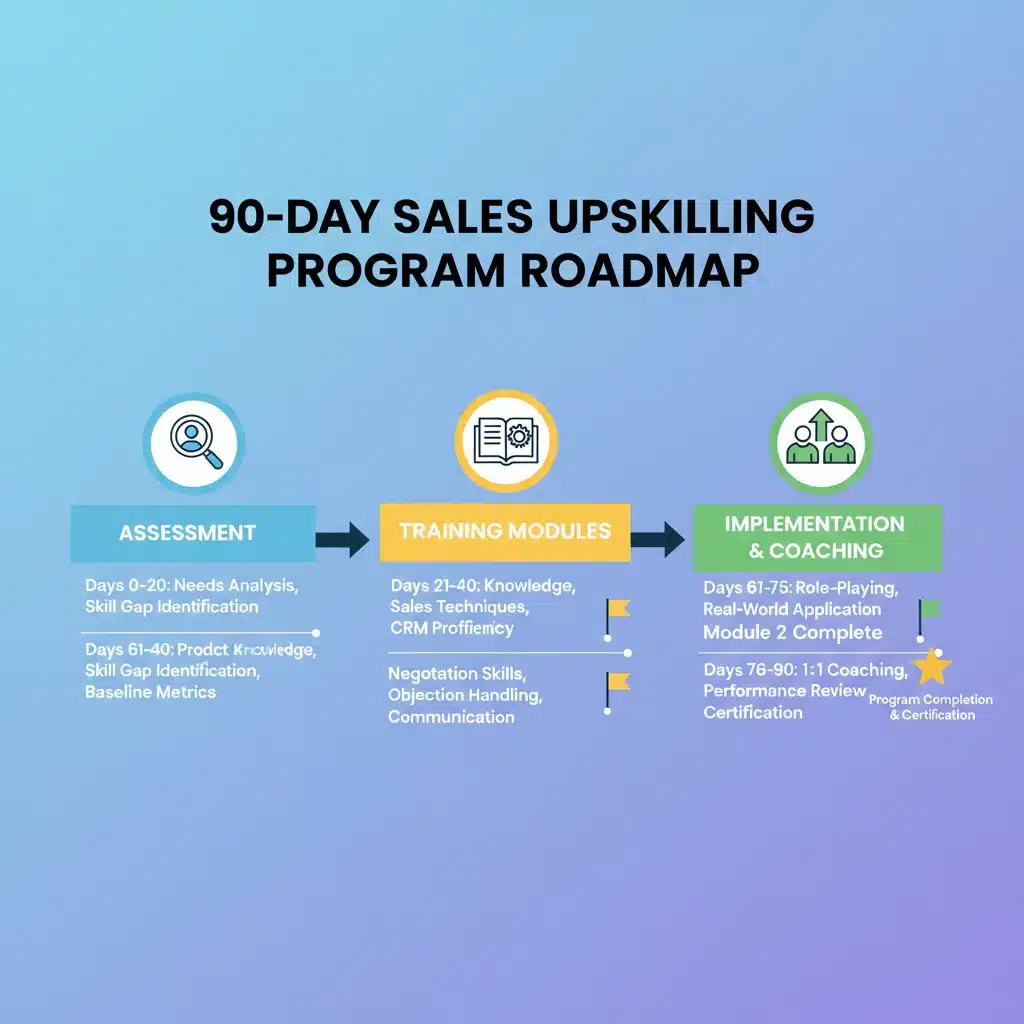
Phase 3: Reinforcement, Coaching, and Measurement (Days 61-90)
1. Ongoing Coaching and Feedback Loops
Training shouldn’t end after a module. Managers should actively coach their teams, providing regular feedback on performance, celebrating successes, and addressing areas for further development. Schedule weekly 1:1 coaching sessions focused on applying learned skills.
- Call Reviews: Listen to recorded sales calls together and provide specific feedback.
- Deal Strategy Sessions: Work through complex deals, applying new methodologies.
- Shadowing: Managers can shadow reps, offering real-time guidance.
This continuous reinforcement is what translates training into lasting behavioral change and is a cornerstone of successful sales team upskilling.
2. Performance Tracking and KPI Monitoring
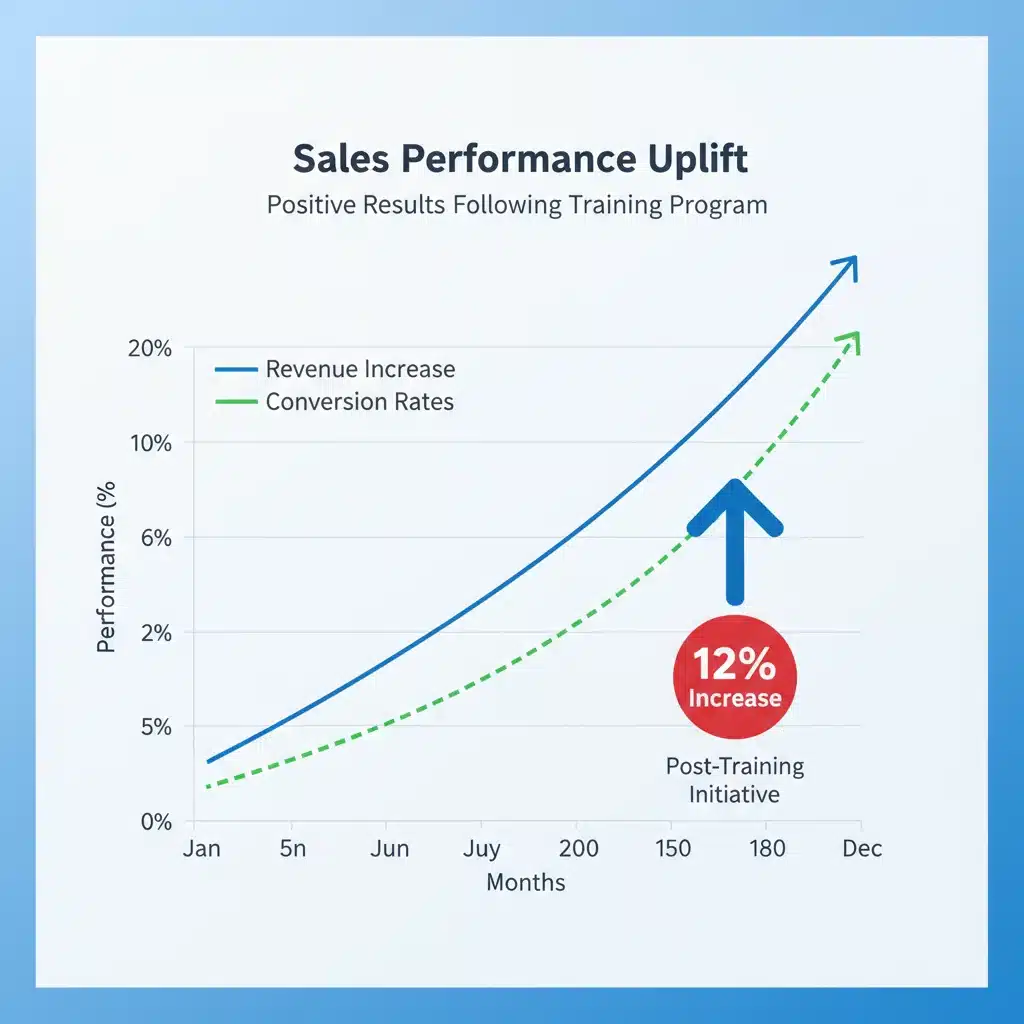
This is where you start to see the 12% performance jump materialize. Continuously monitor the KPIs established in Phase 1. Compare performance metrics from before the program to current performance. Look for trends in:
- Conversion rates
- Average deal size
- Sales cycle length
- Pipeline value and velocity
- Customer satisfaction (if applicable)
- Adoption rates of new tools/processes
Celebrate incremental improvements and use data to identify any areas where further training or coaching might be needed.
3. Refinement and Future Planning
The 90-day mark isn’t the end; it’s a milestone. Gather feedback on the program itself from participants. What worked well? What could be improved? Use this feedback to refine your sales team upskilling strategy for the future. Sales development is an ongoing journey, not a one-time event. Plan for quarterly refreshers, advanced topic workshops, and continuous access to learning resources.
Key Strategies for Maximizing Your 12% Performance Jump
Achieving a significant performance increase requires more than just a well-structured program. It demands strategic execution and a supportive environment.
1. Leadership Buy-in and Sponsorship
For any sales team upskilling program to succeed, it needs strong support from leadership. When executives champion the initiative, it signals its importance to the entire team, increasing engagement and commitment. Leaders should actively participate, communicate the ‘why,’ and allocate necessary resources.
2. Personalization of Learning Paths
While core training is essential, recognize that each salesperson has unique strengths and weaknesses. Where possible, offer personalized learning paths or supplementary resources. A rep struggling with prospecting might benefit from extra modules on lead generation, while another might need more advanced negotiation tactics. This tailored approach makes sales team upskilling more effective for individuals.
3. Creating a Culture of Continuous Learning
Upskilling should not be seen as a temporary project but as an integral part of your sales culture. Encourage curiosity, experimentation, and sharing of knowledge. Recognize and reward individuals who actively engage in learning and apply new skills successfully. This fosters an environment where growth is valued and expected.
4. Leveraging Technology for Delivery and Reinforcement
Utilize Learning Management Systems (LMS) to deliver content, track progress, and provide access to resources. Sales enablement platforms can integrate training with daily workflows, making learning more contextual. AI-powered tools can offer personalized recommendations and practice scenarios. Technology can significantly enhance the reach and effectiveness of your sales team upskilling efforts.
5. Celebrating Milestones and Successes
Acknowledge and celebrate individual and team progress throughout the 90 days. Publicly recognize those who adopt new skills quickly or achieve significant wins using new techniques. Positive reinforcement motivates the team and reinforces the value of the upskilling program.
Measuring the 12% Performance Increase: Beyond the Numbers
While the 12% performance jump is a clear quantitative goal, it’s essential to look at both quantitative and qualitative impacts of your sales team upskilling program.
Quantitative Metrics:
- Revenue Growth: Direct increase in sales revenue.
- Conversion Rates: Improvement at each stage of the sales funnel.
- Average Deal Size: Increase in the value of closed deals.
- Sales Cycle Length: Reduction in the time it takes to close a deal.
- Customer Acquisition Cost (CAC): Potential reduction due to more efficient selling.
- Customer Retention Rate: Improved relationship building leading to higher retention.
- Productivity Metrics: Number of qualified leads, proposals sent, meetings booked per rep.
Qualitative Metrics:
- Team Confidence: Observe increased assertiveness and belief in their abilities.
- Employee Engagement: Higher morale, job satisfaction, and reduced turnover.
- Customer Feedback: Positive comments on sales interactions, perceived value, and professionalism.
- Adaptability: Team’s ability to quickly pivot to new market conditions or product changes.
- Internal Collaboration: Improved teamwork and knowledge sharing within the sales department.
Potential Challenges and How to Overcome Them
Even the best-planned sales team upskilling programs can face hurdles. Anticipating these and having strategies to overcome them is key:
1. Resistance to Change
Some reps, especially experienced ones, might be resistant to new methods. Address this by clearly communicating the benefits, showcasing success stories, involving them in the planning process, and emphasizing that upskilling is about enhancing, not replacing, their existing expertise.
2. Time Constraints
Sales teams are busy. Integrate training into their workflow as much as possible, break down modules into bite-sized pieces, and emphasize that the time invested now will save time and increase efficiency later.
3. Lack of Managerial Support
If sales managers aren’t bought in or equipped to coach, the program will falter. Train your managers first, provide them with coaching tools, and ensure they understand their critical role in reinforcement.
4. Inconsistent Application of Skills
Without consistent reinforcement, new skills can quickly fade. Implement regular check-ins, peer accountability systems, and continuous coaching to ensure skills are applied consistently.
5. Measuring ROI
Clearly define your KPIs from the start and consistently track them. Use CRM data and sales reports to demonstrate the tangible impact of the program, making the ROI evident to stakeholders.
Conclusion: Future-Proofing Your Sales Force with Strategic Upskilling
The journey to a high-performing sales team ready for 2026 and beyond is not a sprint, but a marathon of continuous improvement. Implementing a focused 90-day sales team upskilling program is a powerful stride in that marathon. By strategically assessing needs, delivering targeted training, providing robust coaching, and meticulously measuring results, you can confidently expect to see a 12% performance jump and cultivate a sales force that is agile, effective, and future-proof.
Don’t wait for your competitors to set the pace. Invest in your sales team now, empower them with the skills they need for tomorrow, and watch your revenue grow. The future of sales belongs to those who are prepared to continuously learn and adapt. Is your team ready to seize it?