ABM in 2026: Securing High-Value US Clients with Precision Marketing

ABM in 2026: Securing 5-7 High-Value US Clients Annually with Precision Marketing
In the rapidly evolving landscape of B2B sales and marketing, the quest for high-value clients remains the holy grail for businesses aiming for sustainable growth. As we look towards 2026, the traditional broad-stroke marketing approaches are increasingly giving way to more surgical, targeted methodologies. Among these, Account-Based Marketing (ABM) stands out as the most potent strategy for securing those coveted 5-7 high-value US clients annually. This isn’t just about closing more deals; it’s about closing the right deals – those that drive significant revenue, foster long-term partnerships, and elevate your brand’s market position.
The allure of ABM lies in its fundamental shift from a ‘spray and pray’ model to a ‘hunt and nurture’ philosophy. Instead of casting a wide net for leads, ABM focuses resources on a predefined set of target accounts that are most likely to become valuable customers. This precision not only maximizes ROI but also builds deeper, more meaningful relationships. For companies setting their sights on the competitive US market, where decision-makers are inundated with information, a tailored, personalized approach is no longer a luxury but a necessity. By 2026, the businesses that master ABM strategy will be the ones dominating their niches, consistently exceeding their client acquisition goals for high-value accounts.
This comprehensive guide will delve into the intricacies of ABM in 2026, exploring the cutting-edge trends, technologies, and best practices that will enable your organization to identify, engage, and convert ABM high-value clients in the US. We’ll cover everything from building your ideal customer profile to leveraging advanced data analytics and fostering seamless sales and marketing alignment. Prepare to transform your approach to client acquisition and unlock unparalleled growth.
Understanding the Evolution of ABM for High-Value Client Acquisition
Account-Based Marketing isn’t a new concept, but its evolution has been profound. What began as a niche strategy for enterprise sales has blossomed into a sophisticated framework, empowered by technological advancements and a deeper understanding of buyer behavior. In 2026, ABM is less about a single campaign and more about an overarching business philosophy that permeates sales, marketing, and customer success.
From Lead Generation to Account Engagement
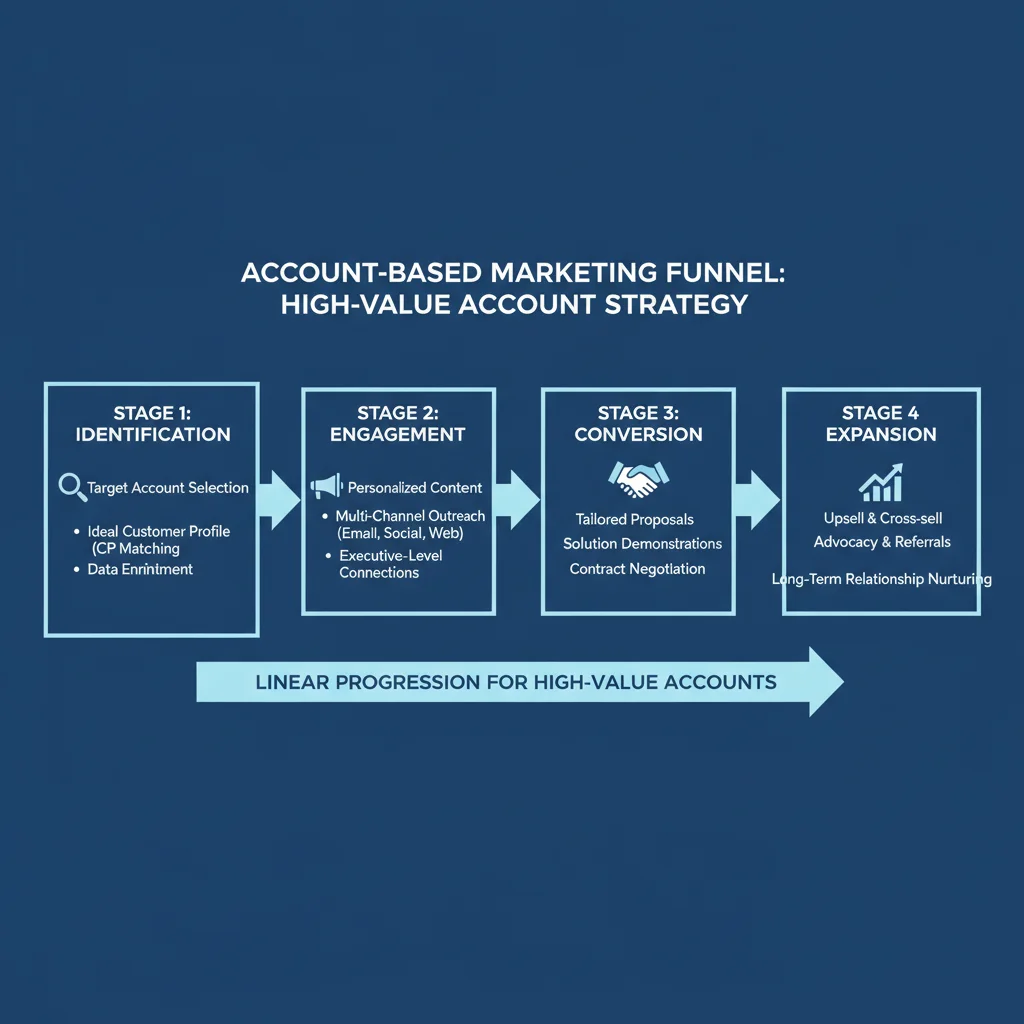
Historically, marketing departments were tasked with generating as many leads as possible, often without a clear understanding of their ultimate fit or value. Sales teams would then sift through these leads, often leading to inefficiencies and frustration. ABM flips this model. The journey begins with identifying specific, high-value accounts that align perfectly with your ideal customer profile (ICP). This proactive selection ensures that every marketing and sales effort is directed towards targets with the highest potential for conversion and long-term value.
The focus shifts from ‘lead generation’ to ‘account engagement.’ This means understanding the entire buying committee within a target account, their individual roles, pain points, and preferred communication channels. By engaging multiple stakeholders with personalized content and interactions, you build consensus and accelerate the buying process. This is particularly crucial when targeting ABM high-value clients in the US, where complex B2B sales cycles often involve numerous decision-makers.
The Role of Data and AI in Modern ABM
The resurgence and sophistication of ABM are inextricably linked to advancements in data analytics and Artificial Intelligence (AI). In 2026, these technologies are not just tools; they are the backbone of effective ABM. AI-powered platforms can sift through vast amounts of data to identify ideal target accounts based on firmographics, technographics, intent signals, and predictive analytics. This takes the guesswork out of account selection, ensuring you’re focusing on the most promising opportunities.
Furthermore, AI assists in personalizing content at scale, recommending optimal engagement strategies, and even predicting which accounts are most likely to convert. Data-driven insights allow for continuous optimization of campaigns, ensuring that resources are always deployed efficiently. For businesses aiming to secure 5-7 high-value US clients annually, leveraging these technologies is non-negotiable. They provide the competitive edge needed to cut through the noise and deliver truly impactful experiences.
Building Your Ideal Customer Profile (ICP) for US Market Dominance
The cornerstone of any successful ABM strategy is a meticulously defined Ideal Customer Profile (ICP). Without a clear understanding of who your best customers are, your efforts to attract ABM high-value clients will be akin to shooting in the dark. For the US market, this requires a nuanced approach, considering not just industry and company size, but also cultural nuances, regulatory environments, and regional economic factors.
Key Criteria for Defining Your ICP
When constructing your ICP, go beyond basic demographics. Consider these critical factors:
- Firmographics: Industry (e.g., Tech, Healthcare, Finance), company size (revenue, employee count), location (specific states, regions, or major cities within the US), growth rate, and organizational structure.
- Technographics: What technologies do they currently use? Are they compatible with your solutions? Do they use complementary software? This indicates potential integration points or competitive advantages.
- Pain Points & Challenges: What specific problems does your product or service solve for them? High-value clients often have complex problems that require sophisticated solutions. Understanding these deeply allows for highly relevant messaging.
- Strategic Initiatives: What are their current business priorities? Are they looking to expand, reduce costs, innovate, or improve efficiency? Aligning your offering with their strategic goals is paramount.
- Budget & Spending Habits: Do they have the budget and willingness to invest in solutions like yours? Past purchasing behavior can be a strong indicator.
- Cultural Fit: While harder to quantify, a good cultural fit can lead to stronger, more enduring partnerships. This might involve shared values, innovation propensity, or decision-making processes.
Leveraging Data for ICP Refinement
Don’t rely solely on assumptions. Utilize your existing customer data, CRM records, and third-party data providers to identify patterns and characteristics of your most successful, profitable clients. Interview your sales and customer success teams – they have invaluable insights into what makes a client truly ‘high-value.’ Tools powered by AI can analyze this data to surface predictive insights, helping you refine your ICP continuously. This iterative process ensures your focus remains razor-sharp on accounts that offer the greatest potential for long-term value, directly supporting your goal of acquiring ABM high-value clients consistently.
Crafting a Multi-Channel Engagement Strategy for US Accounts
Once you’ve identified your target accounts, the next step is to engage them effectively. In 2026, a fragmented approach simply won’t cut it. High-value US clients expect a cohesive, personalized experience across all touchpoints. This necessitates a multi-channel engagement strategy that integrates various marketing and sales tactics into a seamless narrative.
Personalization at Scale
The hallmark of effective ABM is personalization. This goes far beyond merely inserting a company name into an email. True personalization involves understanding the specific challenges, goals, and even individual preferences of key stakeholders within an account. Content, messaging, and outreach should be tailored to resonate with their unique context.
For example, a marketing campaign might involve:
- Personalized Content: Custom whitepapers, case studies, or even dedicated landing pages that speak directly to the target account’s industry and challenges.
- Tailored Email Sequences: Drip campaigns that address specific pain points and offer relevant solutions, referencing their business and industry.
- Account-Specific Ad Campaigns: Display ads or social media ads targeted specifically at individuals within the account, featuring messaging relevant to their roles and company.
Leveraging AI-driven content generation and personalization engines can help scale these efforts without compromising authenticity, a critical factor when aiming for 5-7 ABM high-value clients in the US market.
Integrated Sales and Marketing Playbooks
Successful multi-channel engagement requires impeccable coordination between sales and marketing. In 2026, the lines between these departments are increasingly blurred, giving rise to ‘Smarketing’ – a unified approach where both teams share common goals, metrics, and strategies. Develop shared playbooks that outline:
- Account Tiers: Categorize target accounts (e.g., Tier 1, Tier 2) to dictate the level of resource allocation and personalization.
- Content Maps: Which content pieces are relevant for which stage of the buyer journey and for which stakeholder role within the account.
- Cadences & Triggers: When and how sales and marketing should engage, based on account activity, intent signals, and specific milestones.
- Hand-off Protocols: Clear guidelines for when an account transitions from marketing-led engagement to sales-led engagement.
This integrated approach ensures a consistent and compelling experience for the target account, preventing disjointed communication and accelerating their journey towards becoming a high-value client. This level of synchronization is essential for consistently winning ABM high-value clients.
Leveraging Advanced Technologies for ABM Success in 2026
The technological ecosystem supporting ABM has matured significantly, offering powerful tools that were once the stuff of science fiction. To secure high-value US clients, businesses must embrace these innovations.
ABM Platforms and Orchestration Tools
Dedicated ABM platforms (e.g., Terminus, Demandbase, 6sense) are becoming indispensable. These platforms consolidate various functions, including account identification, intent data analysis, personalized advertising, email orchestration, and analytics, into a single interface. They allow for the orchestration of complex, multi-touch campaigns across diverse channels, ensuring a cohesive and targeted approach.
Key features to look for in 2026 ABM platforms include:
- Advanced Intent Data: Identifying which accounts are actively researching solutions like yours, even before they engage directly.
- Predictive Analytics: Forecasting which accounts are most likely to close and their potential value.
- AI-Powered Personalization: Generating dynamic content and optimizing messaging based on real-time account behavior.
- Cross-Channel Attribution: Understanding the impact of each touchpoint on the buyer’s journey.
These platforms empower marketing and sales teams to work more efficiently and effectively, focusing their efforts on the most promising opportunities to acquire ABM high-value clients.
CRM Integration and Data Synergy
Your ABM platform must seamlessly integrate with your CRM (e.g., Salesforce, HubSpot). This integration is crucial for maintaining a single source of truth for account data, ensuring that sales and marketing have access to the same, up-to-date information. Data synergy allows for:
- Holistic Account View: A complete picture of all interactions, activities, and insights related to a target account.
- Automated Workflows: Triggering sales outreach based on marketing engagement, or vice versa.
- Accurate Reporting: Measuring the impact of ABM efforts on pipeline, revenue, and customer lifetime value.
The cleaner and more integrated your data, the more intelligent and effective your ABM campaigns will be, directly impacting your ability to land 5-7 ABM high-value clients annually.
Measuring Success and Optimizing Your ABM Program
Unlike traditional marketing which often focuses on volume metrics (leads generated, website traffic), ABM demands a different set of KPIs centered around account quality and revenue impact. To consistently secure ABM high-value clients, you need robust measurement and continuous optimization.
Key ABM Metrics for 2026
Focus on metrics that reflect the health and progress of your target accounts:
- Account Engagement: Track the number of engaged stakeholders within an account, the depth of engagement (time on site, content consumed), and the variety of channels engaged.
- Account Penetration: How many contacts within a target account have you successfully reached and engaged?
- Pipeline Velocity: How quickly are target accounts moving through your sales funnel?
- Account-Specific ROI: The revenue generated from a specific target account versus the cost of engaging that account.
- Customer Lifetime Value (CLTV): For closed-won accounts, how much revenue do they generate over their entire relationship with your company? This is a crucial long-term metric for high-value clients.
- Win Rates: The percentage of target accounts that convert into paying customers.
These metrics provide a holistic view of your ABM program’s effectiveness, allowing you to identify areas for improvement and double down on what works.
Continuous Optimization and Learning
ABM is not a set-it-and-forget-it strategy. It requires ongoing analysis, testing, and refinement. Regularly review your performance against your KPIs. Ask questions like:
- Are we targeting the right accounts?
- Is our messaging resonating with key stakeholders?
- Are our sales and marketing teams effectively aligned?
- Which channels are most effective for different account tiers or stages?
- How can we further personalize our interactions?
Use A/B testing for different messaging, content formats, and outreach strategies. Leverage the insights from your ABM platforms and CRM to make data-driven decisions. The goal is to create a feedback loop that constantly improves your ability to attract, engage, and convert ABM high-value clients.

Overcoming Challenges in ABM Implementation for US Clients
While the benefits of ABM are clear, implementation can present challenges, especially when targeting high-value US clients. Proactive planning and strategic approaches can mitigate these hurdles.
Achieving Sales and Marketing Alignment
One of the biggest obstacles is often the historical divide between sales and marketing. ABM demands a unified front. To overcome this:
- Establish Shared Goals: Both teams must be incentivized by the same outcomes, primarily revenue from target accounts.
- Joint Account Planning: Sales and marketing should collaboratively select target accounts and develop engagement strategies.
- Regular Communication: Foster open and frequent dialogue through shared meetings, dashboards, and communication channels.
- Shared Technology: Ensure both teams are using and contributing to the same CRM and ABM platforms for a unified view of accounts.
When sales and marketing function as a cohesive unit, the impact on securing ABM high-value clients is exponential.
Data Quality and Management
The effectiveness of ABM hinges on accurate and comprehensive data. Poor data quality can derail even the most sophisticated strategies. Invest in:
- Data Enrichment Tools: To fill in gaps and enhance your understanding of target accounts.
- Data Cleansing Processes: Regularly clean your CRM to remove duplicate or outdated information.
- Data Governance: Establish clear protocols for data entry, maintenance, and usage across all departments.
High-quality data ensures that your personalization efforts are precise and your targeting is accurate, crucial for attracting discerning ABM high-value clients.
Scaling Personalization Without Losing Authenticity
As you scale your ABM efforts to target more accounts, there’s a risk of personalization becoming generic. To maintain authenticity:
- Tiered Approach: Implement a tiered ABM strategy where Tier 1 (highest value) accounts receive hyper-personalized, one-to-one treatment, while lower tiers receive more scaled but still tailored ‘one-to-few’ or ‘one-to-many’ approaches.
- AI for Insights, Humans for Connection: Use AI to surface insights and automate tasks, but empower your sales and marketing teams to craft genuine, human-centric messages and build rapport.
- Focus on Value: Always prioritize delivering genuine value to the account, rather than just pushing a product.
Striking this balance is key to engaging US clients who value genuine relationships and relevant solutions.
The Future of ABM: Trends to Watch in 2026 and Beyond
ABM is not static; it’s a dynamic field continuously shaped by technological innovation and evolving buyer expectations. Staying ahead of these trends will be vital for consistently acquiring ABM high-value clients.
Hyper-Personalization with Generative AI
Generative AI will play an even more significant role in 2026, moving beyond simple content creation to crafting highly nuanced, context-aware messages and content pieces for individual stakeholders within target accounts. Imagine AI-generated emails that sound exactly like a human sales rep, or dynamic website experiences that adapt in real-time based on an account’s previous interactions and expressed intent.
Predictive Analytics for Proactive Engagement
The sophistication of predictive analytics will reach new heights, enabling businesses to anticipate account needs and potential challenges even before the accounts themselves are fully aware. This allows for truly proactive engagement, positioning your company as a strategic partner rather than just a vendor. Identifying accounts on the verge of a major transformation or those showing early signs of dissatisfaction with a competitor will be a game-changer for securing ABM high-value clients.
Deepening the Sales-Marketing-Customer Success Loop
The integration of customer success teams into the ABM framework will become more pronounced. ABM won’t end at conversion; it will extend into nurturing existing high-value clients, identifying expansion opportunities, and ensuring long-term retention. This ‘full-funnel ABM’ approach recognizes that the true value of a high-value client lies in their entire lifecycle, not just the initial sale.
Ethical AI and Data Privacy
As AI and data usage become more pervasive, ethical considerations and data privacy will take center stage. Businesses will need to ensure transparency in data collection and usage, comply with evolving privacy regulations (like CCPA and potential new US federal laws), and build trust with their target accounts. Ethical ABM will be a differentiator, particularly for high-value clients who are often more conscious of data practices.
Conclusion: Your Path to Securing High-Value US Clients with ABM
The ambition to secure 5-7 high-value US clients annually is not just an aspiration; it’s an achievable reality with a well-executed Account-Based Marketing strategy. By 2026, ABM will be the standard for B2B organizations seeking precision, efficiency, and significant ROI from their client acquisition efforts. It’s a methodology that demands a fundamental shift in mindset, a commitment to data-driven decision-making, and a relentless focus on delivering personalized value to your most important prospects.
Embracing the trends discussed – from advanced AI and integrated platforms to hyper-personalization and deep sales-marketing alignment – will empower your team to navigate the complexities of the US market and consistently land those transformative deals. Remember, ABM is a journey of continuous learning and optimization. Start by meticulously defining your ICP, building robust multi-channel engagement strategies, and investing in the right technological infrastructure. Measure your progress, learn from your campaigns, and adapt with agility.
The future of B2B growth is targeted, personal, and account-centric. By mastering ABM, your business will not only meet but exceed its goals for acquiring ABM high-value clients, forging lasting partnerships that drive sustainable success for years to come. Begin your transformation today, and position your company as a leader in the competitive landscape of 2026.