
In today’s hyper-competitive market, generic marketing messages are quickly becoming obsolete. Consumers expect experiences tailored specifically to their needs and preferences. The good news? Artificial intelligence (AI) is no longer a futuristic concept but a powerful, accessible tool that can revolutionize how businesses connect with their customers and, more importantly, how they drive sales. If you’re looking to significantly boost your 2026 sales, embracing AI personalization sales strategies is not just an option, it’s a necessity. This comprehensive guide will explore five cutting-edge, AI-powered personalization tactics designed to deliver at least a 15% higher conversion rate, transforming your marketing efforts into a finely tuned sales engine.
The Irrefutable Case for AI Personalization in Sales
Before diving into the tactics, let’s understand why AI personalization sales is such a game-changer. Traditional personalization often relies on basic segmentation – age, location, past purchases. While effective to a degree, it lacks the depth and real-time adaptability that AI brings. AI can process vast amounts of data, identify complex patterns, and predict future behaviors with remarkable accuracy. This means you can move beyond simple segmentation to true 1:1 personalization at scale, making every customer interaction feel unique and relevant.
The benefits are manifold:
- Increased Engagement: Personalized content is 42% more engaging than generic content. When customers feel understood, they are more likely to interact with your brand.
- Higher Conversion Rates: Studies show that personalization can increase conversion rates by an average of 10-15%, and in some cases, much higher. Our target of 15% is not just aspirational; it’s achievable with the right AI strategies.
- Improved Customer Loyalty: A personalized experience fosters a sense of loyalty. Customers are more likely to return to brands that consistently meet their individual needs.
- Enhanced Customer Lifetime Value (CLTV): By anticipating needs and offering relevant upsells or cross-sells, AI personalization can significantly increase the total revenue generated from each customer over their relationship with your brand.
- Reduced Marketing Spend: By targeting the right audience with the right message at the right time, you reduce wasted ad spend and improve the ROI of your marketing campaigns.
The landscape of customer expectations is evolving rapidly. Businesses that fail to adapt and leverage advanced personalization techniques risk being left behind. Now, let’s explore the five pivotal AI-powered tactics that will drive your sales success in 2026.
1. Hyper-Targeted Dynamic Content and Product Recommendations
Gone are the days of static websites and generic email blasts. AI personalization sales thrives on dynamic content that adapts in real-time to individual user behavior. This tactic involves using AI to analyze a customer’s browsing history, purchase patterns, demographics, and even real-time interactions to present them with highly relevant content and product recommendations.
How it Works:
- Data Collection & Analysis: AI algorithms continuously collect and analyze data from various touchpoints – website visits, app usage, email opens, social media engagement, CRM data, and more.
- Behavioral Segmentation: Based on this data, AI segments users into micro-groups, far more granular than traditional methods. These segments can be dynamic, changing as user behavior evolves.
- Real-time Content Adaptation: When a user visits your website or opens an email, the AI instantly pulls the most relevant content, product suggestions, special offers, or even website layouts specifically for them. For an e-commerce site, this means showing products they are most likely to buy next. For a SaaS company, it could mean highlighting features most relevant to their usage patterns.
- Predictive Recommendations: AI doesn’t just react to past behavior; it predicts future needs. For example, if a customer buys a new phone, AI might recommend compatible accessories or insurance plans.
Implementation Tips:
- Invest in a CDP (Customer Data Platform): A CDP is crucial for unifying customer data from disparate sources, providing a single, comprehensive view for your AI.
- Leverage Machine Learning Models: Implement collaborative filtering, content-based filtering, and hybrid recommendation engines to power your product suggestions.
- A/B Test Everything: Even with AI, continuous testing of different content variations and recommendation algorithms is vital to optimize performance.
The impact of hyper-targeted dynamic content on AI personalization sales is profound. Imagine a customer landing on your site and immediately seeing exactly what they’re looking for, or receiving an email with an offer so perfectly timed and relevant that it feels like you read their mind. This level of relevance significantly reduces bounce rates and dramatically increases the likelihood of a purchase.
2. AI-Powered Predictive Analytics for Customer Journey Optimization
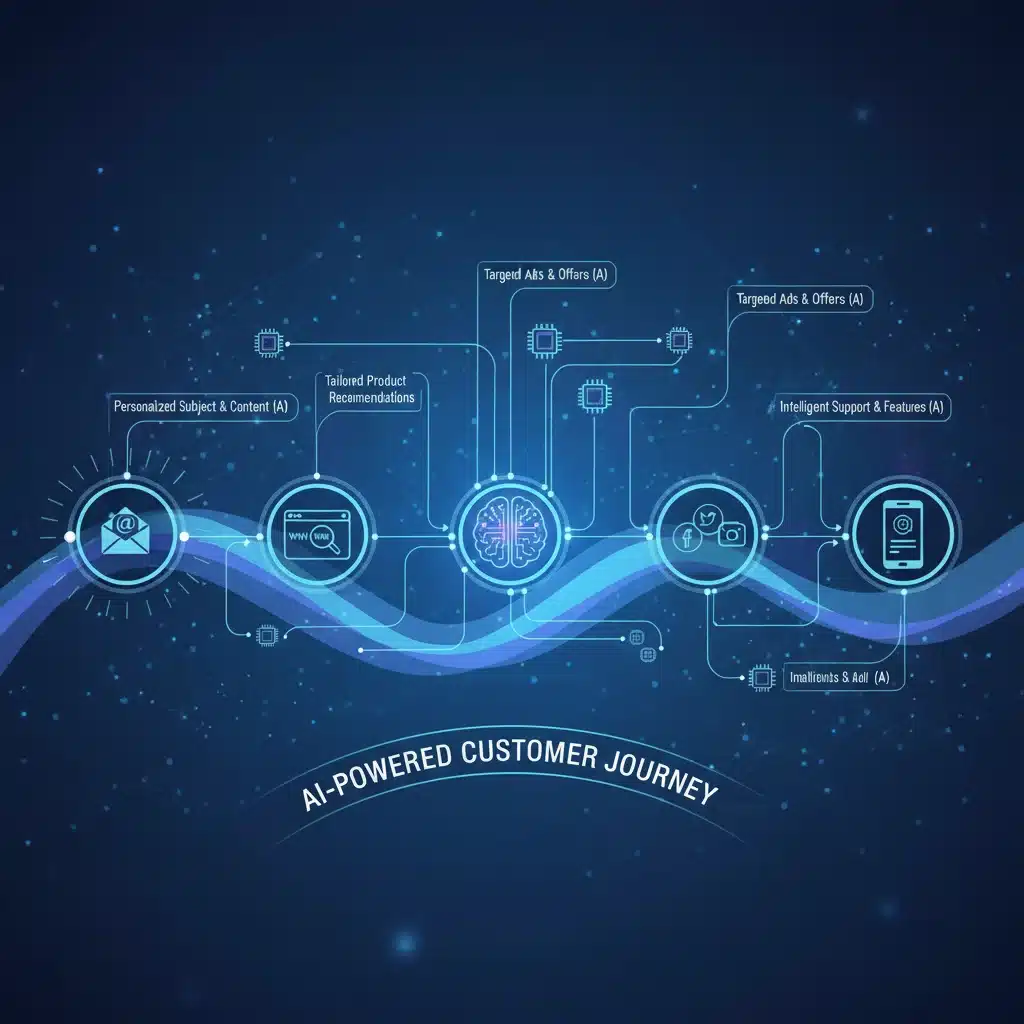
Understanding the customer journey is paramount, but predicting their next move is where AI truly shines. AI-powered predictive analytics goes beyond understanding past behavior; it forecasts future actions, allowing businesses to proactively optimize the customer journey and intervene at critical moments to drive sales. This is a core component of a successful AI personalization sales strategy.
How it Works:
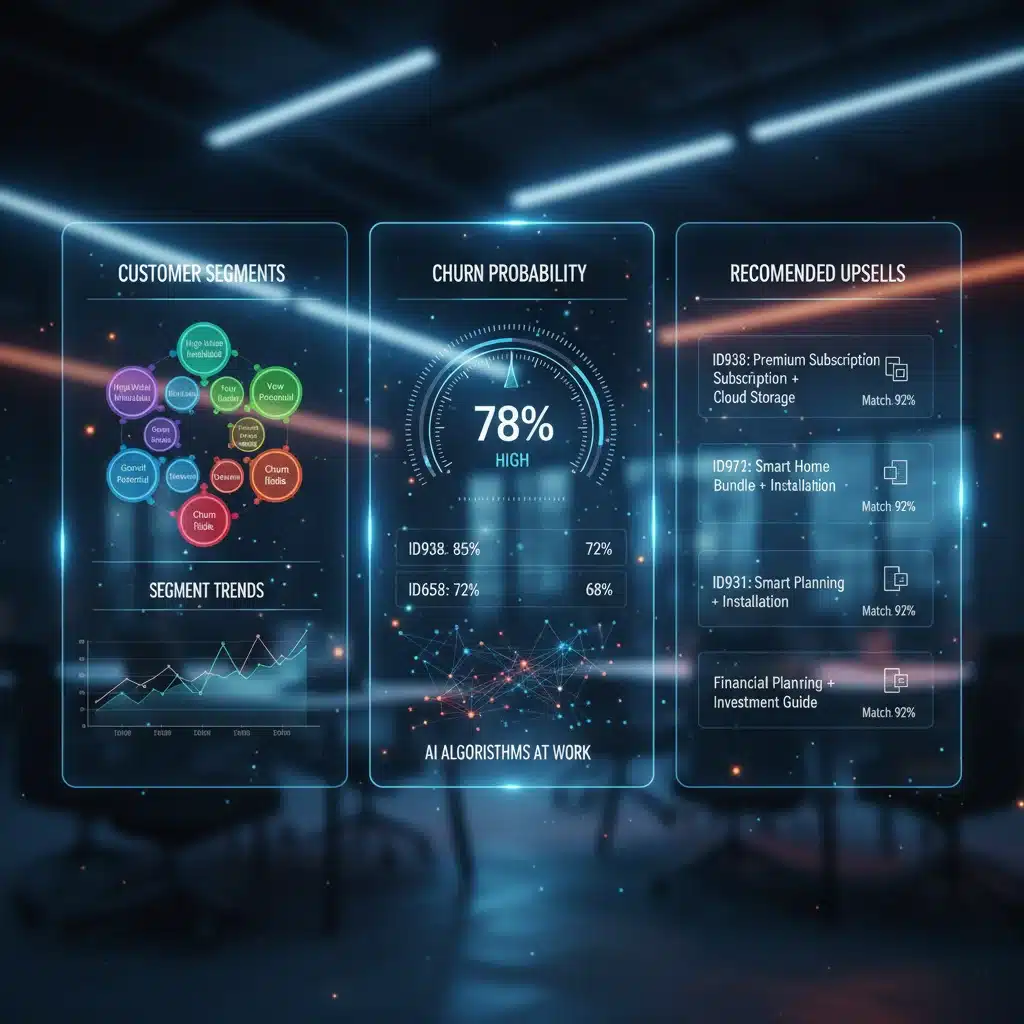
- Churn Prediction: AI models analyze historical data (e.g., declining engagement, support tickets, product usage) to identify customers at risk of churning. This allows you to proactively offer incentives or personalized support to retain them.
- Next Best Action (NBA): Based on a customer’s current stage in the journey and their predicted future behavior, AI recommends the ‘next best action’ – whether it’s sending a personalized email, suggesting a specific product, offering a discount, or triggering a sales call.
- Lead Scoring & Prioritization: AI can analyze vast amounts of lead data (firmographics, engagement, online behavior) to predict which leads are most likely to convert, allowing sales teams to prioritize their efforts effectively.
- Lifetime Value Prediction: AI can estimate the potential lifetime value of a customer, helping you allocate resources and personalization efforts more strategically.
Implementation Tips:
- Integrate Data Sources: Ensure your CRM, marketing automation, and sales platforms are integrated to feed comprehensive data into your AI models.
- Define Clear Objectives: What do you want to predict? Churn? Conversion? Upsell opportunities? Clear objectives will guide your model development.
- Start Small, Scale Up: Begin with one predictive model (e.g., churn prediction) and refine it before expanding to more complex scenarios.
By predicting customer needs and potential issues, businesses can create a seamless, proactive, and highly personalized journey that guides customers towards conversion and fosters long-term loyalty. This predictive capability is a cornerstone of advanced AI personalization sales.
3. AI-Driven Personalized Email Marketing and Automation
Email marketing remains one of the most effective digital channels, but its power is amplified exponentially with AI personalization. Instead of generic newsletters, AI allows for highly targeted, individually crafted email campaigns that resonate deeply with each recipient, significantly boosting open rates, click-through rates, and ultimately, sales.
How it Works:
- Personalized Subject Lines: AI can analyze past open rates and user preferences to generate subject lines most likely to grab attention for each individual.
- Dynamic Content Blocks: Similar to website content, email content (product recommendations, articles, offers) can be dynamically inserted based on the recipient’s profile and behavior.
- Optimal Send Times: AI analyzes when each individual is most likely to open and engage with emails, scheduling delivery for maximum impact.
- Automated Triggered Emails: AI can trigger personalized emails based on specific actions (e.g., abandoned cart reminders with personalized product suggestions, post-purchase follow-ups with related product recommendations, re-engagement campaigns for inactive users).
- A/B/n Testing at Scale: AI can run multivariate tests on various email elements (subject lines, CTAs, content layouts) simultaneously across different audience segments to continually optimize performance.
Implementation Tips:
- Choose an AI-Powered Email Platform: Many modern email marketing platforms now integrate AI capabilities.
- Segment Aggressively: Use AI to create highly granular segments based on behavior, preferences, and predicted needs.
- Focus on Value: Ensure every personalized email offers genuine value to the recipient, rather than just pushing products.
The precision of AI in email marketing means less spam, more relevance, and a far greater chance of converting leads into customers. This direct, personalized communication channel is a vital tool for any AI personalization sales strategy.
4. Conversational AI for Enhanced Customer Experience and Sales Support
Chatbots and virtual assistants have evolved significantly beyond simple FAQs. Modern conversational AI, powered by natural language processing (NLP) and machine learning, can engage in sophisticated, personalized conversations with customers, providing real-time support, answering complex queries, and even guiding them through the sales funnel. This dramatically enhances the customer experience and frees up human sales agents for more complex tasks.
How it Works:
- 24/7 Personalized Support: AI chatbots can answer common questions, provide product information, and troubleshoot issues around the clock, offering immediate gratification to customers.
- Lead Qualification & Nurturing: Bots can engage with website visitors, ask qualifying questions, gather contact information, and even recommend specific products or services based on their responses, passing warm leads directly to sales.
- Personalized Product Discovery: By understanding natural language queries, AI can help customers find exactly what they need, even if they don’t know the exact product name. “I need a durable laptop for graphic design” can lead to tailored recommendations.
- Proactive Engagement: AI can initiate conversations based on user behavior (e.g., if a user spends a long time on a pricing page, the bot can offer to answer questions or connect them with a sales rep).
- Post-Sales Support & Upselling: Bots can assist with order tracking, provide usage tips, and even suggest complementary products based on past purchases.
Implementation Tips:
- Define Clear Use Cases: Start with specific tasks where AI can add immediate value (e.g., answering FAQs, lead qualification).
- Train Your AI Extensively: The quality of your AI’s responses depends heavily on the data it’s trained on. Provide a wide range of common questions and scenarios.
- Seamless Hand-off to Human Agents: Ensure there’s a clear, efficient pathway for the AI to escalate complex issues to a human representative, complete with context.
Conversational AI creates a highly responsive and personalized customer experience, reducing friction in the sales process and ensuring customers feel supported at every step. This direct, interactive approach is invaluable for boosting AI personalization sales.
5. AI-Powered Dynamic Pricing and Offer Optimization
One of the most impactful yet often overlooked areas of AI personalization sales is dynamic pricing and offer optimization. Instead of static pricing models, AI can analyze a multitude of factors to determine the optimal price for each product, for each customer, at each specific moment, maximizing both sales volume and profit margins.
How it Works:
- Real-time Demand Analysis: AI considers current inventory levels, competitor pricing, market demand, seasonal trends, and even external factors like weather or news events to adjust prices dynamically.
- Customer-Specific Pricing: Based on a customer’s purchasing history, loyalty status, perceived price sensitivity, and even their browsing behavior, AI can present personalized offers or discounts. This isn’t about price gouging; it’s about offering the right deal to the right person to close the sale.
- Personalized Bundling: AI can identify products that are frequently purchased together and create personalized bundles or package deals for individual customers.
- Promotional Effectiveness Prediction: AI can predict which types of promotions (e.g., percentage off, free shipping, buy-one-get-one) will be most effective for different customer segments.
- Inventory Optimization: Dynamic pricing can also be used to move slow-moving inventory by offering targeted discounts to customers most likely to purchase those items.
Implementation Tips:
- Start with Clear Goals: Are you aiming to maximize revenue, clear inventory, or acquire new customers? Your AI pricing strategy should align with these goals.
- Monitor Ethical Implications: Ensure your dynamic pricing algorithms are fair and transparent, avoiding any practices that could be perceived negatively by customers.
- Integrate with E-commerce & Inventory Systems: Seamless integration is crucial for real-time price adjustments and offer delivery.
Dynamic pricing and offer optimization ensure that you’re always presenting the most attractive proposition to each customer, maximizing the chances of conversion and significantly boosting your AI personalization sales figures.
Measuring Success: Key Metrics for AI Personalization
Implementing these AI personalization sales tactics is only half the battle. To ensure you’re achieving that 15% (or higher!) conversion rate boost, you need to rigorously measure your success. Here are key metrics to track:
- Conversion Rate: This is the ultimate metric. Track conversion rates for personalized campaigns versus non-personalized ones.
- Average Order Value (AOV): See if personalized recommendations and dynamic pricing lead to larger purchases.
- Customer Lifetime Value (CLTV): Personalization should foster loyalty, leading to repeat purchases and higher CLTV.
- Bounce Rate: For websites with dynamic content, a lower bounce rate indicates greater relevance.
- Email Open and Click-Through Rates: For personalized email campaigns, these metrics are direct indicators of engagement.
- Customer Satisfaction Scores (CSAT/NPS): Personalized experiences generally lead to happier customers.
- Sales Cycle Length: AI can streamline the sales process, potentially shortening the time from lead to conversion.
Regularly analyze these metrics, conduct A/B tests, and use the insights to continuously refine your AI models and personalization strategies. The beauty of AI is its ability to learn and improve over time, making your personalization efforts increasingly effective.
Challenges and Considerations for Implementing AI Personalization
While the benefits of AI personalization sales are clear, implementing these strategies comes with its own set of challenges:
- Data Quality and Integration: AI is only as good as the data it feeds on. Ensuring clean, accurate, and integrated data from all sources is critical.
- Privacy Concerns: With increased personalization comes the responsibility to protect customer data and adhere to privacy regulations (e.g., GDPR, CCPA). Transparency and opt-out options are crucial.
- Initial Investment: Implementing advanced AI solutions can require significant investment in technology, talent, and infrastructure.
- Talent Gap: Finding skilled data scientists and AI engineers to build, deploy, and maintain these systems can be challenging.
- Algorithmic Bias: AI models can inadvertently perpetuate or amplify existing biases in the data, leading to unfair or ineffective personalization. Regular auditing of algorithms is necessary.
- Over-Personalization: There’s a fine line between helpful personalization and ‘creepy’ intrusion. Respecting boundaries and offering control to customers is key.
Addressing these challenges proactively will ensure a smoother implementation and greater long-term success for your AI personalization sales initiatives.
The Future is Personalized and AI-Driven
The trajectory for sales and marketing is clear: personalization, driven by AI, will be the differentiator for market leaders. The businesses that embrace these technologies now will be the ones that capture significant market share and build unbreakable customer relationships in 2026 and beyond. The five tactics discussed – hyper-targeted dynamic content, predictive analytics, personalized email marketing, conversational AI, and dynamic pricing – are not just trends; they are foundational shifts in how businesses interact with their customers.
By focusing on these areas, you can move beyond generic outreach and create truly bespoke experiences that resonate on an individual level. This isn’t just about making more sales; it’s about building a more efficient, customer-centric, and future-proof business model. Start planning your AI personalization sales strategy today, and position your business for unprecedented growth and a significant boost in conversion rates.
Are you ready to transform your sales approach with AI?
The time to act is now. The businesses that hesitate to adopt these powerful AI personalization tactics risk falling behind competitors who are already reaping the benefits. By strategically implementing these five methods, you’re not just aiming for a 15% increase in conversion rates; you’re building a resilient, data-driven sales engine capable of sustained growth and deeper customer engagement. Embrace the power of AI personalization sales and secure your competitive edge in the market of tomorrow.