Achieve 3-Month ROI with Hyper-Targeted MarTech Personalization

Personalization at Scale: Implementing Hyper-Targeted Campaigns with New MarTech for a 3-Month ROI Boost
In today’s hyper-competitive digital landscape, generic marketing messages are a relic of the past. Consumers demand experiences that are tailored, relevant, and anticipate their needs. This isn’t just a preference; it’s an expectation that directly impacts engagement, conversion, and ultimately, your bottom line. The good news? Achieving this level of sophistication – personalization at scale – is no longer an insurmountable challenge. With the right MarTech stack and a strategic approach, businesses can implement hyper-targeted campaigns that deliver a tangible return on investment (ROI) in as little as three months. This article delves into how to harness the power of new MarTech to drive this rapid and significant MarTech Personalization ROI.
The concept of personalization isn’t new, but its evolution, driven by advancements in artificial intelligence (AI), machine learning (ML), and data analytics, has transformed it from a nice-to-have into a critical business imperative. Companies that excel at personalization grow 40% faster than those that don’t. Yet, many still struggle to move beyond basic segmentation. The key lies in leveraging modern marketing technology to not only gather vast amounts of customer data but also to process, analyze, and act upon it in real-time, delivering truly individualized experiences across every touchpoint. Our focus here is on demonstrating how to achieve a rapid MarTech Personalization ROI, making your efforts not just effective but also immediately impactful on your business’s financial health.
Understanding the Core of Hyper-Targeted Personalization
Hyper-targeted personalization goes beyond simply addressing a customer by their first name. It involves delivering content, offers, and experiences that are precisely aligned with an individual’s unique preferences, behaviors, and stage in the customer journey. This requires a deep understanding of each customer, built from a mosaic of data points: browsing history, purchase patterns, demographic information, engagement with past campaigns, and even real-time contextual data like location or device. The goal is to create a one-to-one marketing experience that feels intuitive and valuable, fostering stronger customer relationships and driving higher conversion rates. This granular approach is what ultimately fuels significant MarTech Personalization ROI.
The Pillars of Effective Personalization:
- Data Unification: Consolidating customer data from disparate sources (CRM, CDP, analytics platforms, marketing automation) into a single, unified profile.
- Advanced Segmentation: Moving beyond broad demographic segments to create micro-segments based on behavior, intent, and predicted future actions.
- Real-time Interaction: Delivering personalized content and offers in the moment, when they are most relevant and impactful.
- Omnichannel Consistency: Ensuring a seamless and personalized experience across all channels – email, web, mobile, social, and even offline.
- A/B Testing and Optimization: Continuously testing and refining personalization strategies to improve performance and maximize MarTech Personalization ROI.
Without robust MarTech, achieving this level of personalization is virtually impossible. Legacy systems often lack the integration capabilities, processing power, and AI/ML functionalities required to manage and act on the sheer volume of data generated by modern consumers. Investing in the right MarTech stack is not just about adopting new tools; it’s about building a foundation for sustainable growth and a rapid return on your investment in personalized marketing efforts.
The Role of New MarTech in Accelerating ROI
The current landscape of marketing technology offers an unprecedented opportunity to drive rapid MarTech Personalization ROI. From Customer Data Platforms (CDPs) to AI-powered content optimization tools, the capabilities are vast. Here’s a breakdown of key MarTech categories and how they contribute to hyper-targeted campaigns and quick returns:
1. Customer Data Platforms (CDPs): The Foundation of Personalization
A CDP is perhaps the most crucial component for achieving personalization at scale. It unifies customer data from all sources into a persistent, comprehensive, and accessible customer profile. This ‘golden record’ of each customer allows marketers to:
- Build Rich Profiles: Combine online and offline data, behavioral patterns, preferences, and transactional history into a single view.
- Enable Advanced Segmentation: Create highly specific and dynamic audience segments based on real-time data.
- Power Real-time Activation: Feed unified customer profiles to other MarTech tools (e.g., marketing automation, ad platforms) for instantaneous personalization.
By providing a single source of truth for customer data, CDPs eliminate data silos, improve data quality, and empower marketers to understand and engage with customers on a profoundly individual level. This efficiency and accuracy directly contribute to a faster MarTech Personalization ROI.
2. AI and Machine Learning (ML) for Predictive Personalization
AI and ML are the engines that drive intelligent personalization. They enable marketers to move beyond reactive personalization to proactive, predictive engagement. Key applications include:
- Predictive Analytics: Forecasting future customer behavior, such as churn risk, likelihood to purchase a specific product, or optimal next-best action.
- Content Recommendation Engines: Delivering highly relevant product or content suggestions based on individual preferences and behaviors.
- Dynamic Content Optimization: Automatically adjusting website content, email elements, or ad creatives in real-time for each visitor.
- Automated Journey Orchestration: Designing and executing complex, personalized customer journeys that adapt based on real-time interactions.
AI and ML significantly reduce the manual effort involved in personalization, allowing marketers to scale their efforts and achieve far greater precision, thereby accelerating the path to MarTech Personalization ROI.
3. Marketing Automation Platforms (MAPs) with Personalization Capabilities
Modern MAPs have evolved far beyond simple email blasts. They now integrate deeply with CDPs and AI tools to orchestrate complex, personalized customer journeys across multiple channels. Features critical for hyper-targeting include:
- Behavioral Triggers: Automating actions (e.g., sending an email, displaying a pop-up) based on specific customer behaviors (e.g., abandoned cart, website visit).
- Dynamic Content Blocks: Ensuring different segments or individuals see customized content within a single email or webpage template.
- A/B/n Testing: Facilitating continuous optimization of personalized messages and workflows.
By automating personalized interactions at scale, MAPs free up marketing teams to focus on strategy and analysis, driving efficiency and a quicker realization of MarTech Personalization ROI.
4. Real-time Personalization and Optimization Tools
These tools specialize in delivering immediate, contextually relevant experiences. This includes:
- Website Personalization Platforms: Dynamically altering website content, calls-to-action, and layouts based on visitor data.
- Experimentation Platforms: Conducting A/B testing and multivariate testing on personalized experiences to identify optimal approaches.
- Ad Personalization: Delivering hyper-targeted ads across various digital channels based on unified customer profiles.
The ability to adapt experiences in real-time is crucial for capturing fleeting moments of customer intent and significantly boosts the effectiveness of personalized campaigns, leading to faster MarTech Personalization ROI.
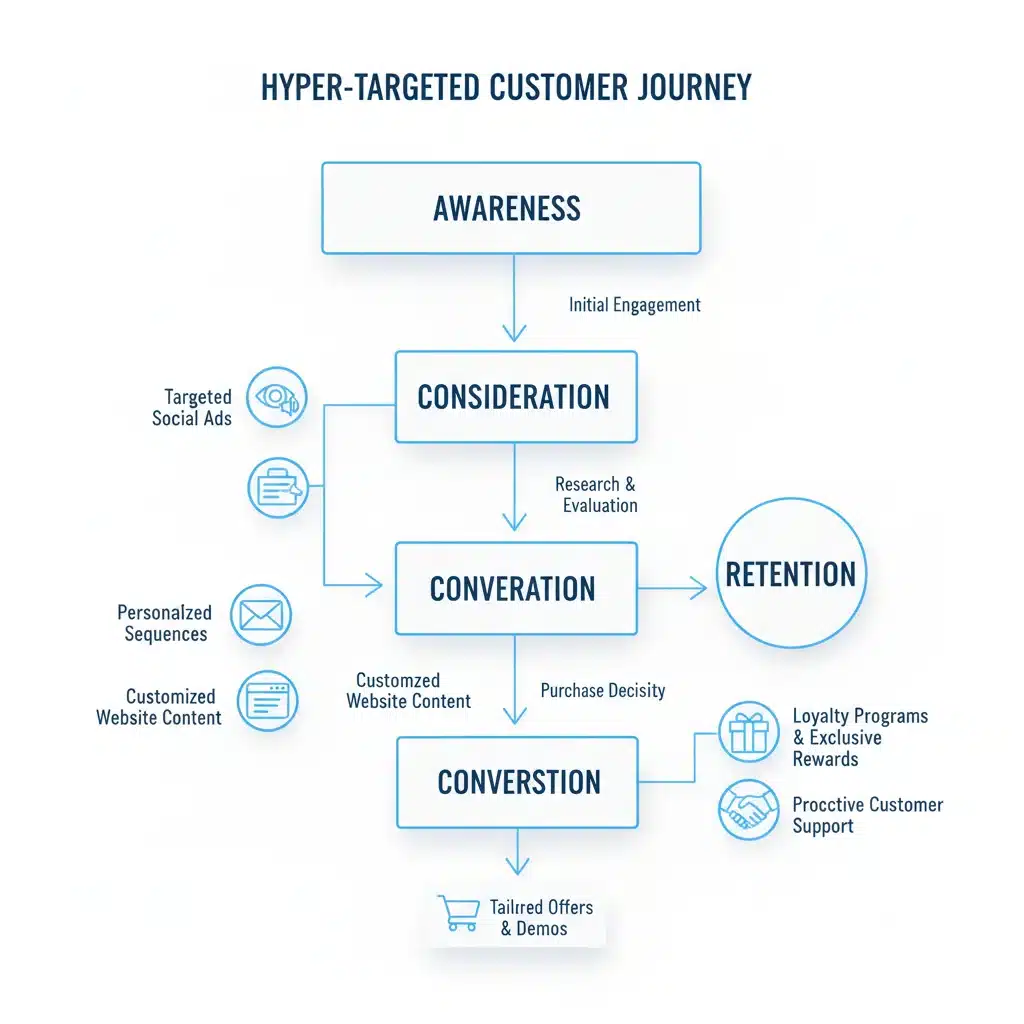
Crafting a 3-Month ROI Strategy: A Step-by-Step Guide
Achieving a significant MarTech Personalization ROI within three months requires a focused, agile, and data-driven approach. Here’s a roadmap:
Month 1: Foundation and Initial Activation
1. Define Clear, Measurable Goals:
- What does success look like in 3 months? Focus on 1-2 key metrics, e.g., 15% increase in conversion rate for a specific product, 10% increase in average order value (AOV) for returning customers, or a 20% improvement in email click-through rates.
- These goals should be SMART: Specific, Measurable, Achievable, Relevant, Time-bound.
2. Data Audit and CDP Implementation (or Optimization):
- Identify all existing customer data sources (CRM, e-commerce, web analytics, email, social).
- Prioritize data points essential for your initial personalization goals.
- If not already in place, begin or accelerate CDP implementation. If you have one, ensure data quality and integration with key activation channels.
- The faster you unify your data, the quicker you’ll see MarTech Personalization ROI.
3. Identify Key Customer Segments and Use Cases:
- Start with high-impact, low-complexity segments. Examples: abandoned cart users, first-time website visitors, loyal customers, specific product category browsers.
- Choose 1-2 initial use cases where personalization can have a quick, demonstrable effect. For instance, an abandoned cart email sequence with dynamic product recommendations or a personalized welcome series for new subscribers.
4. Select and Integrate Core MarTech Tools:
- Ensure your chosen CDP, marketing automation platform, and any website personalization tools are integrated and communicating effectively.
- Focus on getting the basic integrations working for your initial use cases.
5. Launch Initial Hyper-Targeted Campaigns:
- Deploy your first personalized campaigns based on your chosen segments and use cases.
- Start with simple, yet impactful, personalizations. For example, dynamic product recommendations on product pages or personalized email subject lines.
- Measure initial engagement metrics (open rates, click-through rates, time on site).
Month 2: Expansion and Optimization
1. Analyze Initial Campaign Performance:
- Deep dive into the data from Month 1. What worked? What didn’t?
- Compare personalized campaign performance against generic benchmarks or control groups.
- Identify areas for immediate improvement and optimization. This rapid feedback loop is key to fast MarTech Personalization ROI.
2. Refine Segmentation and Personalization Logic:
- Based on Month 1 insights, refine your existing segments. Can you make them more granular?
- Adjust personalization rules and content based on user responses.
- Leverage A/B testing to compare different personalized messages, offers, or content layouts.
3. Expand Use Cases and Channels:
- Introduce 1-2 new personalization use cases. Perhaps personalize on-site search results, or tailor ad creatives based on recent browsing history.
- Begin extending personalization to additional channels, such as in-app messages or social media retargeting with dynamic product ads.
4. Leverage AI/ML for Deeper Insights:
- If not already, start utilizing AI/ML capabilities within your MarTech stack for predictive analytics. For example, identify customers at risk of churn or those most likely to convert next.
- Use these insights to inform your next wave of hyper-targeted campaigns.
Month 3: Scaling and ROI Measurement
1. Comprehensive Performance Review:
- Conduct a thorough review of all personalized campaigns over the three-month period.
- Quantify the impact on your initial SMART goals. Calculate the direct MarTech Personalization ROI by comparing revenue generated by personalized vs. non-personalized efforts, factoring in MarTech costs.
- Look at secondary metrics like customer lifetime value (CLTV), customer satisfaction (CSAT), and brand loyalty.
2. Scale Successful Strategies:
- Double down on the personalization strategies that yielded the best results.
- Automate successful workflows to handle increasing volumes of personalized interactions.
- Explore opportunities to apply proven tactics to new segments or product lines.
3. Roadmap for Continuous Improvement:
- Develop a long-term roadmap for personalization, identifying future MarTech investments, data requirements, and advanced use cases.
- Personalization is an ongoing journey, not a one-time project. Continuously monitor, test, and adapt.
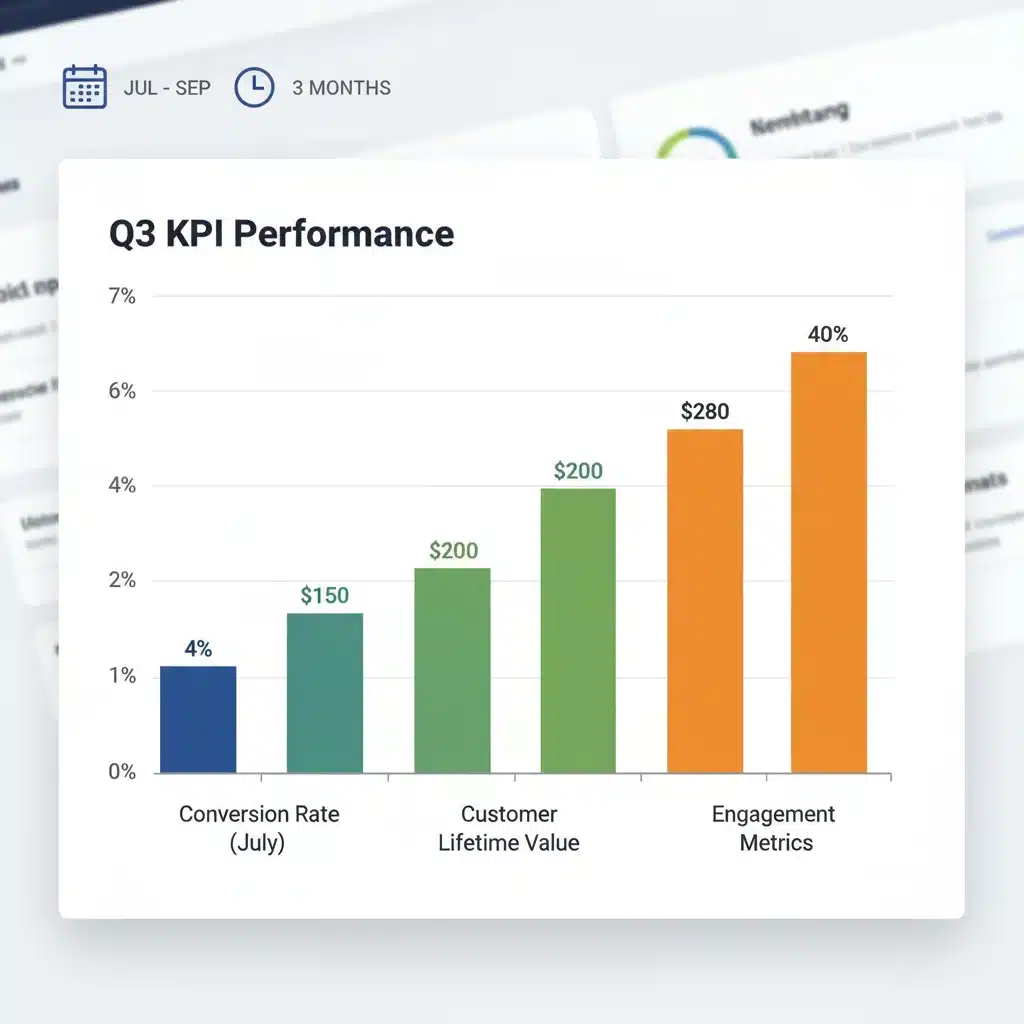
Measuring Your 3-Month MarTech Personalization ROI
Accurately measuring MarTech Personalization ROI is crucial to justify investments and demonstrate value. Beyond direct revenue, consider a holistic view:
Key Metrics to Track:
- Conversion Rate: Compare personalized vs. non-personalized campaign conversion rates.
- Average Order Value (AOV): Does personalization lead to customers buying more?
- Customer Lifetime Value (CLTV): Personalized experiences often foster loyalty, increasing CLTV over time.
- Engagement Metrics: Open rates, click-through rates, time on site, bounce rate for personalized content.
- Customer Acquisition Cost (CAC): More efficient targeting can reduce CAC.
- Customer Retention Rate: Personalized experiences reduce churn.
- Revenue Attribution: Directly link personalized interactions to revenue generated.
Calculating ROI:
A basic ROI calculation for a specific campaign or initiative is:
ROI = ( (Revenue from Personalized Campaigns - Cost of Personalized Campaigns) / Cost of Personalized Campaigns ) * 100%
However, for a comprehensive MarTech Personalization ROI, you’ll need to consider:
- Incremental Revenue: The additional revenue generated specifically due to personalization efforts, compared to a control group or baseline.
- Cost Savings: Reduced customer support inquiries due to clearer communication, decreased ad spend through better targeting, or improved operational efficiency.
- Soft Benefits: While harder to quantify immediately, improved brand perception, customer satisfaction, and loyalty contribute to long-term value.
Focusing on a 3-month window allows for quick validation of your strategies and MarTech investments, providing the data needed to scale successful initiatives and refine those that need adjustment.
Common Challenges and How to Overcome Them for Rapid ROI
While the promise of rapid MarTech Personalization ROI is compelling, challenges exist. Proactive planning can mitigate these:
1. Data Silos and Quality Issues:
- Solution: Prioritize a robust CDP implementation. Invest in data governance strategies to ensure data accuracy, completeness, and consistency across all sources. Clean data is the bedrock of effective personalization.
2. Lack of Integration Between MarTech Tools:
- Solution: Choose MarTech solutions designed for interoperability, ideally those with open APIs or pre-built connectors. A well-integrated stack ensures seamless data flow and activation.
3. Overwhelming Data Volume and Complexity:
- Solution: Start small with high-impact use cases. Leverage AI/ML capabilities within your MarTech to automate data analysis and identify actionable insights, reducing manual burden. Focus on the most relevant data points for your immediate goals.
4. Resource Constraints (Skills and Time):
- Solution: Invest in training your marketing team on new MarTech tools and personalization best practices. Consider bringing in external consultants for initial setup and strategy. Automate as much as possible to free up time for strategic thinking.
5. Privacy Concerns and Regulations:
- Solution: Build a privacy-by-design approach. Ensure all data collection and usage adheres to regulations like GDPR and CCPA. Be transparent with customers about data usage and provide clear opt-out options. Trust is paramount for successful personalization.
Addressing these challenges head-on will streamline your path to achieving a strong MarTech Personalization ROI within your desired timeframe.
The Future of Personalization: Beyond 3 Months
Achieving a 3-month MarTech Personalization ROI is an excellent starting point, but personalization is a continuous journey. As your data grows and your MarTech evolves, you can explore more advanced strategies:
- Hyper-Personalized Product Development: Using customer insights to inform future product or service offerings.
- Predictive Customer Service: Anticipating customer needs and proactively offering support before issues arise.
- Voice and Conversational AI Personalization: Tailoring interactions across voice assistants and chatbots.
- Emotional AI: Understanding and responding to customer sentiment in real-time.
- Metaverse/Web3 Personalization: Exploring personalized experiences in emerging digital environments.
The foundation you build in the first three months will serve as a springboard for these future innovations, ensuring that your personalization efforts continue to deliver compounding returns and maintain a competitive edge.
Conclusion: Your Path to Rapid MarTech Personalization ROI
The era of one-size-fits-all marketing is definitively over. Consumers expect and reward personalized experiences. By strategically implementing new MarTech solutions – especially CDPs, AI/ML, and advanced marketing automation – businesses can move beyond basic segmentation to deliver hyper-targeted campaigns that resonate deeply with individual customers. The journey to a significant MarTech Personalization ROI doesn’t have to be a long one. With a focused 3-month strategy encompassing data unification, intelligent segmentation, real-time activation, and continuous optimization, you can quickly demonstrate the financial impact of your personalization efforts.
Embrace the power of modern MarTech to transform your customer relationships, boost engagement, drive conversions, and ultimately, secure a robust return on your investment in a remarkably short timeframe. The time to act is now; your customers (and your balance sheet) will thank you for it.