Boost 2026 Sales: AI Personalization for 15% Conversion Uplift

AI-driven personalization is crucial for boosting 2026 sales, offering businesses a strategic advantage to achieve a 15% conversion uplift by tailoring customer experiences effectively and efficiently.
Boost 2026 Sales: 5 Proven AI-Driven Personalization Tactics for a 15% Conversion Uplift
The landscape of sales is evolving at an unprecedented pace, driven largely by advancements in artificial intelligence. To truly
Understanding the AI Personalization Imperative for 2026
In 2026, customers expect more than just products; they demand experiences tailored precisely to their needs and preferences. Generic marketing messages and one-size-fits-all sales approaches are rapidly becoming obsolete. Artificial intelligence offers the power to analyze vast datasets, identify intricate patterns, and predict individual customer behavior, making hyper-personalization at scale a tangible reality. This shift isn’t just about convenience; it’s about building deeper customer relationships and driving measurable revenue growth.
The imperative stems from rising customer expectations and the increasing competition in every market. Businesses that fail to adapt risk losing market share to agile, AI-powered competitors. Personalization, when executed correctly with AI, transforms the customer journey from a series of transactional interactions into a seamless, highly relevant, and engaging experience. This leads directly to higher satisfaction, increased loyalty, and, most importantly, a significant uplift in conversion rates.
The evolution of customer expectations
Modern consumers, particularly in the US market, are accustomed to personalized experiences across various digital platforms, from streaming services suggesting movies to e-commerce sites recommending products. This expectation extends to every interaction with a brand. They anticipate that businesses understand their past behaviors, anticipate their future needs, and communicate with them in a way that feels unique and valuable. AI is the engine that fuels these sophisticated expectations.
- Data-driven insights: AI processes customer data to uncover hidden preferences.
- Predictive analytics: Foresees future customer actions and needs.
- Real-time adaptation: Adjusts offers and messages as customer behavior evolves.
- Enhanced engagement: Creates more meaningful and relevant interactions.
Ultimately, the businesses that embrace AI personalization will be the ones that thrive in 2026 and beyond. It’s about creating a competitive moat, not just optimizing a single campaign. The ability to speak to each customer as an individual, at scale, is the new gold standard in sales and marketing.
AI-Powered Product Recommendations: Elevating the Shopping Experience
One of the most immediate and impactful applications of AI in personalization is through intelligent product recommendations. Gone are the days of simple ‘customers who bought this also bought that.’ Modern AI systems leverage complex algorithms, including collaborative filtering, content-based filtering, and deep learning, to provide hyper-relevant suggestions that genuinely resonate with individual shoppers. This not only enhances the shopping experience but also significantly increases average order value (AOV) and conversion rates.
These advanced recommendation engines analyze a multitude of data points: browsing history, purchase patterns, items viewed, search queries, demographic information, and even real-time behavior on the site. By understanding the intricate connections between products and customer preferences, AI can surface items that a customer is highly likely to purchase, often before they even realize they need them. This proactive approach transforms passive browsing into active discovery, driving sales effortlessly.
Dynamic content and personalized landing pages
Beyond just product suggestions, AI can dynamically alter website content and landing pages based on visitor profiles and behaviors. Imagine a retail site where the homepage layout, promotional banners, and even textual descriptions change to reflect a user’s known preferences or recent interactions. This level of dynamic personalization creates an impression that the website was built just for them, fostering a stronger connection and guiding them more efficiently toward conversion.
- Behavioral targeting: Adjusts content based on real-time user actions.
- Preference learning: Continuously refines recommendations over time.
- Cross-channel consistency: Ensures personalized experiences across all touchpoints.
- Increased relevance: Reduces bounce rates and improves engagement metrics.
The effectiveness of AI-powered product recommendations lies in their ability to anticipate customer desires and streamline the path to purchase. By presenting the right products at the right time, businesses create a frictionless and enjoyable shopping journey, leading to higher satisfaction and a noticeable uplift in sales figures. This tactic is foundational for any business looking to significantly boost sales in 2026.
Predictive Analytics for Proactive Customer Engagement
Predictive analytics, a core component of AI, empowers businesses to move beyond reactive customer service and into a realm of proactive engagement. By analyzing historical data and identifying patterns, AI models can forecast future customer behaviors, such as the likelihood of churn, the next best product to offer, or even the optimal time to reach out with a specific message. This foresight allows sales teams to intervene strategically, preventing issues before they arise and seizing opportunities for upselling or cross-selling.
For instance, an AI system might identify a customer showing signs of dissatisfaction or a reduced engagement level. This early warning enables a sales representative to reach out with a personalized solution or offer, thereby retaining a valuable customer who might otherwise have churned. Conversely, it can flag customers who are highly likely to convert on a particular product, allowing for targeted offers that close deals faster and more efficiently.
Optimizing sales outreach timing and content
AI’s predictive capabilities extend to optimizing the timing and content of sales outreach. Instead of generic email blasts or cold calls, AI can determine the best channel, time of day, and message type for each individual prospect. This precision ensures that communications are not only relevant but also delivered when the recipient is most receptive, dramatically increasing open rates, click-through rates, and ultimately, conversions.
- Churn prediction: Identifies at-risk customers for timely intervention.
- Next best action: Recommends optimal steps for sales reps.
- Lead scoring: Prioritizes leads based on conversion potential.
- Personalized outreach: Tailors communication channels and timing.
Implementing predictive analytics transforms sales into a highly efficient, data-driven operation. It minimizes wasted effort on unlikely prospects and maximizes impact on those most inclined to convert. This proactive approach to customer engagement is a cornerstone for achieving significant sales growth and a 15% conversion uplift in 2026, making every customer interaction count.
Hyper-Personalized Email Marketing and Messaging
Email marketing remains a potent channel, but its effectiveness multiplies exponentially when infused with AI-driven personalization. Generic newsletters or promotional emails often end up in spam folders or are ignored. However, when AI crafts messages based on individual preferences, past interactions, and real-time behavior, emails transform into highly relevant, engaging communications that command attention and drive action. This applies equally to other messaging platforms like SMS or in-app notifications.
AI can segment audiences far beyond basic demographics, creating micro-segments of customers with highly specific needs and interests. For example, an AI could identify customers who recently viewed a specific product category but didn’t purchase, then send a follow-up email showcasing complementary items or a limited-time offer on those very products. This level of precision ensures that every message feels like a personal communication, not a mass-market broadcast.
Crafting dynamic email content at scale
Beyond segmentation, AI can dynamically generate email content, subject lines, and calls to action (CTAs) that are most likely to resonate with each recipient. It can even A/B test different elements in real-time, learning and optimizing as campaigns progress. This capability allows businesses to scale hyper-personalization without overwhelming marketing teams, ensuring consistency and effectiveness across millions of messages.
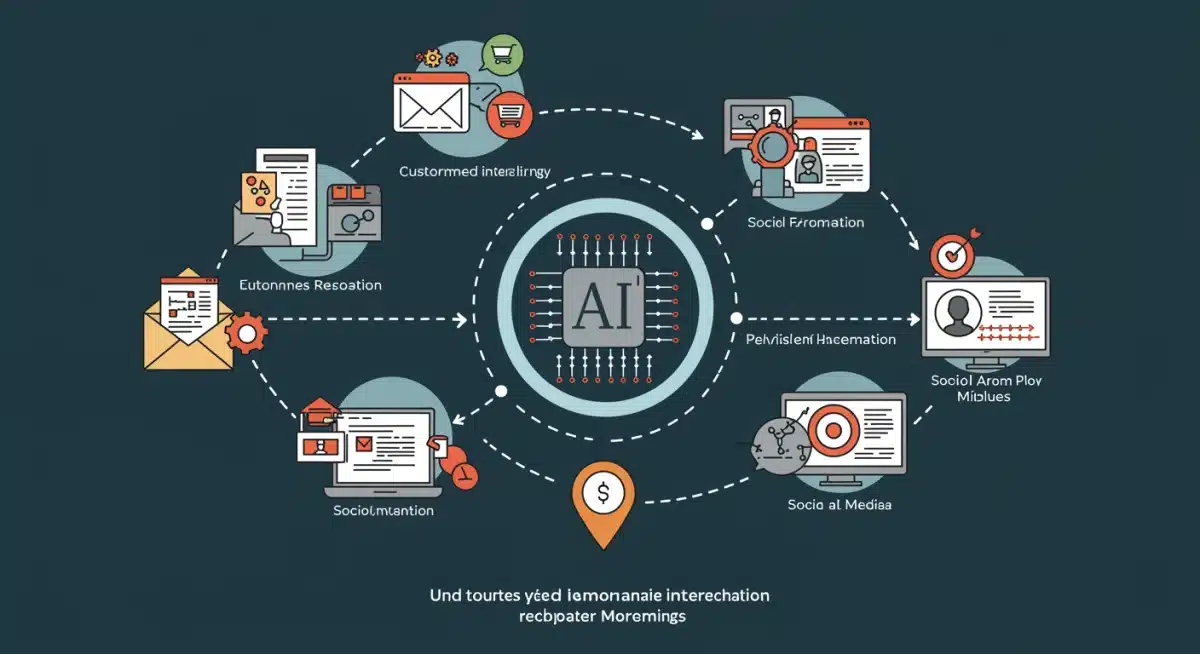
- Behavioral email triggers: Sends emails based on specific user actions.
- Personalized subject lines: Increases open rates with tailored titles.
- Dynamic content blocks: Customizes images, offers, and text within emails.
- Optimal send times: Delivers messages when recipients are most active.
The power of hyper-personalized email and messaging lies in its ability to nurture leads, drive repeat purchases, and build lasting customer relationships. By leveraging AI to make every communication uniquely relevant, businesses can significantly improve engagement metrics and directly contribute to a higher conversion uplift, making it a critical tactic for boosting 2026 sales.
AI-Driven Customer Service and Support Personalization
Customer service is no longer just about resolving issues; it’s a crucial touchpoint for building loyalty and driving future sales. AI plays a transformative role in personalizing support interactions, making them more efficient, empathetic, and effective. From intelligent chatbots to AI-assisted human agents, personalization in customer service ensures that every customer feels understood and valued, leading to higher satisfaction and positive brand perception.
AI-powered chatbots can handle routine inquiries, provide instant answers to FAQs, and even guide customers through product selection based on their expressed needs and past behavior. For more complex issues, AI can equip human agents with comprehensive customer profiles, purchase history, and even sentiment analysis of previous interactions, allowing them to offer highly personalized and informed assistance without the customer having to repeat themselves.
Proactive problem solving and tailored solutions
Beyond reactive support, AI enables proactive problem-solving. By monitoring customer behavior and product usage, AI can identify potential issues before they escalate, allowing support teams to reach out with solutions or preventative advice. This not only minimizes customer frustration but also demonstrates a brand’s commitment to customer success, reinforcing loyalty and opening doors for future sales.
- Intelligent chatbots: Provide instant, personalized support.
- Agent assist tools: Empower human agents with real-time data.
- Sentiment analysis: Understands customer mood to tailor responses.
- Personalized FAQs: Delivers answers most relevant to the user.
By integrating AI into customer service, businesses can offer a seamless, personalized support experience that not only resolves issues efficiently but also strengthens customer relationships. This enhanced service directly impacts customer retention and advocacy, which are vital components of sustainable sales growth and achieving that crucial 15% conversion uplift in 2026.
Optimizing Sales Funnels with AI-Powered Personalization
The sales funnel, from initial awareness to final purchase, can be significantly optimized through AI-driven personalization at every stage. Instead of a linear, generic path, AI allows for dynamic adjustments to the funnel based on individual prospect behavior, preferences, and progress. This ensures that prospects receive the most relevant information and offers precisely when they need them, accelerating their journey towards conversion.
At the top of the funnel, AI can personalize ad creatives and targeting to attract high-potential leads. In the middle, it can customize content delivery, suggesting whitepapers, case studies, or webinars that align with a prospect’s specific interests and pain points. As prospects move closer to conversion, AI can trigger personalized demos, trials, or direct outreach from sales representatives equipped with a deep understanding of their needs.
Dynamic pricing and offer optimization
AI can also implement dynamic pricing strategies and offer optimization based on individual customer value, purchase history, and real-time market conditions. This means presenting the right offer at the right price to the right customer at the right time, maximizing conversion likelihood without devaluing products or services. This level of granular optimization is impossible to achieve manually and represents a significant advantage in competitive markets.
- Personalized ad targeting: Reaches ideal customers with tailored messages.
- Dynamic content delivery: Provides relevant information at each funnel stage.
- Behavioral lead nurturing: Guides prospects with context-aware communication.
- Conversion path optimization: Identifies and removes friction points.
By applying AI personalization across the entire sales funnel, businesses can create a highly efficient and effective conversion machine. This holistic approach not only improves the customer experience but also drives substantial improvements in conversion rates, making it a powerful strategy to boost 2026 sales and secure a competitive edge.
| Key Tactic | Brief Description |
|---|---|
| AI Product Recommendations | Leverage AI to offer hyper-relevant product suggestions based on individual behavior. |
| Predictive Analytics | Anticipate customer needs and behaviors to proactively engage and prevent churn. |
| Hyper-Personalized Messaging | Tailor email and messaging content, timing, and offers to individual recipients. |
| AI Customer Service | Enhance support with AI chatbots and agent assist tools for personalized interactions. |
Frequently Asked Questions About AI Personalization for Sales
AI-driven personalization in sales uses artificial intelligence to analyze customer data and deliver tailored experiences, content, and product recommendations. It moves beyond basic segmentation to offer unique interactions for each individual, optimizing the sales journey and increasing the likelihood of conversion.
By understanding individual customer needs and behaviors, AI delivers highly relevant messages and offers at optimal times. This precision reduces friction in the sales funnel, increases engagement, and builds trust, directly leading to a significant increase in conversion rates, often exceeding 15%.
Effective AI personalization relies on a rich mix of data, including browsing history, purchase records, demographic information, real-time website behavior, email interactions, and customer service logs. The more comprehensive and clean the data, the more accurate and impactful the AI’s personalization efforts will be.
No, AI personalization is increasingly accessible to businesses of all sizes. While large enterprises may have more complex implementations, many affordable AI tools and platforms are available for small and medium-sized businesses to leverage personalization tactics and achieve significant sales growth.
Begin by auditing your existing customer data to ensure its quality and accessibility. Then, identify a specific sales challenge that personalization can address, such as improving product recommendations or email engagement. Start with a pilot project using an AI tool and scale up gradually based on results.
Conclusion
Embracing AI-driven personalization is no longer a futuristic concept but a present-day necessity for businesses aiming to thrive and significantly boost 2026 sales. The five proven tactics discussed—AI-powered product recommendations, predictive analytics, hyper-personalized email marketing, AI-driven customer service, and optimized sales funnels—collectively offer a powerful framework for achieving a remarkable 15% conversion uplift. By understanding and proactively responding to individual customer needs at scale, companies can forge deeper connections, enhance customer loyalty, and ultimately secure a formidable competitive advantage in the rapidly evolving market. The future of sales is personal, and AI is the key to unlocking its full potential.