2025 Marketing Playbook: Boost Q1 Conversions by 15% with Data
The 2025 Marketing Playbook outlines five data-driven strategies designed to significantly boost Q1 conversions by 15% through hyper-personalized customer journeys and advanced analytics.
As businesses navigate an increasingly competitive digital landscape, having a robust strategy is paramount. This article delves into
The 2025 Marketing Playbook: 5 Data-Driven Strategies to Boost Q1 Conversions by 15%,
offering actionable insights to propel your business forward.
Leveraging AI for Hyper-Personalization at Scale
In 2025, artificial intelligence (AI) is no longer a luxury but a necessity for marketers seeking to achieve hyper-personalization. This goes beyond simple name insertions in emails; it involves understanding individual customer behaviors, preferences, and predicting their next steps to deliver truly relevant content and offers.
AI-powered tools can analyze vast amounts of customer data, identifying patterns that human analysts might miss. This enables marketers to segment audiences with unprecedented precision, ensuring that each message resonates deeply with its intended recipient. The result is a more engaging customer experience that naturally leads to higher conversion rates.
Predictive Analytics for Customer Journey Optimization
- Anticipating Needs: AI models can predict future customer needs based on past interactions and demographic data, allowing for proactive marketing.
- Dynamic Content Delivery: Content adapts in real-time to user behavior, from website layouts to product recommendations.
- Optimized Timing: AI determines the ideal time to send communications, increasing open rates and engagement.
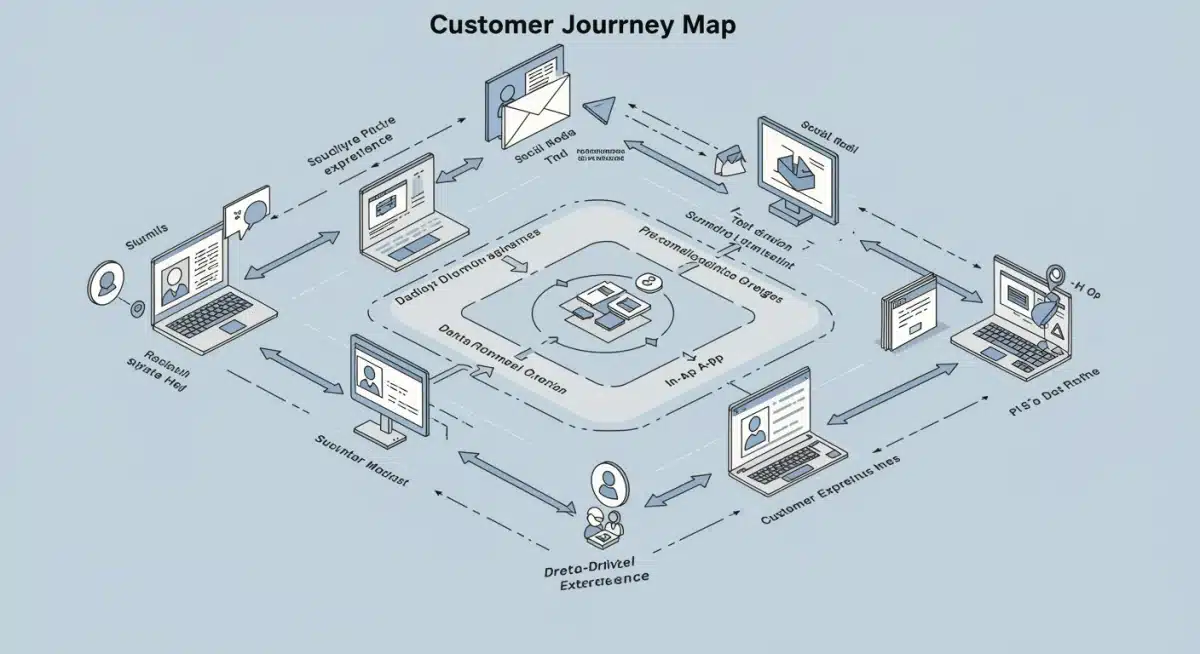
By integrating AI into every stage of the customer journey, from initial awareness to post-purchase support, businesses can create a seamless and highly personalized experience. This not only builds stronger customer relationships but also significantly improves the efficiency and effectiveness of marketing spend, directly contributing to the goal of boosting Q1 conversions by 15%.
Ultimately, the strategic application of AI for hyper-personalization is about making every customer feel understood and valued. This deep connection fosters loyalty and encourages repeat business, forming a cornerstone of the 2025 Marketing Playbook.
Mastering First-Party Data Collection and Utilization
With evolving privacy regulations and the deprecation of third-party cookies, first-party data has become the gold standard for effective marketing. Businesses must prioritize collecting, organizing, and activating their own customer data to gain a competitive edge and ensure compliance.
First-party data offers unparalleled insights into customer behavior, allowing for more accurate targeting and personalization. It includes information gathered directly from customer interactions with your website, apps, CRM systems, and surveys. This direct relationship fosters trust and provides a rich, reliable source of information.
Strategies for Robust First-Party Data Acquisition
- Enhanced Website Analytics: Implement advanced analytics tools to track user behavior on your site, understanding navigation paths and content consumption.
- Interactive Content: Use quizzes, polls, and personalized tools to gather explicit preferences and demographic information.
- Loyalty Programs: Reward customers for sharing data and engaging with your brand, creating a mutually beneficial exchange.
- CRM Integration: Consolidate all customer interaction data within a robust CRM system for a unified view.
Once collected, this data must be meticulously organized and made accessible across all marketing channels. A unified customer profile allows for consistent messaging and experiences, regardless of where the customer interacts with your brand. This holistic approach is crucial for any business aiming to boost Q1 conversions by 15% by 2025.
The effective utilization of first-party data empowers marketers to build stronger, more resilient campaigns less reliant on external data sources, securing a foundational element of the 2025 Marketing Playbook.
Embracing Conversational Marketing and Chatbots
The demand for instant gratification and personalized service continues to grow, making conversational marketing a critical component of modern strategy. Chatbots, live chat, and messaging apps are transforming how businesses interact with customers, offering immediate support and personalized assistance.
Conversational marketing allows for real-time engagement, answering questions, guiding customers through the sales funnel, and even completing transactions. This direct, interactive approach significantly improves the customer experience, reduces friction, and can lead to a substantial increase in conversion rates.
Optimizing Conversational Channels
- AI-Powered Chatbots: Implement chatbots capable of handling complex queries and personalizing interactions based on user history.
- Seamless Handoffs: Ensure a smooth transition from chatbot to human agent when complex issues arise, maintaining service quality.
- Proactive Engagement: Deploy chatbots to initiate conversations on high-intent pages, offering assistance before customers encounter problems.
Beyond immediate support, conversational marketing tools gather valuable data on customer pain points and preferences, which can then be fed back into your overall marketing strategy. This continuous feedback loop helps refine offerings and improve future interactions, driving higher Q1 conversions. The ability to provide instant, relevant support makes this a powerful strategy within the 2025 Marketing Playbook.
Integrating conversational elements across your digital touchpoints creates a more dynamic and responsive customer journey, crucial for meeting the expectations of today’s consumers and achieving growth targets.
Advanced Attribution Modeling for ROI Measurement
Understanding which marketing efforts truly drive conversions is essential for optimizing spend and achieving growth targets. Traditional last-click attribution models often fail to capture the full complexity of the modern customer journey. Advanced attribution modeling provides a more accurate picture of return on investment (ROI).
Multi-touch attribution models, such as linear, time decay, or U-shaped, assign credit to various touchpoints along the customer path to conversion. This allows marketers to identify the most influential channels and content, enabling more informed budget allocation and strategic planning.
Implementing Advanced Attribution
- Data Integration: Consolidate data from all marketing channels and customer touchpoints into a single platform.
- Model Selection: Choose an attribution model that best reflects your business goals and customer journey complexity.
- Continuous Optimization: Regularly review attribution insights to adjust campaigns and reallocate budgets for maximum impact.
By accurately measuring the impact of each marketing interaction, businesses can optimize their strategies to drive the desired 15% increase in Q1 conversions. This data-driven approach ensures that every dollar spent is contributing effectively to business growth. It’s a fundamental pillar of the 2025 Marketing Playbook, ensuring that marketing efforts are not just effective, but also efficient.
Moving beyond simplistic attribution helps uncover hidden opportunities and prevents misallocation of resources, making your marketing budget work harder and smarter.
Building Community and Fostering User-Generated Content
In an era of declining trust in traditional advertising, consumers increasingly rely on recommendations from peers. Building a strong brand community and encouraging user-generated content (UGC) are powerful strategies to enhance credibility, engagement, and ultimately, conversions.
A thriving community provides a platform for customers to share experiences, offer support, and advocate for your brand. UGC, such as reviews, testimonials, photos, and videos, serves as authentic social proof that can significantly influence purchasing decisions. This organic endorsement is often more impactful than any paid advertisement.
Strategies for Community Building and UGC
- Dedicated Platforms: Create forums, groups, or social media spaces where customers can connect and interact.
- Incentivize Contributions: Offer rewards, exclusive access, or recognition for customers who create and share content.
- Showcase UGC: Feature user-generated content prominently on your website, social media, and in marketing campaigns.
By actively nurturing a community and encouraging UGC, businesses can tap into a powerful network of brand advocates. These advocates not only drive new customer acquisition but also foster loyalty among existing customers, contributing directly to the goal of boosting Q1 conversions by 15%.
This strategy aligns perfectly with the focus on authenticity and trust that defines effective marketing in 2025, making it a vital component of the 2025 Marketing Playbook. Genuine customer stories and interactions build a brand’s reputation organically and sustainably.
Integrated Marketing Automation for Seamless Experiences
The complexity of modern marketing demands sophisticated automation to manage diverse channels and customer touchpoints efficiently. Integrated marketing automation platforms are crucial for delivering seamless, personalized experiences at scale, freeing up marketing teams to focus on strategy and creativity.
These platforms automate repetitive tasks, such as email sequences, social media posting, and lead nurturing, ensuring consistent communication and timely follow-ups. More importantly, they connect data across various systems, enabling marketers to trigger highly relevant actions based on real-time customer behavior.
Key Aspects of Integrated Automation
- Cross-Channel Orchestration: Coordinate campaigns across email, social media, SMS, and other channels from a single platform.
- Behavioral Triggers: Automate responses to specific customer actions, such as website visits, cart abandonment, or content downloads.
- Lead Scoring and Nurturing: Automatically qualify leads and deliver tailored content to move them through the sales funnel.
By streamlining operations and enhancing personalization through automation, businesses can significantly improve efficiency and effectiveness. This leads to a more optimized customer journey, reducing drop-off rates and directly contributing to the ambitious target of boosting Q1 conversions by 15%.
The strategic implementation of integrated marketing automation is not just about saving time; it’s about creating a more cohesive and impactful marketing ecosystem, a core tenet of the 2025 Marketing Playbook. It ensures that no customer interaction is missed and every opportunity for engagement is maximized.
| Key Strategy | Brief Description |
|---|---|
| AI Hyper-Personalization | Leveraging AI to deliver ultra-relevant content and offers based on individual customer behavior. |
| First-Party Data Mastery | Collecting and activating proprietary customer data for accurate targeting and compliance. |
| Conversational Marketing | Utilizing chatbots and live chat for real-time engagement and personalized customer support. |
| Advanced Attribution | Measuring ROI accurately across all touchpoints to optimize marketing spend effectively. |
Frequently Asked Questions
Hyper-personalization, driven by AI, is crucial because it delivers highly relevant content tailored to individual customer needs and behaviors. This increases engagement, builds trust, and significantly reduces friction in the buying process, directly boosting conversion rates in a competitive market.
First-party data is vital as third-party cookies diminish. It provides direct, reliable insights into customer behavior, enabling precise targeting and personalization while maintaining privacy compliance. Mastering its collection and activation is fundamental for effective and future-proof marketing campaigns.
Chatbots offer instant, personalized assistance, answering queries and guiding customers through the sales funnel 24/7. This real-time engagement improves customer experience, resolves issues quickly, and can proactively offer relevant information, leading to higher conversion rates by removing purchase barriers.
Last-click attribution oversimplifies the complex customer journey by crediting only the final touchpoint. Advanced multi-touch models provide a more accurate view by distributing credit across all interactions. This allows marketers to identify truly influential channels and optimize budget allocation for better ROI.
User-generated content (UGC), like reviews and testimonials, acts as authentic social proof, significantly influencing purchasing decisions. It builds trust and credibility far more effectively than traditional ads. Encouraging and showcasing UGC fosters community and turns customers into powerful brand advocates, driving conversions.
Conclusion
The journey towards boosting Q1 conversions by 15% in 2025 is clearly paved with data-driven innovation and customer-centric strategies. By embracing AI for hyper-personalization, mastering first-party data, leveraging conversational marketing, implementing advanced attribution, and fostering user-generated content, businesses can build a resilient and highly effective marketing framework. These strategies, outlined in the
2025 Marketing Playbook,
are not just about adopting new technologies; they are about fundamentally rethinking how we connect with customers to create more meaningful, engaging, and ultimately, more profitable relationships.