Marketing Automation for Lead Nurturing: Reduce Manual Effort by 30%

Implementing marketing automation for lead nurturing streamlines processes, enabling businesses to engage prospects effectively, reduce manual tasks by 30%, and enhance conversion rates through personalized and timely communication.
In today’s competitive digital landscape, efficiency is paramount. Businesses are constantly seeking innovative ways to optimize their operations and maximize their marketing impact. One of the most transformative strategies is marketing automation lead nurturing, a systematic approach designed to guide potential customers through their buyer’s journey with minimal manual intervention.
Understanding the Core of Marketing Automation for Lead Nurturing
Marketing automation is more than just sending automated emails; it’s a comprehensive strategy that leverages technology to automate repetitive marketing tasks. When applied to lead nurturing, it creates a personalized and consistent communication flow with prospects, moving them closer to a purchase decision without constant human oversight. This not only saves valuable time but also ensures that no lead falls through the cracks.
The essence of successful lead nurturing lies in providing the right information to the right person at the right time. Manual processes often struggle with this, leading to missed opportunities and inconsistent messaging. Automation platforms bridge this gap, allowing marketers to define triggers, actions, and content sequences that adapt to a lead’s behavior and stage in the sales funnel.
Defining Automated Lead Nurturing Workflows
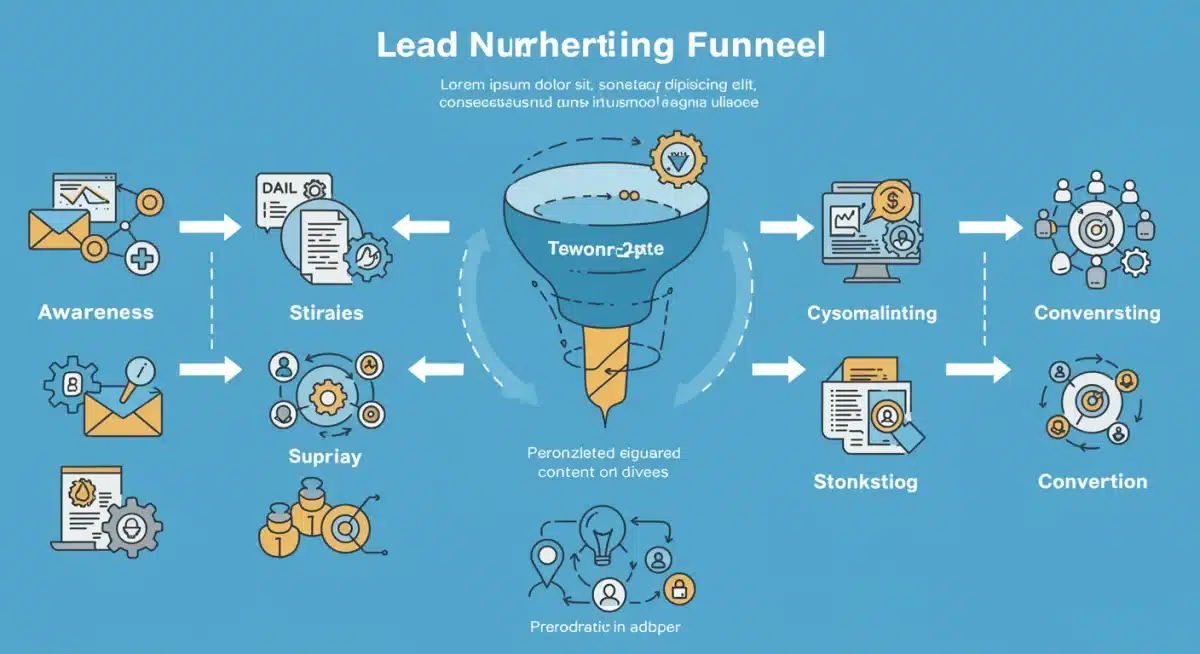
Automated lead nurturing workflows are sequences of marketing activities, such as emails, content offers, and social media interactions, that are triggered by specific actions or timelines. These workflows are designed to educate, engage, and qualify leads over time, gradually building trust and demonstrating value. A well-designed workflow ensures that each lead receives relevant communications, fostering a stronger relationship with your brand.
- Welcome Series: Immediately engages new subscribers or leads with an introduction to your brand.
- Educational Content Series: Delivers valuable insights and solutions to common pain points.
- Product/Service Showcase: Introduces specific offerings once a lead shows interest.
- Re-engagement Campaigns: Aims to revive inactive leads with compelling offers or content.
By defining these workflows upfront, businesses can establish a scalable and efficient system for lead engagement. This proactive approach minimizes the chances of leads disengaging due to lack of follow-up or irrelevant information, ultimately contributing to a more robust sales pipeline.
Setting Up Your Automation Foundation: Tools and Strategy
Before diving into specific campaigns, establishing a solid foundation for your marketing automation efforts is crucial. This involves selecting the right technology and crafting a strategic approach that aligns with your business objectives. The choice of automation platform can significantly impact your ability to execute complex nurturing sequences and integrate with other essential business tools.
A robust automation platform should offer features such as email marketing, lead scoring, CRM integration, landing page creation, and analytics. These capabilities enable a holistic approach to lead nurturing, allowing you to track interactions, personalize content, and measure the effectiveness of your campaigns. Without the right tools, even the most well-intentioned strategy can fall short.
Choosing the Right Marketing Automation Platform
The market offers a plethora of marketing automation platforms, each with its strengths and weaknesses. Factors to consider include your budget, the size of your team, your existing tech stack, and the complexity of your desired nurturing sequences. Popular choices often include HubSpot, Marketo, Pardot, and ActiveCampaign, among others.
- HubSpot: All-in-one platform with extensive CRM, marketing, sales, and service features.
- Marketo: Enterprise-level solution known for advanced lead management and analytics.
- Pardot (Salesforce): Ideal for businesses already using Salesforce CRM, offering seamless integration.
- ActiveCampaign: Strong in email marketing and automation, suitable for small to medium businesses.
Beyond features, consider the platform’s ease of use, customer support, and scalability. A platform that grows with your business and is intuitive for your team to navigate will yield the best long-term results. Investing time in research and demos can prevent costly mistakes down the line.
Crafting Compelling Content for Automated Nurturing
Content is the fuel that drives your lead nurturing engine. Even the most sophisticated automation platform won’t yield results if the content it delivers isn’t valuable, relevant, and engaging. Developing a content strategy that supports each stage of the buyer’s journey is essential for successful automated lead nurturing. This means understanding your audience’s needs and pain points at various stages.
From initial awareness to decision-making, leads require different types of information. Early-stage leads might benefit from blog posts, infographics, or general guides, while mid-stage leads may be ready for case studies, webinars, or detailed whitepapers. Late-stage leads often seek product demos, free trials, or consultations. Tailoring your content ensures that each automated touchpoint provides maximum value.
Personalization and Segmentation in Content Delivery
Personalization goes beyond merely addressing a lead by their first name. It involves delivering content that directly addresses their specific interests, industry, role, and past interactions with your brand. Segmentation plays a crucial role here, allowing you to group leads based on shared characteristics and behaviors, then deliver highly targeted content.
- Demographic Segmentation: Based on attributes like job title, industry, or company size.
- Behavioral Segmentation: Based on actions such as website visits, email opens, or content downloads.
- Firmographic Segmentation: For B2B, based on company size, revenue, or location.
By combining strong content with intelligent personalization and segmentation, your automated nurturing campaigns can feel incredibly relevant and human. This approach not only improves engagement rates but also builds a stronger sense of trust and credibility with your prospects.
Implementing Lead Scoring and Segmentation for Precision
Lead scoring and segmentation are pivotal for maximizing the effectiveness of your marketing automation efforts. Lead scoring assigns a value to each lead based on their engagement with your brand and their demographic information, indicating how likely they are to convert. Segmentation then allows you to group these leads into distinct categories, enabling highly targeted nurturing campaigns. This dual approach ensures that your marketing resources are focused on the most promising prospects.
Without lead scoring, all leads might be treated equally, leading to wasted effort on prospects who are not ready to buy. Similarly, without segmentation, generic messages might be sent to diverse audiences, reducing their impact. Together, these strategies empower marketers to deliver precise, timely, and relevant communications that resonate with each individual lead.
Developing an Effective Lead Scoring Model
An effective lead scoring model considers both explicit and implicit data. Explicit data includes information directly provided by the lead, such as job title, industry, or company size. Implicit data is gathered from their behavior, such as website pages visited, emails opened, or content downloaded. Points are assigned for each action or attribute, and the total score indicates a lead’s readiness for sales engagement.
- Positive Scores: Award points for desirable actions (e.g., downloading a whitepaper, visiting pricing page).
- Negative Scores: Deduct points for undesirable actions (e.g., unsubscribing, visiting career pages).
- Thresholds: Define scores at which a lead moves from marketing-qualified to sales-qualified.
Regularly review and adjust your lead scoring model to ensure it accurately reflects your ideal customer profile and the buying journey. This iterative process helps maintain the integrity and effectiveness of your nurturing programs.
Measuring Success and Optimizing Your Automation Efforts
Implementing marketing automation for lead nurturing is not a set-it-and-forget-it endeavor. Continuous measurement and optimization are critical to achieving and sustaining a 30% reduction in manual effort and improved conversion rates. Analyzing key metrics provides insights into what’s working and what needs adjustment, allowing you to refine your strategies for even greater impact.
Tracking the right metrics helps you understand the health of your lead nurturing campaigns, identify bottlenecks, and justify your automation investment. Without data-driven insights, optimization becomes a guessing game. Focus on metrics that directly correlate with your business goals, such as lead quality, conversion rates, and ROI.
Key Metrics for Nurturing Campaign Performance
Several metrics can help you gauge the effectiveness of your automated lead nurturing campaigns. These provide a holistic view of engagement, lead progression, and ultimate revenue generation. By monitoring these indicators, you can make informed decisions to optimize your workflows and content.
- Email Open Rates: Indicates the effectiveness of your subject lines and sender reputation.
- Click-Through Rates (CTR): Measures how engaging your email content and calls-to-action are.
- Conversion Rates: Tracks the percentage of nurtured leads that convert into customers.
- Time to Conversion: Shows how long it takes for a nurtured lead to become a customer.
- Lead-to-SQL Conversion Rate: Measures the efficiency of turning marketing-qualified leads into sales-qualified leads.
- Revenue Attributed to Nurturing: Quantifies the financial impact of your automated campaigns.
Regularly reviewing these metrics and conducting A/B tests on different elements of your campaigns (e.g., subject lines, content formats, send times) will enable continuous improvement. This iterative optimization process is key to maximizing the ROI of your marketing automation investment and achieving significant reductions in manual effort.
Practical Solutions for Reducing Manual Effort by 30%
Achieving a 30% reduction in manual effort through marketing automation for lead nurturing is an ambitious yet attainable goal. It requires a strategic combination of technology, well-designed workflows, and a commitment to continuous optimization. The practical solutions outlined here focus on leveraging automation to take over repetitive, time-consuming tasks, freeing up your team to focus on higher-value activities.
The core idea is to identify areas where human intervention is currently high and replace them with automated processes. This includes everything from initial lead capture and qualification to personalized content delivery and follow-up sequences. By systematically automating these steps, businesses can streamline their operations and significantly boost overall efficiency.
Automating Lead Capture and Qualification
One of the first areas to target for manual effort reduction is lead capture and initial qualification. Instead of manually sorting through new leads, automation can instantly categorize them, assign lead scores, and route them to the appropriate nurturing track. This ensures that every new lead receives immediate attention and relevant follow-up without any delay.
- Automated Form Submissions: Integrate forms directly with your CRM and automation platform for instant lead entry.
- Instant Lead Scoring: Automatically assign scores based on form data and initial interactions.
- Dynamic List Segmentation: New leads are automatically added to relevant segments based on their profile and interests.
- Automated Welcome Sequences: Trigger an immediate, personalized welcome email or series.
By automating these initial steps, you eliminate the need for manual data entry, lead assignment, and initial communication, which often consume a significant amount of marketing and sales team time. This not only reduces effort but also improves the speed and consistency of your lead engagement.
Streamlining Content Delivery and Follow-Up
Beyond initial contact, automating the delivery of personalized content and subsequent follow-ups is where significant manual effort reduction truly happens. Instead of manually sending out emails, scheduling social media posts, or tracking engagement for each lead, automation platforms handle these tasks seamlessly based on predefined triggers and behaviors.
- Behavior-Triggered Emails: Send specific content based on website visits, content downloads, or product views.
- Drip Campaigns: Deliver a series of educational or promotional emails over a set period.
- CRM Integration for Sales Hand-off: Automatically update CRM records and notify sales when a lead reaches a certain score.
- Automated Social Media Scheduling: Integrate content delivery with social media platforms.
This automated content delivery and follow-up system ensures that leads receive consistent, relevant communications at every stage of their journey. It removes the burden of manual tracking and execution from your team, allowing them to focus on strategy, content creation, and direct sales interactions with highly qualified leads. The cumulative effect of these automated processes is a substantial reduction in manual workload, often exceeding the 30% target.
| Key Aspect | Benefit for Lead Nurturing |
|---|---|
| Automated Workflows | Ensures consistent, timely engagement without manual intervention. |
| Lead Scoring | Prioritizes high-potential leads, focusing sales efforts effectively. |
| Content Personalization | Delivers relevant messages, increasing engagement and conversion rates. |
| Analytics & Optimization | Provides data for continuous improvement and ROI maximization. |
Frequently Asked Questions About Marketing Automation for Lead Nurturing
It’s the process of using software to automate repetitive marketing tasks, specifically designed to guide potential customers through the sales funnel. This includes automated emails, content delivery, and personalized interactions based on lead behavior.
By automating tasks like lead scoring, email sending, content distribution, and follow-ups, teams spend less time on repetitive administrative work. This frees up marketers to focus on strategy, content creation, and high-value interactions, leading to significant efficiency gains.
Key tools include a marketing automation platform (e.g., HubSpot, Marketo), a CRM system for lead tracking and management, and content creation tools. Integration between these platforms is crucial for a seamless and effective nurturing process.
Absolutely. Small businesses often have limited resources, making automation even more critical. It allows them to compete with larger enterprises by maintaining consistent communication, personalizing interactions, and efficiently managing their leads without expanding their team.
Measure ROI by tracking conversion rates from nurtured leads, monitoring the time it takes for leads to convert, and attributing revenue directly to automated campaigns. Analyze metrics like email open rates, click-through rates, and ultimately, the revenue generated versus the cost of your automation tools.
Conclusion
Implementing marketing automation for lead nurturing is no longer a luxury but a strategic imperative for businesses aiming to thrive in the digital age. By meticulously designing automated workflows, personalizing content, and leveraging lead scoring, organizations can achieve a remarkable reduction in manual effort, often exceeding 30%. This efficiency gain translates directly into improved lead quality, higher conversion rates, and a more robust return on investment for marketing initiatives. The journey toward fully optimized lead nurturing is continuous, requiring ongoing analysis and refinement, but the foundational benefits of automation are immediate and profound, empowering marketing teams to focus on innovation and strategic growth rather than routine tasks.