Scaling Your U.S. Business in 2026: Achieving 30% Growth with Remote Teams and AI Integration

The landscape of business is in a constant state of flux, and for U.S. companies aiming for ambitious growth in 2026, adaptability and innovation are not just buzzwords; they are prerequisites for success. Achieving a significant 30% growth target demands a strategic recalibration of operational models, a keen eye on emerging technologies, and a profound understanding of evolving workforce dynamics. This article delves into how forward-thinking U.S. businesses can leverage two of the most potent forces shaping the modern economy: the power of remote teams and the transformative potential of Artificial Intelligence (AI) integration. By strategically combining these elements, companies can unlock unprecedented levels of efficiency, innovation, and market reach, propelling them towards their growth objectives and solidifying their competitive advantage.
The traditional brick-and-mortar business model, while still relevant for many sectors, is increasingly being challenged by the agility and cost-effectiveness offered by remote work. The pandemic accelerated the adoption of remote work, proving its viability and, in many cases, its superiority in terms of employee satisfaction and productivity. Concurrently, AI has moved beyond theoretical discussions to become a practical tool capable of automating complex tasks, providing data-driven insights, and personalizing customer experiences. Integrating AI into remote operations creates a synergistic effect, enabling businesses to operate with unparalleled efficiency and intelligence, regardless of geographical boundaries. As we look towards 2026, the businesses that master this integration will be the ones that not only survive but thrive, achieving remarkable growth rates like the ambitious 30% target we’re discussing.
The Imperative of Scaling US Business for 30% Growth
To achieve a 30% growth rate within the competitive U.S. market by 2026, businesses must adopt a multifaceted approach that addresses both internal capabilities and external market opportunities. This isn’t merely about increasing sales; it’s about building a robust, scalable infrastructure that can support sustained expansion. The U.S. market, with its diverse consumer base and dynamic economic conditions, presents both immense opportunities and significant challenges. Businesses must be agile enough to respond to market shifts, innovative enough to differentiate themselves, and efficient enough to maintain profitability during rapid expansion. The conventional methods of scaling often involve substantial capital expenditure on physical infrastructure and a geographical limitation on talent acquisition. However, the modern era offers alternative, more flexible, and often more effective pathways to scaling, primarily through the strategic deployment of remote teams and the intelligent integration of AI.
Understanding the nuances of the U.S. market is crucial. This includes navigating complex regulatory environments, understanding regional consumer preferences, and adapting to varying economic climates across states. A growth strategy for 2026 must therefore be adaptable and data-driven. A 30% growth target is not a small feat; it demands a clear vision, meticulous planning, and the courage to embrace new operational paradigms. Businesses that cling to outdated models risk being outmaneuvered by more agile competitors. The focus must shift from simply doing more to doing things smarter, more efficiently, and with a broader reach. This is where the strategic advantage of remote teams and AI integration truly comes into play, offering a blueprint for sustainable and accelerated scaling US business.
Harnessing the Power of Remote Teams for US Expansion
The shift to remote work has dramatically reshaped how businesses operate and grow. For U.S. companies aiming to scale, remote teams offer a strategic advantage that can directly contribute to a 30% growth target. One of the most significant benefits is access to a wider talent pool. Instead of being limited to candidates within a commutable distance, businesses can recruit the best talent from across the nation, or even globally, without the constraints of physical relocation. This not only allows for the acquisition of specialized skills that might be scarce locally but also promotes diversity, bringing fresh perspectives and innovative ideas to the table. A diverse workforce, often a byproduct of remote hiring, has been consistently linked to higher levels of creativity and problem-solving, both essential for scaling US business effectively.
Beyond talent acquisition, remote teams offer substantial cost savings. Reducing or eliminating office space, utilities, and related overheads can free up significant capital that can be reinvested into growth initiatives, such as product development, marketing, or technology upgrades. This financial flexibility is critical when pursuing ambitious growth targets. Furthermore, the inherent flexibility of remote work can lead to increased employee satisfaction and retention. Employees often appreciate the autonomy and work-life balance that remote work provides, leading to higher morale and reduced turnover. A stable, motivated workforce is far more productive and committed to achieving company goals. Implementing effective communication tools and robust project management platforms is crucial for maintaining cohesion and productivity within a distributed team. Regular virtual meetings, clear communication channels, and shared digital workspaces ensure that remote teams remain aligned and efficient, directly supporting the goal of scaling US business.
Building a Robust Remote Infrastructure
Successfully integrating remote teams into your growth strategy requires more than just allowing employees to work from home; it demands a robust infrastructure. This includes investing in secure and reliable technology for communication, collaboration, and data management. Cloud-based platforms, virtual private networks (VPNs), and enterprise-grade cybersecurity measures are non-negotiable. Furthermore, establishing clear remote work policies, performance metrics, and regular feedback mechanisms is essential. Training managers to lead remote teams effectively, focusing on outcomes rather than oversight, is also paramount. Companies must foster a culture of trust and accountability, ensuring that remote employees feel connected, valued, and supported. This comprehensive approach to remote infrastructure lays the groundwork for seamless operations and sustained growth, making it a cornerstone for scaling US business.

Leveraging AI Integration for Exponential Growth
Artificial Intelligence is no longer a futuristic concept; it’s a present-day reality that is revolutionizing how businesses operate. For U.S. companies aiming for 30% growth by 2026, strategic AI integration is a game-changer. AI can automate repetitive tasks, freeing up human capital to focus on higher-value activities that drive innovation and strategic development. This automation extends across various departments, from customer service with AI-powered chatbots to finance with automated invoice processing and fraud detection. The efficiency gains are substantial, directly contributing to cost reduction and increased productivity, both vital for scaling US business.
Beyond automation, AI excels at data analysis. In a world awash with information, AI algorithms can sift through vast datasets to identify patterns, predict trends, and provide actionable insights that human analysts might miss. This predictive capability is invaluable for market forecasting, personalized marketing campaigns, and optimizing supply chains. Imagine an AI system analyzing customer behavior to recommend tailored products, leading to higher conversion rates and increased customer lifetime value. Or an AI optimizing logistics routes, saving time and fuel costs. These intelligent applications of AI directly impact the bottom line, providing a competitive edge necessary for achieving aggressive growth targets. Furthermore, AI can enhance the customer experience through personalized interactions and faster response times, leading to greater customer satisfaction and loyalty, which are crucial for scaling US business in a competitive environment.
AI in Customer Service and Sales
AI’s impact on customer service and sales is particularly profound. AI-powered chatbots can handle routine inquiries 24/7, providing instant support and freeing up human agents for more complex issues. This not only improves response times but also ensures consistent service quality. In sales, AI can analyze customer data to identify high-potential leads, predict purchasing behavior, and even assist in crafting personalized sales pitches. CRM systems integrated with AI can provide sales teams with real-time insights, allowing them to optimize their strategies and close deals more efficiently. This level of personalized and efficient engagement is critical for acquiring new customers and retaining existing ones, directly fueling the 30% growth objective for scaling US business.
AI in Operations and Decision Making
Operationally, AI can optimize everything from inventory management to production schedules. By analyzing historical data and real-time conditions, AI can predict demand fluctuations, minimize waste, and streamline workflows. In decision-making, AI provides a data-driven foundation, reducing reliance on intuition alone. Business leaders can use AI-generated reports and forecasts to make more informed strategic choices, mitigate risks, and identify new opportunities. For a U.S. business aiming for significant growth, this level of operational intelligence is indispensable for ensuring that expansion is not only rapid but also sustainable and profitable, effectively scaling US business.
The Synergy: Remote Teams and AI for Maximum Impact
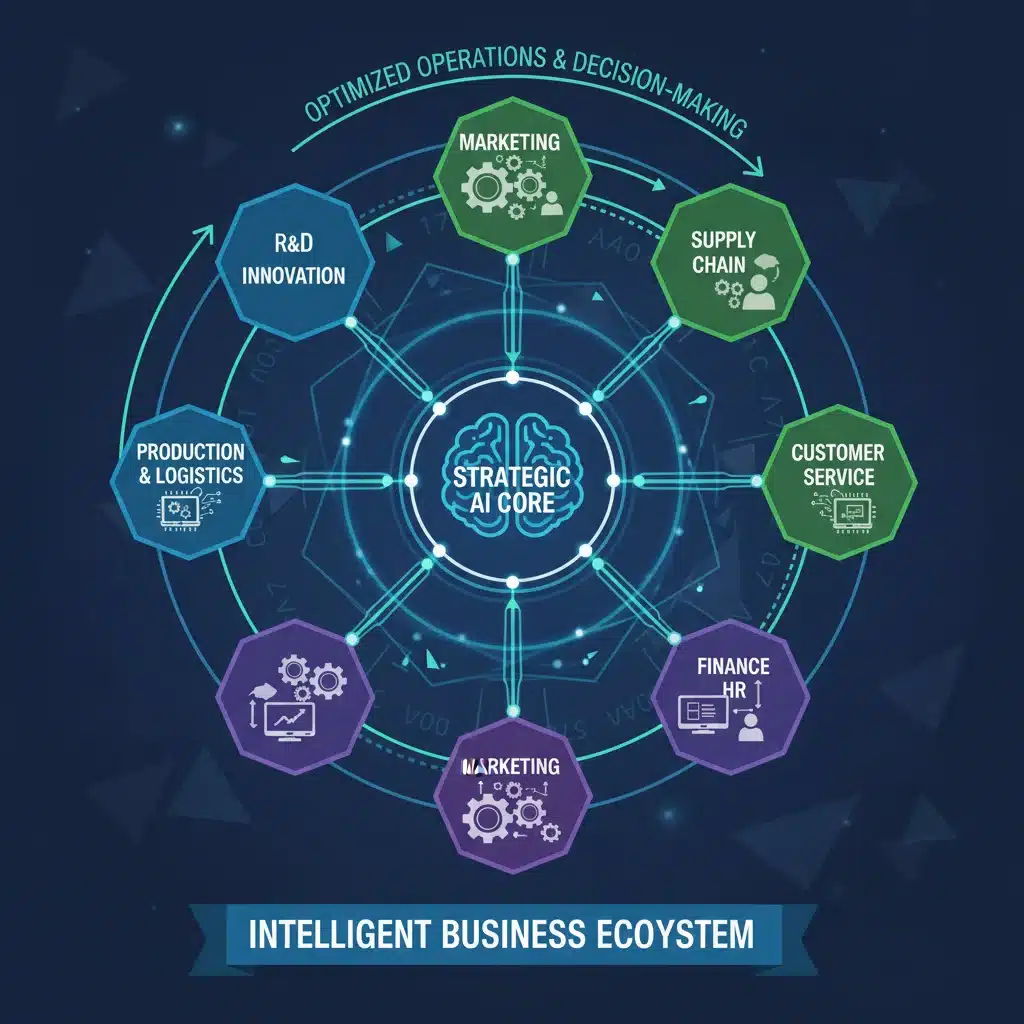
The true power emerges when remote teams and AI integration are not viewed as standalone strategies but as symbiotic forces working in unison. AI tools become indispensable for managing and optimizing remote operations, while remote teams, unburdened by geographical constraints, can effectively deploy and leverage AI technologies across a broader spectrum. For instance, AI-powered project management tools can track progress, automate task assignments, and identify bottlenecks in a distributed team environment. This ensures that remote teams remain productive and aligned, regardless of their location. AI can also facilitate seamless communication across different time zones, translating messages and scheduling meetings to accommodate global team members, thereby enhancing collaboration and efficiency.
Furthermore, AI can play a crucial role in onboarding and training remote employees. Virtual assistants can guide new hires through company policies and procedures, answer frequently asked questions, and provide access to relevant resources. This reduces the burden on HR and management, allowing for faster integration of new talent into the remote workforce. AI-driven analytics can also monitor employee engagement and well-being, providing insights that help managers address potential issues proactively, fostering a more supportive and productive remote work environment. This synergy creates a highly efficient, intelligent, and scalable operational model that is perfectly positioned to achieve the ambitious 30% growth target for scaling US business by 2026.
Enhanced Data Security and Compliance with AI in Remote Setups
A significant concern with remote work is data security and compliance. AI can significantly bolster these aspects. AI-powered cybersecurity systems can monitor network activity for anomalies, detect potential threats in real-time, and automate responses to security breaches. This is particularly crucial for remote teams accessing sensitive company data from various locations. AI can also assist in ensuring compliance with various U.S. regulations, automatically flagging non-compliant data practices or access patterns. This robust security framework protects the business from costly breaches and legal penalties, building trust among clients and partners, which is essential for scaling US business and maintaining its reputation.
Strategic Implementation: A Roadmap for 2026
Achieving 30% growth and effectively scaling US business by 2026 requires a clear, actionable roadmap for implementing remote teams and AI integration. This isn’t a one-time project but an ongoing strategic initiative that needs careful planning, execution, and continuous optimization.
Phase 1: Assessment and Planning (Q1-Q2 2025)
The first step is a thorough assessment of your current business operations, identifying areas where remote work and AI can deliver the most significant impact. This involves:
- Gap Analysis: Evaluate existing technological infrastructure, team capabilities, and operational processes to pinpoint areas that need improvement or transformation.
- Define Clear Objectives: Beyond the 30% growth target, set specific, measurable, achievable, relevant, and time-bound (SMART) goals for remote work implementation and AI integration. For example, ‘Reduce operational costs by 15% through AI-driven automation’ or ‘Expand talent pool by 50% through remote hiring.’
- Pilot Programs: Start with small-scale pilot programs for both remote work and AI integration in specific departments or projects. This allows for testing, learning, and refining strategies before a full-scale rollout.
- Stakeholder Buy-in: Secure buy-in from leadership and key stakeholders by demonstrating the potential ROI and strategic advantages of these initiatives.
Phase 2: Infrastructure Development and Training (Q3-Q4 2025)
Once the plan is in place, focus on building the necessary technological and human infrastructure:
- Technology Stack: Invest in robust, scalable, and secure cloud-based tools for communication (e.g., Slack, Microsoft Teams), project management (e.g., Asana, Jira), CRM (e.g., Salesforce), and AI platforms. Ensure seamless integration between these systems.
- Cybersecurity Measures: Implement advanced cybersecurity protocols, including VPNs, multi-factor authentication, and regular security audits, especially for remote access.
- Employee Training: Provide comprehensive training for all employees on new tools, remote work best practices, and AI literacy. This is crucial for successful adoption and maximizing the benefits of these technologies.
- Policy Development: Formalize remote work policies, including expectations for availability, communication, and performance management.
Phase 3: Rollout and Optimization (2026 Onwards)
With infrastructure and training complete, begin the wider rollout and focus on continuous improvement:
- Phased Implementation: Gradually expand remote work options and AI tools across departments, learning from each phase and making necessary adjustments.
- Performance Monitoring: Continuously monitor key performance indicators (KPIs) related to productivity, efficiency, cost savings, and employee satisfaction for both remote teams and AI-driven processes.
- Feedback Loops: Establish regular feedback mechanisms from employees and customers to identify areas for improvement and innovation.
- AI Model Refinement: Regularly update and refine AI models with new data to ensure their continued accuracy and effectiveness.
- Scalability Planning: As the business grows, ensure that the remote infrastructure and AI solutions can scale commensurately without compromising performance or security.
Overcoming Challenges in Scaling US Business
While the benefits of remote teams and AI integration are substantial, businesses must also be prepared to address potential challenges to successfully scale their U.S. business. These challenges can range from cultural shifts to technological hurdles, and proactive planning is key to mitigating them.
Cultural Adaptation and Employee Engagement
One of the biggest challenges in a remote setup is maintaining company culture and employee engagement. Without the informal interactions of a physical office, it can be harder to foster a sense of belonging and camaraderie. Businesses must invest in virtual team-building activities, regular check-ins, and strong leadership communication to keep remote employees connected and motivated. AI can assist here by analyzing communication patterns to identify potential disengagement or by powering internal platforms that facilitate social interaction and recognition. Creating a culture that values flexibility, trust, and autonomy is crucial for the long-term success of remote teams and by extension, for scaling US business effectively.
Managing Data Privacy and Security
With increased reliance on digital tools and distributed teams, data privacy and cybersecurity become paramount concerns. The risk of data breaches increases, and compliance with various data protection regulations (e.g., CCPA, state-specific privacy laws) becomes more complex. Businesses must implement robust cybersecurity frameworks, including encryption, access controls, and regular employee training on security best practices. AI-powered security tools can provide an extra layer of defense, but human vigilance and a strong security culture are equally important. Proactive measures and continuous monitoring are essential to protect sensitive information and maintain customer trust while scaling US business.
Ensuring Seamless AI Integration and Adoption
Integrating AI effectively is not just about purchasing software; it’s about ensuring its seamless adoption by employees and its alignment with business goals. Resistance to change, lack of understanding, or poorly integrated systems can hinder AI’s potential. Businesses need to clearly communicate the benefits of AI to their workforce, provide adequate training, and involve employees in the implementation process. Starting with AI solutions that address immediate pain points can build confidence and demonstrate tangible value. Regular evaluation of AI performance and user feedback is critical for continuous improvement and ensuring that AI tools truly enhance, rather than complicate, operations for scaling US business.
Measuring Success and Sustaining Growth
Achieving 30% growth by 2026 is an ambitious goal, and continuous measurement and adaptation are vital to sustaining this trajectory. Key Performance Indicators (KPIs) must be established to track progress across all facets of the business, including financial metrics, operational efficiency, customer satisfaction, and employee engagement.
Key Metrics for Remote Team Performance
For remote teams, metrics might include project completion rates, individual and team productivity, communication effectiveness (e.g., response times on collaboration platforms), and employee retention rates. Surveys on employee satisfaction and well-being are also crucial for understanding the overall health of the remote workforce. AI tools can automate the collection and analysis of much of this data, providing real-time insights into team performance and areas needing improvement, thereby directly supporting the goal of scaling US business effectively.
Evaluating AI Integration Impact
The impact of AI integration can be measured through metrics such as cost savings from automation, increased revenue from personalized marketing, improved customer satisfaction scores due to AI-powered support, and reduction in error rates. Businesses should also track the ROI of AI investments to ensure they are yielding the desired returns and contributing positively to the 30% growth target. Continuous monitoring and A/B testing of AI models are essential for optimization and ensuring that AI remains a powerful driver for scaling US business.
Long-Term Vision and Adaptability
Sustaining growth beyond 2026 requires a long-term vision and a culture of continuous adaptation. The technological landscape, market conditions, and workforce expectations will continue to evolve. Businesses must remain agile, regularly reassessing their strategies, exploring new AI advancements, and adapting their remote work models to stay ahead of the curve. Investing in ongoing research and development, fostering an innovative mindset, and empowering employees to experiment with new tools and approaches will be critical for ensuring that the business remains competitive and continues its growth trajectory, effectively scaling US business for the future.
Conclusion: The Future of Scaling US Business
The journey to achieving 30% growth for a U.S. business by 2026 is both challenging and exhilarating. It demands a forward-thinking approach that embraces the transformative potential of remote teams and AI integration. By strategically leveraging a globally accessible talent pool, optimizing operations through intelligent automation, and making data-driven decisions, businesses can unlock unprecedented levels of efficiency, innovation, and market reach. The synergy between remote work and AI creates a resilient, agile, and highly scalable operational model that is perfectly suited for the dynamic U.S. market.
While challenges such as cultural adaptation, cybersecurity, and effective integration must be addressed proactively, the rewards of a successful implementation are immense. Businesses that commit to this dual strategy will not only achieve their ambitious growth targets but will also build a sustainable, future-proof enterprise capable of thriving in an increasingly competitive global economy. The time to invest in these transformative strategies is now, paving the way for a prosperous and innovative future for scaling US business.