Predictive Analytics 2026: Unlocking Sales Opportunities 3 Months Ahead

Predictive Analytics 2026: Unlocking Sales Opportunities 3 Months Ahead
In the rapidly evolving business landscape of 2026, the ability to foresee the future is no longer a luxury but a fundamental necessity for sustained growth and competitive advantage. Businesses are constantly seeking innovative ways to stay ahead, and one of the most powerful tools at their disposal is predictive analytics. This advanced field of data science is transforming how companies approach sales, allowing them to not just react to market changes, but to proactively identify and capitalize on predictive sales opportunities months before they fully materialize. Imagine knowing, with a high degree of certainty, which customers are most likely to buy, what products will be in demand, and which market segments are poised for explosive growth – all three months in advance. This isn’t science fiction; it’s the reality enabled by sophisticated predictive analytics models.
The core promise of predictive analytics lies in its capacity to analyze historical data, identify patterns, and forecast future outcomes. For sales teams, this translates into an unparalleled ability to optimize strategies, allocate resources effectively, and ultimately, drive revenue like never before. As we delve deeper into 2026, the sophistication of these tools continues to advance, offering increasingly granular and accurate insights. This comprehensive guide will explore how businesses can effectively leverage predictive analytics to pinpoint the top 5 sales opportunities a full three months out, providing a significant lead time to strategize, prepare, and execute winning sales campaigns. We’ll cover everything from understanding the fundamentals to implementing advanced techniques and overcoming common challenges, ensuring your business is fully equipped to harness the power of predictive sales opportunities in the coming years.
What is Predictive Analytics and Why is it Crucial for Sales in 2026?
At its heart, predictive analytics is a branch of advanced analytics that makes predictions about future events. It employs various statistical techniques, machine learning algorithms, and artificial intelligence to analyze current and historical facts to make predictions about future or otherwise unknown events. In the context of sales, this means moving beyond simple reporting of past performance to understanding what will happen, not just what has happened. For businesses in 2026, this distinction is paramount. The global marketplace is more dynamic and competitive than ever, with customer expectations constantly rising and market trends shifting at lightning speed. Relying solely on historical data or intuition is no longer sufficient to maintain a competitive edge.
The criticality of predictive analytics for sales in 2026 stems from several key factors. Firstly, it enables proactive decision-making. Instead of reacting to declining sales or emerging competitor threats, businesses can anticipate these changes and adapt their strategies well in advance. Secondly, it drastically improves resource allocation. By identifying high-potential leads and profitable market segments, sales teams can focus their efforts where they will yield the greatest return, avoiding wasted time and resources on less promising avenues. Thirdly, it fosters a deeper understanding of customer behavior. Predictive models can uncover subtle patterns in purchasing habits, preferences, and churn indicators, allowing for personalized outreach and stronger customer relationships. Finally, and perhaps most importantly for this discussion, it empowers businesses to identify predictive sales opportunities months in advance, giving them an invaluable head start in securing new business and expanding market share.
Consider a scenario where a company can predict a surge in demand for a particular product category in a specific geographic region three months from now. With this insight, they can ramp up production, adjust inventory levels, launch targeted marketing campaigns, and train their sales force to address the anticipated demand. Without predictive analytics, this opportunity might only become apparent when competitors are already well-entrenched, or worse, after the peak demand has passed. This foresight is the game-changer that predictive analytics brings to the sales arena, making it an indispensable tool for any forward-thinking organization aiming to thrive in 2026 and beyond.
The Foundation: Data Collection and Preparation for Accurate Predictions
The accuracy and effectiveness of any predictive analytics model are directly proportional to the quality and quantity of the data it consumes. Therefore, the first and most critical step in leveraging predictive analytics for sales is robust data collection and meticulous preparation. In 2026, data sources are more diverse and abundant than ever before, ranging from traditional CRM systems and sales records to social media interactions, website analytics, IoT device data, and external market intelligence reports. The challenge lies not just in collecting this data, but in integrating, cleaning, and transforming it into a usable format for analysis.
Key Data Sources for Sales Prediction:
- CRM Systems: Customer contact information, interaction history, purchase history, lead status, sales pipeline data.
- ERP Systems: Inventory levels, order fulfillment, supply chain data, financial performance.
- Marketing Automation Platforms: Email open rates, click-through rates, campaign performance, website visitor behavior.
- Website and App Analytics: User navigation paths, dwell times, conversion rates, search queries.
- Social Media Data: Customer sentiment, brand mentions, trending topics, competitor activity.
- External Market Data: Economic indicators, demographic shifts, industry trends, competitor pricing.
- Customer Service Interactions: Support tickets, call logs, feedback forms, common issues.
Data Preparation Steps:
- Data Integration: Consolidating data from disparate sources into a unified repository, often a data warehouse or data lake. This ensures a holistic view of the customer and market.
- Data Cleaning: Identifying and correcting errors, inconsistencies, duplicates, and missing values. Dirty data can severely skew predictive models, leading to inaccurate forecasts and missed predictive sales opportunities.
- Data Transformation: Converting raw data into a format suitable for analysis. This might involve normalization, aggregation, feature engineering (creating new variables from existing ones), or encoding categorical data.
- Data Validation: Ensuring the accuracy and reliability of the processed data through various checks and balances.
Investing in advanced data management platforms and skilled data scientists is crucial for this stage. Without a solid data foundation, even the most sophisticated predictive models will fail to deliver accurate insights or identify viable predictive sales opportunities. The goal is to create a comprehensive, clean, and well-structured dataset that can feed into predictive algorithms, enabling them to learn, identify patterns, and make reliable forecasts about future sales trends and customer behaviors.
Advanced Predictive Modeling Techniques for 2026 Sales
With clean and integrated data in hand, the next step is to apply advanced predictive modeling techniques. In 2026, the landscape of machine learning and artificial intelligence offers a plethora of algorithms, each suited for different types of predictions and data structures. The choice of model depends on the specific sales opportunity being targeted and the nature of the available data. Here, we’ll explore some of the most effective techniques being utilized to uncover predictive sales opportunities three months in advance.
Key Predictive Modeling Techniques:
- Regression Models (Linear, Logistic, Polynomial): Used for forecasting continuous values (e.g., sales volume, revenue) or predicting the probability of a binary outcome (e.g., customer purchase/no purchase).
- Time Series Analysis (ARIMA, Prophet, LSTM): Essential for forecasting future values based on historical time-ordered data. Ideal for predicting seasonal demand, market trends, and product lifecycles.
- Classification Algorithms (Decision Trees, Random Forests, Support Vector Machines, Neural Networks): Used to categorize data into predefined classes. In sales, this could be classifying leads as ‘hot,’ ‘warm,’ or ‘cold,’ or identifying customers at risk of churn.
- Clustering Algorithms (K-Means, Hierarchical Clustering): Unsupervised learning techniques that group similar data points together. Useful for customer segmentation, identifying emerging market niches, and understanding consumer behavior patterns.
- Ensemble Methods (Gradient Boosting, XGBoost): Combine multiple models to achieve higher predictive accuracy than individual models. Increasingly popular for complex sales forecasting challenges.
- Natural Language Processing (NLP): Analyzing unstructured text data from customer reviews, social media, and support tickets to gauge sentiment, identify product pain points, and uncover emerging needs.
The process of building and deploying these models involves several iterative steps: feature selection (identifying the most relevant variables), model training (feeding data to the algorithm to learn patterns), model validation (testing the model’s accuracy on unseen data), and ongoing monitoring and refinement. Advanced platforms often automate much of this process, but human oversight and domain expertise remain crucial for interpreting results and ensuring the models are aligned with business objectives. The goal is to build models that not only predict accurately but also provide interpretable insights that sales teams can act upon to seize predictive sales opportunities.

Identifying the Top 5 Predictive Sales Opportunities 3 Months in Advance
Leveraging the robust data foundation and advanced predictive models, businesses can now specifically target and identify the most promising sales opportunities well in advance. Here are the top 5 categories of predictive sales opportunities that businesses should focus on identifying three months out in 2026:
1. High-Propensity Customer Segments for New Product Adoption
Predictive analytics can segment your existing customer base (and even potential customers) into groups that are highly likely to adopt new products or services. By analyzing past purchase behavior, engagement with marketing campaigns, demographic data, and psychographic profiles, models can identify patterns indicating a strong predisposition towards certain innovations. Three months out, this allows product development teams to fine-tune offerings, marketing to craft highly targeted launch campaigns, and sales teams to prepare personalized pitches, ensuring maximum uptake upon release. This proactive approach significantly reduces the risk of product launch failures and maximizes initial sales.
2. Emerging Market Niches and Geographic Expansion Areas
Through comprehensive market data analysis, including economic indicators, social media trends, competitor activity, and demographic shifts, predictive models can pinpoint nascent market niches or geographic regions that are on the cusp of significant growth. Identifying these areas three months in advance provides ample time to conduct deeper market research, establish local partnerships, build out distribution channels, and recruit or train sales personnel for expansion. This strategic foresight can position your company as a first-mover, capturing significant market share before competitors even recognize the opportunity.
3. Customer Churn Prevention and Upsell/Cross-sell Potential
Predictive models are highly effective at identifying customers who are at a high risk of churning (leaving your service or stopping purchases) well before they do. By analyzing usage patterns, support interactions, sentiment analysis, and competitor engagements, these models can flag at-risk customers. Simultaneously, they can identify customers with a high likelihood of responding positively to upsell or cross-sell offers. Three months’ notice allows customer success and sales teams to implement proactive retention strategies, offer timely solutions, and present relevant upgrades, thereby safeguarding existing revenue and unlocking new streams from the current customer base. This is a critical area for sustainable growth.
4. Optimal Timing for Promotional Campaigns and Pricing Strategies
Understanding the optimal timing for sales promotions and pricing adjustments can have a massive impact on revenue. Predictive analytics can forecast demand fluctuations, price elasticity, and competitor pricing strategies based on historical data, economic forecasts, and external events. Identifying these trends three months ahead allows businesses to strategically plan promotional calendars, implement dynamic pricing models, and time product launches for maximum impact. This prevents costly missteps, such as offering discounts when demand is naturally high or missing out on peak sales periods due to poor timing.
5. Anticipating Supply Chain Disruptions and Inventory Needs
While often seen as an operational concern, anticipating supply chain disruptions and future inventory needs directly impacts sales opportunities. Predictive models can analyze historical supply chain data, global economic forecasts, geopolitical events, and even weather patterns to predict potential delays or shortages. Identifying these risks three months in advance enables procurement and operations teams to secure alternative suppliers, adjust inventory levels, or communicate proactively with customers. This ensures product availability, prevents lost sales due to stockouts, and maintains customer satisfaction, directly supporting the sales effort by guaranteeing product delivery when promised.
Implementing Predictive Analytics in Your Sales Strategy
Identifying predictive sales opportunities is only half the battle; the other half is effectively integrating these insights into your existing sales strategy and operations. This requires a systematic approach, organizational buy-in, and continuous adaptation. In 2026, successful implementation hinges on a seamless flow of information from data scientists to sales teams, empowered by user-friendly tools and clear action plans.
Steps for Effective Implementation:
- Define Clear Objectives: Before diving into the data, clearly articulate what specific sales challenges you aim to solve or what opportunities you want to uncover. Are you focused on lead generation, churn reduction, upselling, or market expansion?
- Build a Cross-Functional Team: Success requires collaboration between data scientists, sales leaders, marketing professionals, and IT. Each plays a crucial role in data interpretation, strategy formulation, and tool implementation.
- Invest in the Right Technology Stack: This includes data integration platforms, machine learning tools, business intelligence dashboards, and CRM systems capable of integrating predictive insights. Cloud-based solutions and AI-powered platforms are becoming standard.
- Develop Actionable Insights and Dashboards: Raw data and complex model outputs are not useful to sales teams. Convert predictions into clear, actionable recommendations and visualize them in intuitive dashboards that highlight key predictive sales opportunities.
- Train Your Sales Force: Equip your sales team with the knowledge and skills to understand and utilize predictive insights. Training should cover how to interpret predictions, prioritize leads, personalize outreach, and adapt their pitches based on forecasted trends.
- Integrate with Sales Workflows: Embed predictive insights directly into the daily workflows of sales representatives. This could mean flagging high-priority leads in the CRM, suggesting next best actions, or providing talking points tailored to predicted customer needs.
- Start Small, Scale Up: Begin with a pilot project focusing on one specific sales opportunity or segment. Learn from the initial implementation, refine your models and processes, and then gradually expand to other areas.
- Monitor, Evaluate, and Iterate: Predictive models are not static. Continuously monitor their performance, compare predictions against actual outcomes, and refine algorithms and data sources as needed. The market is dynamic, and your models must evolve with it.
Successfully integrating predictive analytics means transforming your sales organization into a data-driven powerhouse. It moves sales from an art based on intuition to a science backed by robust data, allowing for more consistent, efficient, and ultimately, more profitable outcomes. This operational shift is crucial for fully realizing the potential of predictive sales opportunities.
Challenges and Best Practices in Predictive Sales Analytics
While the benefits of predictive analytics in identifying sales opportunities are immense, implementing and maintaining these systems comes with its own set of challenges. Addressing these proactively and adhering to best practices will ensure long-term success and maximize ROI.
Common Challenges:
- Data Quality and Availability: Inaccurate, incomplete, or siloed data remains a major hurdle.
- Talent Gap: A shortage of skilled data scientists and analysts who can build, deploy, and interpret complex models.
- Model Complexity and Interpretability: Some advanced models (e.g., deep learning) can be black boxes, making it difficult to understand why a prediction was made, which can hinder trust and adoption by sales teams.
- Integration Issues: Seamlessly integrating predictive insights into existing CRM, marketing automation, and sales enablement tools can be complex.
- Resistance to Change: Sales teams accustomed to traditional methods may be skeptical or resistant to adopting new, data-driven approaches.
- Over-reliance on Technology: Believing that technology alone will solve all sales problems without human judgment and strategic input.
- Ethical Considerations: Ensuring data privacy, avoiding bias in algorithms, and maintaining transparency in how predictions are made.
Best Practices for Success:
- Start with a Business Problem: Don’t just collect data and build models; identify a clear business problem or predictive sales opportunities you want to address.
- Focus on Actionable Insights: Ensure that the output of your predictive models is easy to understand and directly actionable by sales and marketing teams.
- Foster a Data-Driven Culture: Promote understanding and appreciation for data across the organization, from leadership to frontline staff.
- Invest in Data Governance: Establish clear policies and procedures for data collection, storage, security, and usage to ensure data quality and compliance.
- Emphasize Continuous Learning and Iteration: Predictive models are not ‘set and forget.’ Regularly update models with new data, refine algorithms, and adapt to changing market conditions.
- Combine AI with Human Intelligence: Leverage predictive insights to augment, not replace, human sales expertise. The best results come from combining data-driven predictions with the intuition and relationship-building skills of experienced sales professionals.
- Measure ROI: Clearly define metrics for success (e.g., increased conversion rates, reduced churn, higher average deal size) and consistently measure the return on investment of your predictive analytics initiatives.
By proactively addressing these challenges and adhering to these best practices, businesses can build a robust and sustainable predictive analytics capability that consistently uncovers valuable predictive sales opportunities and drives significant growth in 2026 and beyond.
Future Trends in Predictive Sales Analytics for 2026 and Beyond
As we look towards the latter half of the decade, the field of predictive sales analytics is set to undergo even more transformative changes. Staying abreast of these emerging trends will be key to maintaining a competitive edge and continuously uncovering new predictive sales opportunities.
1. Hyper-Personalization at Scale:
Future predictive models will move beyond segment-level personalization to individual-level recommendations. Leveraging real-time data from various touchpoints, AI will predict not just what a customer wants, but how they want to be approached, when they are most receptive, and the exact content that will resonate most deeply. This will enable sales interactions that feel incredibly bespoke and relevant.
2. Explainable AI (XAI):
As models become more complex, the demand for transparency and interpretability will grow. XAI aims to make AI decisions understandable to humans, providing insights into why a particular prediction was made. This will build greater trust among sales teams and business leaders, making it easier to act on predictive sales opportunities and refine strategies.
3. Prescriptive Analytics Integration:
Moving beyond just predicting what will happen, prescriptive analytics will recommend the best course of action to achieve a desired outcome. For sales, this means not just identifying a high-potential lead, but also suggesting the optimal sales script, pricing strategy, and follow-up cadence to close the deal. This elevates the insights from ‘what’ to ‘what to do about it’.
4. Real-time Predictive Insights:
The speed at which data is processed and insights are generated will continue to increase. Real-time predictive analytics will allow sales teams to react instantly to micro-shifts in customer behavior, market conditions, or competitor actions, enabling immediate adjustments to strategy and seizing fleeting predictive sales opportunities.
5. Ethical AI and Data Privacy:
With increasing data usage, ethical considerations and data privacy regulations (like GDPR, CCPA, etc.) will become even more stringent. Future predictive systems will need to be designed with privacy-by-design principles, ensuring responsible data handling, bias mitigation, and transparency in data usage. Companies that prioritize ethical AI will build greater customer trust.
6. Integration of External & Unstructured Data:
Predictive models will increasingly incorporate a wider array of external data sources (e.g., satellite imagery for economic activity, weather patterns, social sentiment from public APIs) and unstructured data (e.g., voice analytics from sales calls, video content analysis) to build a richer, more nuanced understanding of the market and customer behavior. This will lead to more robust and accurate predictions of predictive sales opportunities.
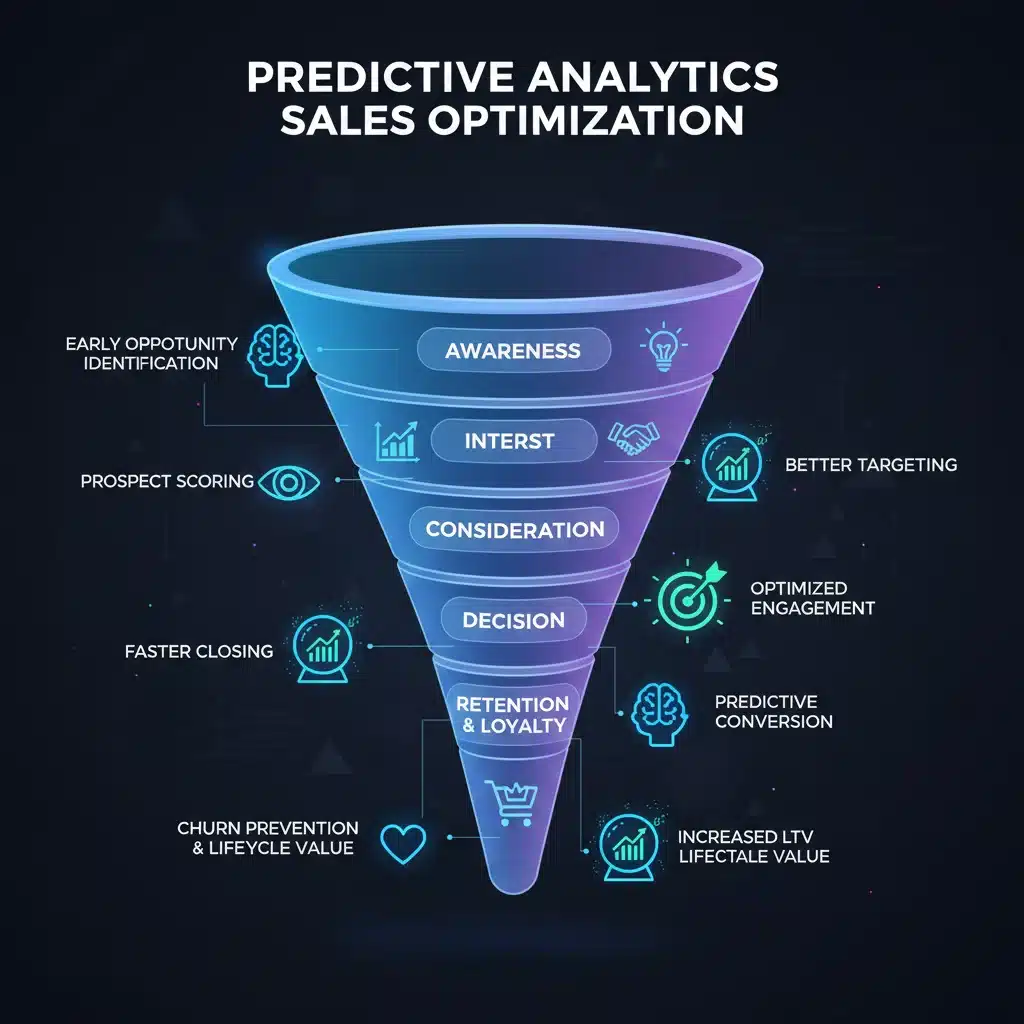
These trends highlight a future where predictive analytics is not just a tool but an embedded intelligence layer that permeates every aspect of the sales cycle, making it more efficient, responsive, and customer-centric. Businesses that embrace these advancements will be best positioned to dominate their respective markets in the years to come.
Conclusion: Seizing the Future with Predictive Sales Opportunities
In conclusion, the journey to identifying and capitalizing on predictive sales opportunities three months in advance in 2026 is a strategic imperative for any business aiming for sustainable growth and market leadership. Predictive analytics is no longer a nascent technology; it is a mature, powerful discipline that, when properly implemented, transforms sales from a reactive function into a proactive, data-driven engine of revenue generation.
From establishing a robust data foundation and employing advanced machine learning models to strategically identifying high-propensity customer segments, emerging market niches, and optimal promotional timings, the roadmap to success is clear. While challenges such as data quality, talent gaps, and organizational resistance exist, they are surmountable with a committed, structured approach and a focus on best practices. The future of sales is undeniably intertwined with the evolution of predictive analytics, promising hyper-personalization, real-time insights, and ethically sound AI systems.
Businesses that invest in building their predictive capabilities today will not only gain a significant competitive advantage but will also foster a culture of foresight and innovation. By understanding what lies ahead, sales teams can move with confidence, precision, and unparalleled effectiveness, ensuring they are always one step ahead in securing the next big deal. Embrace predictive analytics, and unlock a future where sales opportunities are not merely discovered, but accurately foreseen and strategically captured, three months before they even fully emerge.