Interactive Sales Strategies for 2026: Boosting Lead Engagement

Implementing advanced interactive sales content strategies is paramount for businesses aiming to achieve a 25% increase in lead engagement by 2026, transforming static interactions into dynamic, personalized customer journeys.
In today’s rapidly evolving market, simply presenting information is no longer enough to capture and retain attention. The future of sales, particularly by 2026, hinges on truly engaging prospects. This is precisely where interactive sales content strategies become indispensable, promising a significant boost in lead engagement.
Understanding the Shift to Interactive Sales in 2026
The sales landscape is undergoing a profound transformation. What once sufficed as effective outreach is now often overlooked in a deluge of static information. By 2026, the expectation for immediate, personalized, and dynamic experiences will be the norm, not the exception. Buyers are seeking more than just product specifications; they want to actively participate in their purchasing journey, exploring solutions that genuinely address their unique challenges.
This shift is driven by advancements in technology and a growing consumer preference for self-service and tailored content. Businesses that fail to adapt risk falling behind, as competitors embrace interactive formats to create more memorable and impactful interactions. The goal is to move beyond passive consumption and foster a sense of discovery and collaboration with potential customers.
The evolution of buyer behavior
Modern buyers are well-informed, having access to vast amounts of information online. They often complete a significant portion of their research before ever engaging with a sales representative. This necessitates a proactive approach from sales teams, providing valuable, interactive content that guides prospects through their decision-making process, rather than merely pitching products.
- Self-education: Buyers prefer to research independently.
- Personalization demand: Generic content is easily dismissed.
- Engagement expectation: Passive content leads to quick disinterest.
The integration of interactive elements within the sales funnel will not only capture attention but also provide invaluable data insights into buyer preferences and pain points. This data can then be used to refine strategies, personalize future interactions, and ultimately, shorten sales cycles. Understanding how prospects interact with content offers a clear roadmap for more effective follow-ups and tailored solutions.
In conclusion, recognizing and adapting to this fundamental shift towards interactive sales is the first critical step for any organization aiming to thrive in the competitive market of 2026. It’s about meeting the customer where they are, with the content they desire, in a format that encourages active participation.
Leveraging Personalized Quizzes and Assessments for Deeper Insights
One of the most potent interactive sales content strategies for 2026 involves the intelligent use of personalized quizzes and assessments. These tools are far more than just engaging diversions; they are powerful mechanisms for understanding customer needs, qualifying leads, and providing immediate value. By asking a series of targeted questions, businesses can gain deep insights into a prospect’s specific pain points, preferences, and readiness to purchase, all while the prospect feels they are receiving a personalized recommendation or solution.
Consider a scenario where a potential client is exploring software solutions. Instead of sifting through dozens of static product pages, they could take a brief assessment that evaluates their current infrastructure, team size, and specific operational challenges. The outcome? A tailored recommendation for the most suitable software package, along with relevant case studies or demo options. This approach not only streamlines the buyer’s journey but also provides the sales team with a highly qualified lead and a clear understanding of what to discuss.
Crafting effective interactive tools
The success of quizzes and assessments lies in their design. They must be intuitive, relevant, and provide tangible value to the user. Avoid overly complex questions or those that feel intrusive. The aim is to create a guided discovery process that benefits both the prospect and the sales team.
- Clear objectives: Define what information you want to gather.
- Value proposition: Ensure the user receives a useful outcome.
- Engaging design: Make it visually appealing and easy to navigate.
Furthermore, the data collected from these interactive tools can be integrated directly into CRM systems, enriching lead profiles and enabling sales representatives to approach conversations with a level of insight previously unattainable. This data-driven personalization is a cornerstone of effective sales in 2026, allowing for hyper-targeted messaging and a more efficient allocation of sales resources.
Ultimately, personalized quizzes and assessments transform a potentially passive interaction into an active, value-driven exchange. They empower prospects with relevant information while equipping sales teams with the intelligence needed to close deals more effectively, significantly contributing to a 25% increase in lead engagement.
Interactive Demos and Product Configurators: The Future of Product Exploration
The traditional product demo, often a one-sided presentation, is rapidly becoming obsolete. In 2026, the expectation is for interactive demos and sophisticated product configurators that allow prospects to explore, customize, and visualize solutions in real-time. This hands-on approach empowers buyers, letting them discover the value of a product or service on their own terms, fostering a deeper sense of ownership and understanding.
Imagine a customer interested in a complex B2B service. Instead of a sales rep walking them through a pre-recorded video, they can access an interactive demo environment. Here, they can manipulate variables, test different scenarios, and see the immediate impact of various configurations on their specific business needs. This not only clarifies the product’s capabilities but also builds trust by demonstrating transparency and flexibility.
Benefits of dynamic product exploration
Interactive demos and configurators offer several key advantages. They reduce the need for extensive sales calls by answering common questions proactively, allow for 24/7 access to product exploration, and provide valuable data on which features or configurations are most popular, informing future product development and marketing efforts.
- Enhanced understanding: Prospects grasp complex features more easily.
- Increased confidence: Hands-on experience builds trust in the solution.
- Reduced sales cycle: Self-service exploration speeds up decision-making.
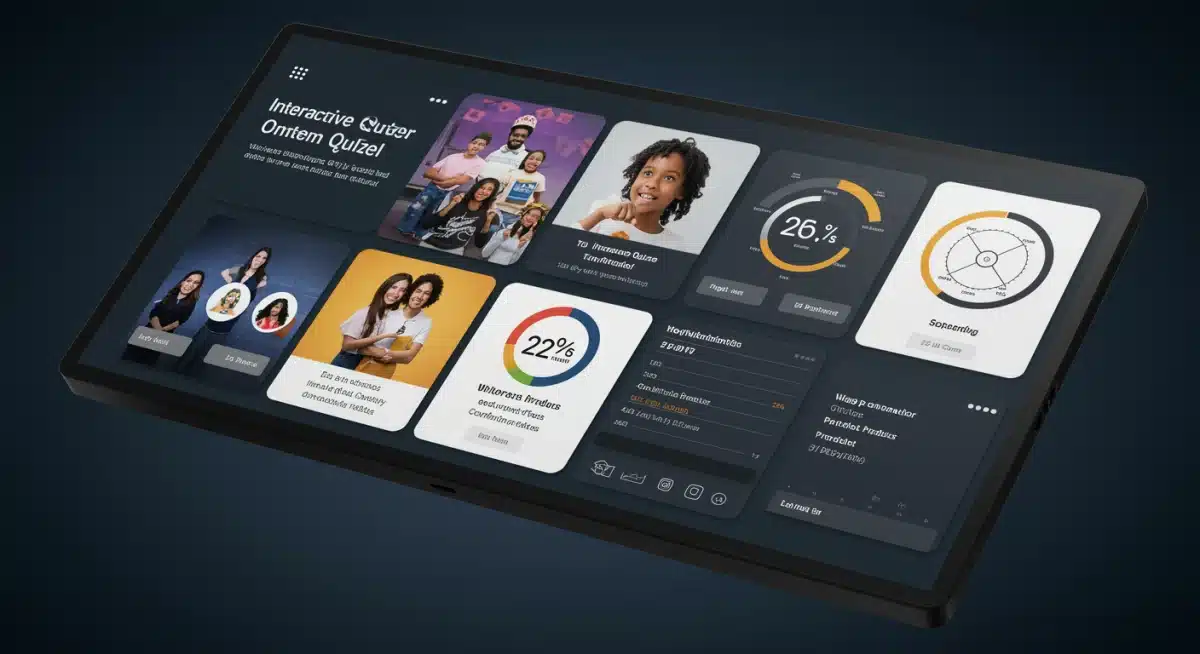
Furthermore, these tools can be integrated with CRM systems to track user interactions, providing sales teams with a detailed activity log. This allows for highly personalized follow-ups, where sales representatives can address specific configurations or features that a prospect explored, demonstrating a keen understanding of their individual interests. This level of informed engagement is crucial for converting leads into loyal customers.
In essence, interactive demos and product configurators transform the product exploration phase into an immersive and personalized experience. They are critical components of a modern interactive sales strategy, driving a significant increase in lead engagement and ultimately, accelerating sales growth in 2026.
Interactive Storytelling and Gamification in the Sales Funnel
Beyond direct product interaction, engaging prospects in 2026 will increasingly involve interactive storytelling and gamification. These techniques leverage fundamental human psychology, turning the often-dry sales process into an enjoyable and memorable experience. By weaving product benefits into compelling narratives or incorporating game-like elements, businesses can capture attention, educate prospects, and drive desired actions in a way that static content simply cannot.
Interactive storytelling might involve a personalized journey where a prospect navigates through a series of choices, each leading to a different outcome that showcases how a product solves a particular problem. For instance, a B2B company could create a “choose your own adventure” style experience where prospects face business challenges and then see how the company’s solution helps them overcome those hurdles. This makes the value proposition tangible and relatable.
Implementing gamified sales experiences
Gamification, on the other hand, introduces elements like points, badges, leaderboards, or challenges into the sales process. This could be as simple as a progress bar indicating how much more information a prospect needs to unlock a special offer, or a quiz that awards points for correct answers about the product’s features. The key is to make engagement feel rewarding and fun, encouraging continued interaction.
- Increased retention: Gamified elements keep users engaged longer.
- Data collection: User choices and performance provide valuable insights.
- Brand loyalty: Positive experiences build stronger connections.
The power of interactive storytelling and gamification lies in their ability to create emotional connections and foster active learning. Instead of being told about a product, prospects experience its benefits firsthand, making the message far more impactful. This also helps in differentiating a brand in a crowded market, as these engaging experiences leave a lasting impression.
By integrating these creative approaches into the sales funnel, businesses can significantly enhance lead engagement. Prospects are more likely to remember and act upon content that they actively participated in, leading to a demonstrable increase in conversion rates and contributing to the targeted 25% lead engagement growth by 2026.
The Role of AI and Predictive Analytics in Personalizing Interactive Content
The true power of interactive sales content in 2026 is exponentially amplified when combined with artificial intelligence (AI) and predictive analytics. These technologies move beyond basic personalization, enabling dynamic content adaptation in real-time based on individual user behavior, preferences, and even their emotional state. This level of intelligent personalization ensures that every interaction is maximally relevant and impactful.
AI algorithms can analyze vast datasets, including past interactions, demographic information, and external market trends, to predict what content a specific lead is most likely to engage with next. For example, if a prospect spends significant time on a particular feature in an interactive demo, AI can automatically suggest a case study related to that feature or trigger a personalized email with additional resources. This eliminates guesswork and ensures that the sales journey is always optimized for conversion.
AI-powered content recommendations
Predictive analytics takes this a step further by identifying patterns that indicate a lead’s propensity to convert. This allows sales teams to prioritize their efforts on the most promising leads and to deliver highly specific interactive content that addresses their predicted needs. The result is a more efficient sales process and a higher return on investment for interactive content creation.
- Real-time adaptation: Content changes dynamically based on user actions.
- Enhanced targeting: AI identifies the most relevant content for each lead.
- Optimized timing: Predictive analytics suggests the best moment for interaction.
Moreover, AI can help in generating interactive content variations at scale, ensuring that businesses can cater to a diverse audience without manual oversight. From automatically generating personalized quiz questions to adjusting the difficulty of a gamified experience, AI provides the infrastructure for truly individualized sales engagements.
Integrating AI and predictive analytics is not just an enhancement; it’s a necessity for businesses aiming to remain competitive and achieve ambitious lead engagement goals by 2026. These technologies transform interactive content from a series of engaging experiences into a finely tuned, intelligent sales machine.
Measuring Impact and Optimizing Interactive Sales Performance
Implementing interactive sales content strategies is only half the battle; the other crucial half involves rigorously measuring their impact and continuously optimizing performance. In 2026, successful sales organizations will employ advanced analytics to track every interaction, quantify engagement, and attribute revenue directly to their interactive efforts. Without robust measurement, even the most innovative content can fall short of its potential.
Key performance indicators (KPIs) for interactive content extend beyond traditional metrics like page views. They include completion rates for quizzes, time spent interacting with configurators, specific choices made within interactive stories, and the number of shares or referrals generated. These granular insights provide a much clearer picture of what resonates with prospects and where improvements can be made.
Essential metrics for interactive content success
Tracking the entire user journey through interactive elements allows sales and marketing teams to identify bottlenecks, understand drop-off points, and refine content to better guide prospects towards conversion. A/B testing different interactive formats or question sequences can also yield significant improvements in engagement and lead qualification.
- Engagement rates: How actively users interact with content.
- Conversion rates: The percentage of users who become qualified leads or customers.
- Time on content: Duration users spend interacting with specific elements.
Furthermore, integrating interactive content analytics with CRM and marketing automation platforms provides a holistic view of the customer. This enables sales teams to correlate interactive engagement with pipeline velocity and deal size, directly demonstrating the ROI of their interactive strategies. The ability to show tangible results is vital for securing continued investment in these innovative approaches.
In conclusion, a commitment to continuous measurement and optimization is paramount for maximizing the effectiveness of interactive sales content. By meticulously tracking performance and using data-driven insights to iterate, businesses can ensure their interactive strategies are consistently driving a 25% increase in lead engagement and achieving their sales objectives in 2026 and beyond.
| Key Strategy | Brief Description |
|---|---|
| Personalized Quizzes | Engage prospects to uncover needs and offer tailored solutions, qualifying leads effectively. |
| Interactive Demos | Allow prospects to explore and customize products/services, building confidence and understanding. |
| Gamification | Integrate game-like elements to make the sales journey fun, rewarding, and memorable. |
| AI & Predictive Analytics | Dynamically personalize content in real-time, optimizing lead targeting and conversion. |
Frequently asked questions about interactive sales strategies
Interactive sales content actively involves the prospect in the sales process, shifting from passive consumption to active participation. Examples include quizzes, polls, calculators, interactive demos, and personalized assessments, designed to gather information while providing value to the user.
By 2026, buyers expect personalized, dynamic experiences. Interactive strategies meet this demand by fostering deeper engagement, providing valuable insights into buyer needs, and creating memorable interactions that differentiate brands in a competitive market, driving higher conversion rates.
Quizzes increase engagement by allowing prospects to self-identify their needs and receive personalized recommendations. This process provides immediate value to the user while simultaneously furnishing sales teams with critical data for effective lead qualification and tailored follow-ups, enhancing relevance.
AI and predictive analytics personalize interactive content in real-time, adapting recommendations based on user behavior and preferences. This ensures that prospects receive the most relevant content at the optimal moment, significantly enhancing engagement and streamlining the sales journey for greater efficiency.
Success is measured through specific KPIs like completion rates, time spent on content, specific choices made, and conversion rates. Advanced analytics integrate with CRM to correlate interactive engagement with pipeline velocity and revenue, demonstrating clear ROI and guiding continuous optimization efforts.
Conclusion
The journey towards achieving a 25% increase in lead engagement by 2026 through interactive sales content strategies is not merely about adopting new tools; it’s about fundamentally rethinking how businesses connect with their prospects. By embracing personalized quizzes, interactive demos, gamified experiences, and leveraging the power of AI, organizations can transform static interactions into dynamic, value-driven conversations. The future of sales belongs to those who empower their buyers with engaging, relevant, and interactive content, fostering deeper connections and driving measurable growth in an increasingly competitive digital landscape. Proactive adaptation and continuous optimization of these strategies will be the hallmarks of success.