Mastering Sales Scripts: Boost Close Rates by 10% in 2026

Practical Solution: Crafting High-Converting Sales Scripts for 2026 That See a 10% Increase in Close Rates
In the dynamic landscape of modern sales, the effectiveness of your sales script can be the single most defining factor between a lost opportunity and a closed deal. As we fast approach 2026, the traditional ‘one-size-fits-all’ approach to sales conversations is rapidly becoming obsolete. Today’s customers are more informed, more discerning, and more resistant to generic pitches than ever before. To truly thrive, businesses must evolve their sales strategies, and at the heart of this evolution lies the art and science of crafting High-Converting Sales Scripts. This comprehensive guide will not only delve into the foundational principles but also provide actionable, cutting-edge techniques designed to help you achieve a remarkable 10% increase in your close rates by 2026.
The marketplace of tomorrow demands personalization, empathy, and value-driven communication. It’s no longer about simply reciting features and benefits; it’s about understanding individual pain points, building rapport, and positioning your solution as the indispensable answer. We will explore how to move beyond rigid templates to create flexible, adaptable scripts that empower your sales team to engage prospects authentically and effectively. From initial outreach to closing the deal, every stage of the sales funnel can be optimized with a well-designed script. The goal is not to sound robotic, but to provide a structured framework that guides your salespeople towards successful outcomes, while allowing for natural, human interaction. Let’s embark on this journey to transform your sales conversations and elevate your business performance.
Understanding the Evolution of Sales Scripts: Why 2026 Demands a New Approach
The sales environment is in constant flux, shaped by technological advancements, shifts in consumer behavior, and evolving market expectations. What worked five years ago might barely move the needle today. In 2026, several key trends will significantly impact how sales scripts need to be constructed and delivered. Firstly, the rise of AI and automation means that prospects are often pre-qualified and expect a higher level of insight from human interactions. They’ve likely done their research, read reviews, and perhaps even interacted with chatbots. This means your sales script needs to go beyond basic information and offer genuine, unique value.
Secondly, the increasing emphasis on customer experience (CX) means that every interaction, including sales calls, must be seamless, pleasant, and helpful. Aggressive, pushy sales tactics are a relic of the past. Modern scripts must prioritize active listening, empathetic questioning, and problem-solving. Prospects want to feel heard and understood, not just sold to. Thirdly, data analytics provides unprecedented insights into customer preferences and behaviors. Leveraging this data to personalize your script, even before the call, can dramatically increase its effectiveness. Understanding a prospect’s industry, company size, recent news, or even their past interactions with your brand can inform a highly targeted and relevant conversation.
Finally, the growing prevalence of remote work and digital communication channels means that sales interactions often occur without the benefit of face-to-face cues. Your verbal communication, therefore, carries even more weight. Clarity, tone, pace, and the ability to convey confidence and trustworthiness through voice alone become critical. A well-designed script accounts for these nuances, ensuring that your message resonates regardless of the medium. Adapting to these trends is not just about staying relevant; it’s about gaining a competitive edge and achieving those crucial close rate increases. The foundation of any High-Converting Sales Scripts strategy for 2026 must be built on these evolving pillars.
Deconstructing the Anatomy of a High-Converting Sales Script
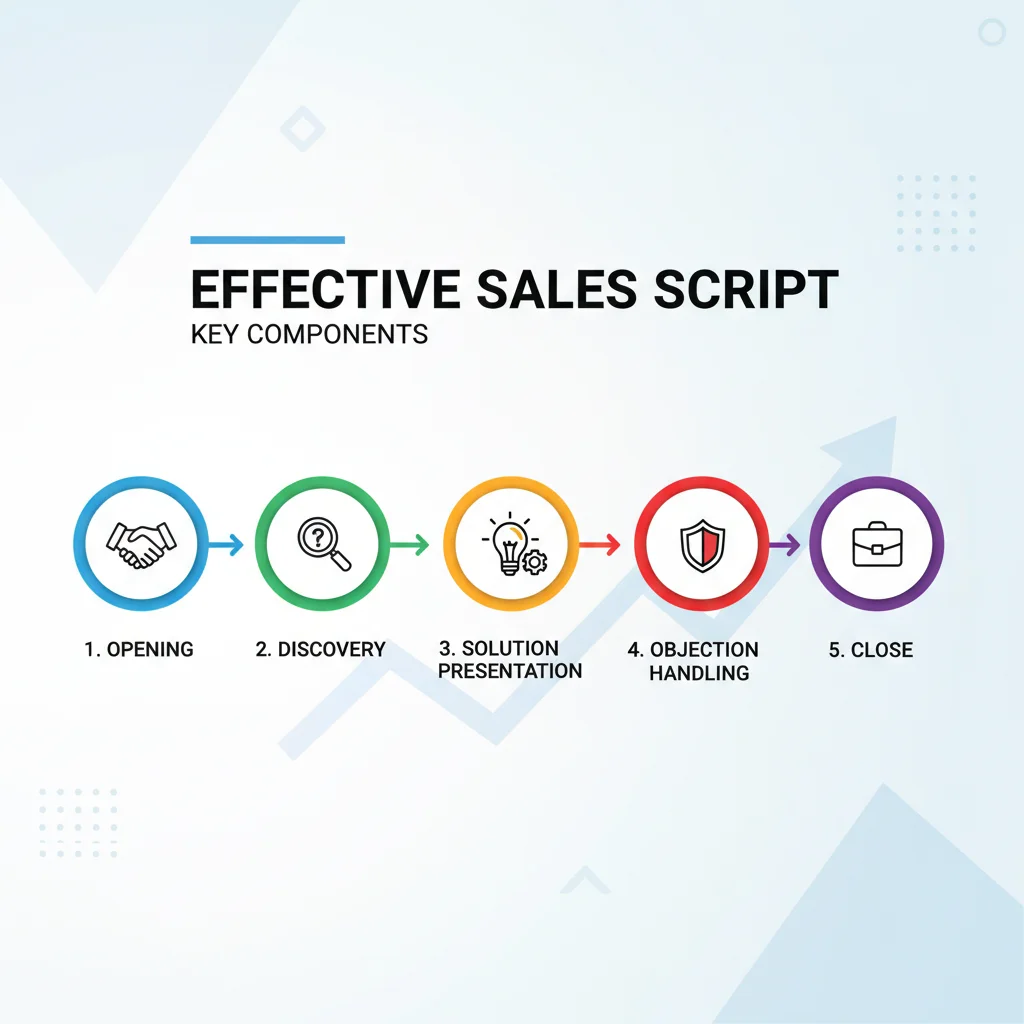
Before we dive into specific techniques, let’s break down the essential components that make up a truly effective sales script. Think of it not as a rigid dialogue to be memorized, but as a flexible framework designed to guide a productive conversation. Each element plays a crucial role in moving the prospect closer to a positive decision.
- The Engaging Opening: This is your make-or-break moment. A strong opening grabs attention, establishes credibility, and sets a positive tone. It should quickly state the purpose of the call, demonstrate respect for the prospect’s time, and ideally, offer immediate value or pique their curiosity. Avoid generic, robotic introductions.
- Discovery and Qualification: This is arguably the most critical phase. It’s where you ask open-ended questions to uncover pain points, needs, goals, and budget constraints. This isn’t about interrogation; it’s about understanding. Effective discovery questions help you qualify the lead and tailor your solution.
- Value Proposition & Solution Presentation: Once you understand their needs, present your product or service as the ideal solution. Focus on benefits, not just features. Explain how your offering directly addresses their identified pain points and helps them achieve their goals. Use storytelling and real-world examples to make it relatable.
- Objection Handling: Anticipate common objections and prepare concise, confident responses. Objections are not rejections; they are often requests for more information or clarification. A well-handled objection can strengthen trust and move the conversation forward.
- The Call to Action (CTA) and Closing: Clearly articulate the next steps. Whether it’s scheduling a demo, sending a proposal, or making a direct purchase, the CTA should be unambiguous. Confidently guide the prospect towards commitment, making the closing process smooth and natural.
- Follow-Up Strategy: A script doesn’t end with the call. Outline what happens post-conversation, whether it’s an email summary, relevant resources, or a scheduled follow-up call. Consistent, value-driven follow-up is essential for nurturing leads.
Each of these components, when expertly crafted and executed, contributes to a seamless and persuasive sales journey. The key is to ensure that your High-Converting Sales Scripts are not just about what you say, but how you say it, and more importantly, how you listen.
Strategy 1: Hyper-Personalization Through Data-Driven Insights
The era of generic sales pitches is over. To achieve a 10% increase in close rates by 2026, hyper-personalization must be at the core of your sales script strategy. This isn’t just about using the prospect’s name; it’s about demonstrating a deep understanding of their unique situation, challenges, and aspirations. Data-driven insights are your most powerful tool for achieving this.
Before any call, leverage your CRM, LinkedIn, company websites, and industry news to gather intelligence. What’s their company’s recent performance? What industry trends are affecting them? Have they recently launched a new product or service, or perhaps faced a specific challenge? Use this information to tailor your opening, discovery questions, and solution presentation. For example, instead of, “I’m calling to tell you about our new software,” try, “I noticed your company recently expanded into [new market], and I believe our software could significantly streamline your operations in that area by [specific benefit].” This immediately signals relevance and value.
Furthermore, analyze past interactions. If a prospect has engaged with your content, downloaded an ebook, or attended a webinar, reference these touchpoints in your script. “I saw you downloaded our whitepaper on [topic], and I wanted to elaborate on how our solution addresses some of the challenges discussed there.” This continuity builds rapport and shows you’re paying attention. Personalized scripts are not just about making the prospect feel special; they are about making the conversation genuinely more productive and relevant to their specific context. This strategy transforms a cold call into a warm, informed conversation, laying the groundwork for truly High-Converting Sales Scripts.
Strategy 2: Embrace the Consultative Selling Mindset
In 2026, successful salespeople will be less like traditional sellers and more like trusted advisors. The consultative selling approach is paramount for crafting High-Converting Sales Scripts. This involves shifting the focus from pitching your product to understanding and solving the prospect’s problems. Your script should reflect this shift, prioritizing questions over statements.
Begin with open-ended questions that encourage the prospect to elaborate on their challenges and goals. Instead of, “Do you have problems with X?” ask, “What are some of the biggest challenges you’re currently facing with X?” or “How are you currently handling Y, and what impact is that having on your team/business?” These questions not only gather crucial information but also position you as someone genuinely interested in their success.
Once you’ve uncovered their needs, your script should guide you to co-create a solution with the prospect, rather than just presenting a pre-packaged one. Frame your product or service as a tool that empowers them to overcome their obstacles and achieve their objectives. Use phrases like, “Based on what you’ve shared, it sounds like our solution could help you by…” or “Many of our clients in similar situations have found that [feature] helps them achieve [benefit]. Does that resonate with your current situation?” This collaborative approach builds trust and ensures that the solution you propose is directly aligned with their perceived value.
The consultative approach also means being prepared to walk away if your solution isn’t the right fit. This honesty, paradoxically, builds immense credibility and can even lead to referrals. Your script should facilitate this honest assessment, ensuring that every conversation is geared towards mutual benefit, not just a sale at any cost. This long-term perspective is crucial for sustainable growth and for truly developing High-Converting Sales Scripts.
Strategy 3: Crafting Compelling Value Propositions and Storytelling
Even the most personalized and consultative script will fall flat without a compelling value proposition and the power of storytelling. In 2026, prospects are bombarded with information; your script needs to cut through the noise by clearly articulating ‘why’ your solution matters to them.
Your value proposition should be concise, clear, and focused on the benefits your solution delivers, not just its features. For example, instead of, “Our software has AI-powered analytics,” say, “Our AI-powered analytics will save your team 10 hours a week on reporting, allowing them to focus on strategic initiatives.” Quantify benefits whenever possible. What specific problem does your product solve? What tangible results can a customer expect? Your script should be infused with these clear value statements at every relevant point.
Storytelling is another powerful technique for making your value proposition resonate. Humans are wired for stories. Instead of just listing features, share a brief, relevant anecdote about how another customer in a similar situation achieved success using your product. “We recently worked with a company much like yours, facing [similar challenge]. By implementing our [solution], they were able to [achieve specific, measurable result] within [timeframe].” This makes your solution tangible, relatable, and inspires confidence.
The key is to keep stories brief, relevant, and focused on the prospect’s potential outcome. They should highlight how your solution transformed a challenge into an opportunity. By weaving compelling value propositions and impactful stories into your High-Converting Sales Scripts, you create a more engaging and memorable experience for the prospect, making your offering truly stand out.
Strategy 4: Mastering Objection Handling with Empathy and Logic
Objections are an inevitable part of the sales process. How you handle them can often determine the success of the entire conversation. For High-Converting Sales Scripts in 2026, objection handling must be approached with a blend of empathy, logic, and a clear understanding of common concerns. The goal isn’t to dismiss an objection but to address it thoughtfully and move the conversation forward.
First, acknowledge and validate the prospect’s concern. “I understand your concern about the cost; many of our clients initially feel that way.” This shows empathy and builds rapport. Never argue with a prospect. Next, reframe the objection or provide additional information. For a cost objection, you might say, “While the initial investment is X, consider the long-term savings of Y and the increased efficiency of Z. What’s the cost of *not* solving this problem?” This shifts the focus from price to value and ROI.
Common objections include price, timing, perceived lack of need, or skepticism about the solution’s effectiveness. Your script should have pre-planned, yet flexible, responses for these. Practice these responses so they sound natural and confident. For example, if a prospect says, “I need to think about it,” a good script might guide you to ask, “That’s perfectly understandable. To help you in your decision-making, what specific aspects do you need more time to consider? Is there anything I can clarify for you right now?” This uncovers the real objection and allows you to address it.
Another powerful technique is to use social proof. “I understand your hesitation about integrating a new system. However, we’ve successfully integrated our solution with over 50 companies in your industry, including [mention a recognizable name if possible], and the transition was seamless.” By anticipating, acknowledging, and effectively addressing objections, your sales team can navigate challenging conversations with grace and increase their chances of closing the deal. This strategic approach to objection handling is a cornerstone of developing High-Converting Sales Scripts.
Strategy 5: The Art of the Confident Close and Effective Follow-Up
The closing of a sale is not a separate event but the natural culmination of a well-executed sales process. Your High-Converting Sales Scripts should guide your team towards confident and clear calls to action. Hesitation at the close can undermine all the good work done previously. In 2026, the close should feel like a logical next step, not a sudden demand.
There are various closing techniques, and your script should enable your salespeople to choose the most appropriate one based on the conversation. The ‘assumptive close’ (e.g., “Which integration option works best for your team?”) works well when rapport and value have been clearly established. The ‘alternative choice close’ (e.g., “Would you prefer the basic package or the premium package?”) simplifies the decision. The ‘summary close’ (e.g., “So, to recap, our solution will help you achieve X, Y, and Z. Based on this, are you ready to move forward?”) reinforces the value proposition.
Crucially, your script must also emphasize the importance of a strong follow-up strategy. Many sales are lost due to a lack of persistent, value-driven follow-up. After the call, send a concise email summarizing the discussion, reiterating key benefits, and outlining the agreed-upon next steps. Provide any promised resources promptly. Your script should include prompts for scheduling the next interaction – whether it’s a follow-up call, a demo, or a proposal review. Remember, the sales process is often a journey, not a single interaction. Consistent, strategic follow-up keeps the momentum going and reinforces the value you bring to the table.
Implementing and Iterating: The Continuous Improvement Loop

Creating High-Converting Sales Scripts isn’t a one-time task; it’s an ongoing process of implementation, measurement, and iteration. To achieve and sustain a 10% increase in close rates by 2026, your team needs a robust system for continuous improvement.
Training and Role-Playing: Once you’ve developed new script elements or full scripts, thorough training is essential. Role-playing allows your sales team to practice delivery, anticipate objections, and internalize the flow of the conversation in a low-stakes environment. Provide constructive feedback and encourage peer learning.
Recording and Analysis: Utilize call recording software (with proper consent) to review actual sales conversations. Analyze what’s working and what isn’t. Are certain phrases consistently leading to positive outcomes? Are there common objections that aren’t being handled effectively? This data is invaluable for refining your scripts.
A/B Testing Script Elements: Don’t be afraid to experiment. A/B test different openings, discovery questions, or objection-handling techniques. Track the results meticulously. Even small tweaks can have a significant impact on conversion rates over time. For example, try two different ways of phrasing your value proposition and see which one resonates more with prospects.
Gathering Feedback: Regularly solicit feedback from your sales team. They are on the front lines and have direct insights into what prospects are responding to. Create a culture where feedback is encouraged and used to improve collective performance. Also, gather feedback from prospects themselves, if appropriate, through surveys or follow-up questions.
CRM Integration: Ensure your CRM is configured to track relevant metrics related to script effectiveness. How many calls lead to a next step? What’s the conversion rate from a discovery call to a demo? This data will provide the quantitative proof of your script’s performance and guide future optimizations. By embedding this iterative process into your sales operations, you ensure that your High-Converting Sales Scripts remain sharp, relevant, and consistently drive superior results.
Measuring Success: Tracking Your 10% Close Rate Increase
The ultimate goal of crafting High-Converting Sales Scripts is to see a tangible improvement in your sales metrics, specifically a 10% increase in close rates. But how do you accurately measure this? It starts with clear definitions and consistent tracking.
Firstly, define your ‘close rate’ precisely. Is it opportunities closed / total opportunities? Or proposals accepted / proposals sent? Ensure everyone on your team understands and uses the same definition. Then, establish a baseline. Before implementing any new script changes, know your current average close rate over a significant period (e.g., the last quarter or year). This baseline will be your benchmark for measuring improvement.
Secondly, leverage your CRM system to its full potential. Tag calls or opportunities where new script elements are being tested. Track the progression of leads through your sales funnel. Key metrics to monitor include:
- Opportunity-to-Close Rate: The percentage of qualified opportunities that result in a closed deal.
- Proposal-to-Close Rate: The percentage of proposals submitted that convert into sales.
- Sales Cycle Length: Does the new script help shorten the time it takes to close a deal?
- Average Deal Size: Are your improved scripts leading to larger deals due to better value articulation?
- Objection Frequency: Are certain objections occurring less often due to proactive script elements?
Regularly review these metrics. Compare performance before and after script implementations. Look for trends and correlations. If you see a consistent upward trend in your close rates, particularly in segments where new scripts are being applied, you’ll have clear evidence of success. Don’t just look at the overall number; segment your data by product, sales rep, lead source, or industry to gain deeper insights into where your High-Converting Sales Scripts are having the most impact. This data-driven approach ensures that your efforts are not just theoretical but demonstrably contributing to your bottom line.
Conclusion: Your Path to Enhanced Sales Performance in 2026
The journey to crafting High-Converting Sales Scripts for 2026 is an investment in your sales team’s future and your company’s growth. By embracing hyper-personalization, adopting a consultative mindset, weaving compelling value propositions and stories, mastering empathetic objection handling, and executing confident closes with robust follow-up, you are not just updating your scripts; you are fundamentally transforming your sales approach.
Remember, a script is a living document, not a rigid mandate. It’s a strategic guide that empowers your salespeople to engage prospects authentically, understand their needs deeply, and present solutions that genuinely resonate. The continuous cycle of implementation, measurement, and iteration is crucial for staying agile and responsive to the ever-changing market. With the strategies outlined in this guide, your business is well-positioned to achieve, and even surpass, that ambitious 10% increase in close rates by 2026. Start today, empower your team, and watch your sales performance soar.