Voice Search Optimization Tools 2026: Capture 10% More Organic Traffic

In the rapidly evolving landscape of digital marketing, staying ahead of the curve isn’t just an advantage; it’s a necessity. As we hurtle towards 2026, one of the most significant shifts in consumer behavior continues to be the proliferation of voice search. Once a nascent technology, voice search has matured into a dominant force, fundamentally altering how users interact with the internet and, consequently, how businesses must optimize their online presence. Ignoring this trend is akin to ignoring mobile optimization a decade ago – a costly mistake that can relegate even the most established brands to digital obscurity.
The statistics paint a clear picture: a substantial portion of online queries are now initiated via voice assistants like Siri, Google Assistant, and Alexa. This paradigm shift demands a recalibration of traditional SEO strategies. Businesses that adapt quickly and effectively to this change stand to gain a significant competitive edge, potentially capturing an additional 10% or more of organic traffic that their less agile competitors will miss. This article delves deep into the world of voice search optimization tools, exploring the technologies, strategies, and insights needed to thrive in this voice-first era. We will uncover how these tools can empower your business to understand, predict, and respond to voice queries, ensuring your content is not just found, but heard.
The Rise of Voice Search: A New Frontier for SEO
The journey from typing queries to speaking them has been swift and transformative. Voice search offers unparalleled convenience, speed, and a hands-free experience that resonates with modern, on-the-go lifestyles. From asking for directions and checking the weather to ordering products and finding local businesses, voice assistants are becoming indispensable digital companions. This shift isn’t merely about convenience; it’s about a more natural, conversational way of seeking information, which has profound implications for search engine optimization.
Understanding the Voice Search User
Voice search users typically employ longer, more conversational phrases, often in the form of questions. Instead of typing “best Italian restaurant NYC,” a voice user might ask, “What are the best Italian restaurants near me in New York City?” This fundamental difference in query structure necessitates a move away from keyword stuffing and towards natural language processing (NLP) and semantic understanding. Businesses must anticipate these conversational queries and structure their content to provide direct, concise answers.
The Impact on Organic Traffic
For businesses, the stakes are high. The top position in voice search results is often a single, definitive answer, making competition fierce. However, for those who successfully optimize, the rewards are substantial. Capturing even a fraction of the growing voice search market can translate into a significant boost in organic traffic, increased brand visibility, and higher conversion rates. Our goal is to equip you with the knowledge and the voice search optimization tools to claim your share of this burgeoning traffic.
Key Pillars of Voice Search Optimization
Optimizing for voice search isn’t a one-size-fitts-all solution; it requires a multi-faceted approach that addresses several critical areas. These pillars form the foundation of an effective voice SEO strategy.
1. Conversational Keyword Research
Traditional keyword research focuses on short, high-volume terms. Voice search demands a shift to long-tail, natural language queries, often phrased as questions. Tools that can identify these conversational keywords, understand their intent, and analyze how users speak rather than type, are invaluable.
2. Featured Snippets and Rich Answers
Voice assistants often pull answers directly from Google’s Featured Snippets (also known as ‘Position 0’). Optimizing your content to appear in these coveted spots is paramount. This involves providing clear, concise, and direct answers to common questions within your content, often in a Q&A format or with well-structured definitions.
3. Local SEO Dominance
A significant portion of voice searches are local queries (e.g., “find a coffee shop near me”). Ensuring your Google My Business profile is meticulously optimized, accurate, and up-to-date is non-negotiable. This includes consistent NAP (Name, Address, Phone Number) information across all online directories, positive reviews, and relevant business categories.
4. Website Speed and Mobile-Friendliness
Voice search users expect immediate answers. A slow-loading website will deter both users and search engines. Mobile-friendliness is also crucial, as most voice searches originate from mobile devices. Your website must be responsive, fast, and offer an excellent user experience across all screen sizes.
5. Structured Data Markup (Schema)
Schema markup helps search engines understand the context and meaning of your content. By implementing relevant schema types (e.g., LocalBusiness, Product, FAQPage), you provide search engines with explicit clues about your data, making it easier for them to extract information for voice answers.
Top Voice Search Optimization Tools for 2026
The market for SEO tools is vast, but specialized voice search optimization tools are emerging as essential assets for digital marketers. These tools leverage AI, NLP, and advanced analytics to help you adapt your strategy. Here are some of the leading contenders and what makes them indispensable for 2026.
1. SEMrush
SEMrush continues to be a powerhouse in the SEO world, and its capabilities for voice search optimization are growing. While not solely a voice search tool, its comprehensive keyword research, competitor analysis, and site audit features are highly adaptable. SEMrush allows you to identify long-tail keywords, analyze featured snippet opportunities, and track your rankings for conversational queries. Its topic research tool helps you uncover common questions users ask around a specific subject, which is gold for voice SEO.
- Key Features for Voice SEO: Long-tail keyword identification, ‘Questions’ filter in keyword magic tool, competitor featured snippet analysis, site health audits for speed and mobile-friendliness.
- How it Helps: Uncovers conversational queries, helps optimize for ‘Position 0’, identifies technical SEO issues that hinder voice search performance.
2. Ahrefs
Similar to SEMrush, Ahrefs offers robust features that indirectly support voice search optimization. Its Site Explorer and Keyword Explorer tools are excellent for identifying question-based keywords and analyzing the content that ranks for them. Ahrefs’ Content Gap analysis can reveal opportunities where your competitors are answering voice queries that you are not. Its ‘Also rank for’ and ‘Parent Topic’ features help uncover related conversational queries.
- Key Features for Voice SEO: Question keywords filter, content gap analysis, backlink analysis (authority boosts voice search rankings), site audit for technical SEO.
- How it Helps: Discover question-based content opportunities, analyze competitor voice search strategies, improve overall site authority.
3. Google Search Console
Google Search Console (GSC) is a free, indispensable tool for any SEO strategy, including voice search. It provides direct insights into how Google sees your site. For voice search, GSC helps you monitor your performance in search results, identify the actual queries users are making (including conversational ones), and pinpoint opportunities for improvement. The ‘Performance’ report can reveal question-based queries that your site is already ranking for, even if not explicitly optimized.
- Key Features for Voice SEO: Performance report (queries, impressions, clicks), rich results status report, mobile usability report, core web vitals.
- How it Helps: Identifies existing voice search visibility, tracks rich snippet performance, ensures mobile-friendliness and site speed.

4. AnswerThePublic
AnswerThePublic is a fantastic visualization tool that takes a seed keyword and generates a comprehensive list of questions, prepositions, comparisons, and alphabetical searches related to that topic. This tool is a goldmine for understanding the specific questions users are asking, which is the cornerstone of voice search optimization.
- Key Features for Voice SEO: Question-based keyword generation, visualization of user queries, prepositional phrases.
- How it Helps: Provides a deep understanding of user intent and common voice queries, helps structure content to answer specific questions.
5. Surfer SEO
Surfer SEO is an on-page optimization tool that helps you create content that is highly relevant to specific search queries. While not exclusively for voice search, its ability to analyze top-ranking content for a given keyword and suggest optimal content length, keyword density, and related terms makes it incredibly useful. It helps ensure your content is comprehensive and answers all aspects of a user’s query, making it more likely to be chosen for a voice answer.
- Key Features for Voice SEO: Content editor for on-page optimization, NLP-powered keyword suggestions, competitor content analysis, outline builder.
- How it Helps: Creates highly relevant and comprehensive content that answers voice queries effectively, improves chances of securing featured snippets.
6. Schema.org Markup Generators
While not a single tool, various online schema markup generators (e.g., Google’s Structured Data Markup Helper, Schema App) are vital for voice search. These tools help you correctly implement structured data on your website, which is crucial for search engines to understand your content and deliver precise answers via voice. Look for generators that support FAQPage, HowTo, LocalBusiness, and Product schema types, as these are frequently used in voice search results.
- Key Features for Voice SEO: Code generation for various schema types, validation tools, rich results testing.
- How it Helps: Enhances search engine understanding of content, increases eligibility for rich results and featured snippets, directly supports voice assistant data extraction.
7. Local SEO Tools (e.g., BrightLocal, Moz Local)
Given the prevalence of local queries in voice search, specialized local SEO tools are indispensable. These platforms help you manage and optimize your Google My Business profile, ensure NAP consistency across directories, monitor local rankings, and manage online reviews. A strong local presence is a cornerstone of voice search success for brick-and-mortar businesses.
- Key Features for Voice SEO: GMB management, citation building and auditing, local rank tracking, review management.
- How it Helps: Ensures accurate local business information, boosts local search visibility, improves local voice search rankings.
Strategies for Maximizing Voice Search Optimization Tools
Having the right voice search optimization tools is only half the battle; knowing how to wield them effectively is where true success lies. Here are advanced strategies to integrate these tools into your SEO workflow and capture that elusive extra 10% of organic traffic.
1. Conduct Comprehensive Conversational Keyword Audits
Start by performing a thorough audit of your existing content using tools like SEMrush and AnswerThePublic. Identify current rankings for question-based queries and uncover new opportunities. Look for gaps where your competitors are answering questions that you are not. Prioritize keywords that align with your business goals and have a high likelihood of being spoken.
2. Optimize for Featured Snippets Relentlessly
Featured Snippets are the holy grail of voice search. Use tools like SEMrush and Ahrefs to identify snippets your competitors own and analyze their structure. Then, re-optimize your content to provide even clearer, more concise, and authoritative answers. Use clear headings, bullet points, numbered lists, and direct answers to common questions within your content to make it snippet-friendly. Google Search Console’s Rich Results Status Report will be your guide here.
3. Prioritize Local Search Signals
For businesses with a physical location, local SEO is non-negotiable. Leverage tools like BrightLocal to ensure your Google My Business profile is fully optimized, including accurate hours, services, photos, and a robust Q&A section. Actively solicit and respond to reviews, as these are crucial trust signals for both users and voice assistants. Consistency of NAP data across all online directories is paramount.
4. Embrace a Q&A Content Strategy
Structure your content around common questions. Create dedicated FAQ pages or integrate Q&A sections within your blog posts and product pages. Use AnswerThePublic to inspire these questions. Each question should be a potential voice query, and your answer should be direct, informative, and concise. Implement FAQPage schema markup to explicitly tell search engines that you are answering questions.
5. Enhance Website Speed and Mobile Responsiveness
Use Google Search Console and other site speed tools (like Google PageSpeed Insights) to continuously monitor and improve your website’s loading times, especially on mobile devices. Voice search users demand instant gratification; a slow site will lead to a poor user experience and lower rankings. Ensure your site is fully responsive and provides an excellent experience across all devices.
6. Implement and Validate Schema Markup
This is a technical but critical step. Use schema markup generators to implement relevant structured data across your site. Focus on LocalBusiness, Product, FAQPage, HowTo, and Article schema. Regularly validate your schema using Google’s Rich Results Test to catch any errors and ensure it’s correctly interpreted by search engines. This makes your content more discoverable and understandable for voice assistants.
7. Analyze Voice Search Performance with Analytics
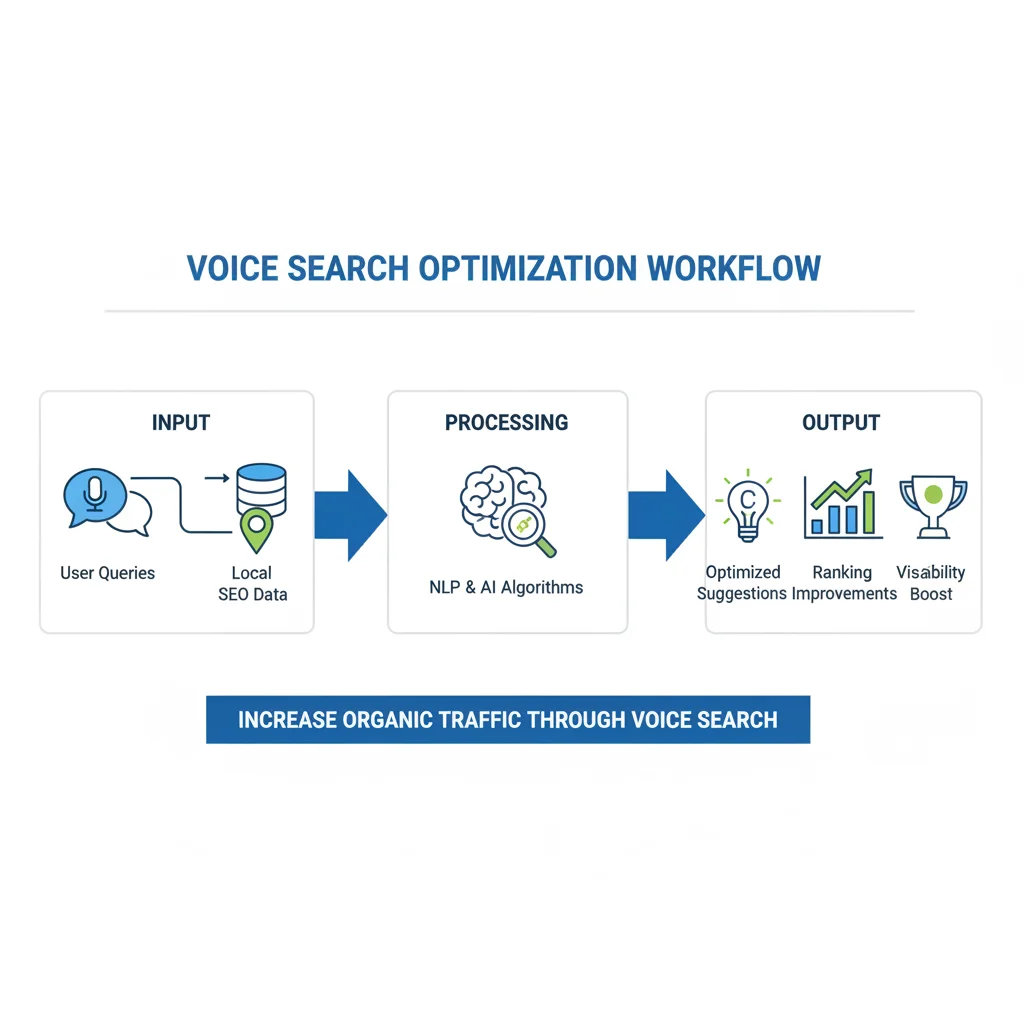
While direct voice search analytics can be challenging, you can infer performance by tracking long-tail, question-based queries in Google Search Console and Google Analytics. Look for increases in organic traffic to pages optimized for voice, and monitor engagement metrics. Tools that integrate with GSC and GA can provide more granular insights into how users are finding and interacting with your voice-optimized content.
8. Monitor and Adapt to AI Advancements
The field of AI and natural language processing is constantly evolving. Stay informed about updates to Google’s algorithms, advancements in voice assistant capabilities, and new features in your voice search optimization tools. Regular monitoring and adaptation are key to maintaining your competitive edge in voice search.
The Future of Voice Search and SEO in 2026 and Beyond
As we look towards 2026 and beyond, voice search is poised for even greater integration into our daily lives. The lines between voice search and traditional search will continue to blur, with AI becoming increasingly sophisticated in understanding context, intent, and even user emotion. This means that SEO professionals will need to evolve their strategies beyond simple keyword matching to holistic content experiences that anticipate user needs before they are explicitly stated.
Personalization and Proactive Information Delivery
Future voice assistants will likely offer more personalized and proactive information. Imagine an assistant that anticipates your next question based on your previous interactions, location, and calendar. This will require businesses to focus on building comprehensive knowledge graphs around their products and services, ensuring that every facet of their offerings is easily digestible by AI.
Multimodal Search Experiences
The future isn’t just about voice; it’s about multimodal search, where voice, text, and visual cues converge. Users might ask a question, see an image result, and then follow up with another voice query. Voice search optimization tools will need to integrate visual SEO principles, ensuring that images and videos are also optimized for discovery in a voice-first, multimodal environment.
Ethical AI and Trust
As AI becomes more pervasive, ethical considerations and trust will become paramount. Voice assistants are trusted sources of information, and businesses must ensure their content is not only accurate but also unbiased and transparent. Building trust with both users and AI will be a critical component of future SEO success.
Conclusion: Your Path to Voice Search Dominance
The opportunity to capture an additional 10% of organic traffic through voice search optimization is not a pipe dream; it’s a tangible reality for businesses willing to invest in the right strategies and voice search optimization tools. By understanding the nuances of conversational queries, optimizing for featured snippets and local search, and leveraging the power of structured data, you can position your brand at the forefront of this digital revolution.
The tools discussed – SEMrush, Ahrefs, Google Search Console, AnswerThePublic, Surfer SEO, Schema.org generators, and local SEO platforms – are not just software; they are your strategic partners in navigating the complexities of voice SEO. Integrate them into your workflow, continuously analyze your performance, and adapt to the ever-changing landscape. The future of search is conversational, and with the right approach, your business can speak directly to your audience, driving unprecedented growth and visibility in 2026 and beyond.