The Future of Marketing Technology Stacks: Integrating Solutions for a 15% Overall Efficiency Gain by 2026
In the rapidly evolving digital landscape, marketing technology (MarTech) has become the backbone of successful business strategies. From customer relationship management (CRM) systems to advanced analytics platforms and sophisticated automation tools, the sheer volume of available solutions can be overwhelming. However, the true power of MarTech isn’t just in the individual tools, but in their seamless integration. This article delves into the critical importance of MarTech Stack Integration, exploring how a strategic approach to unifying these diverse solutions can lead to a remarkable 15% overall efficiency gain by 2026.
The modern marketer faces a complex challenge: leveraging an ever-expanding array of technologies to deliver personalized experiences, optimize campaigns, and measure impact effectively. Without proper integration, these tools often operate in silos, leading to fragmented data, inconsistent customer experiences, and significant operational inefficiencies. The promise of an integrated MarTech stack is not merely about convenience; it’s about unlocking exponential value, driving better decision-making, and ultimately, achieving superior business outcomes.
Understanding the Current MarTech Landscape and Its Challenges
The MarTech landscape has exploded in recent years. Scott Brinker’s MarTech 5000 (now over 11,000 solutions) illustrates the incredible growth and diversity of tools available. While this abundance offers unparalleled opportunities, it also presents significant challenges:
- Data Silos: Different tools capture and store data independently, making it difficult to get a holistic view of the customer. This leads to incomplete profiles and disjointed insights.
- Operational Inefficiencies: Manual data transfer, redundant tasks, and the need to switch between multiple platforms waste valuable time and resources.
- Inconsistent Customer Experiences: Without a unified view, customers may receive conflicting messages or experience a fragmented journey across different touchpoints.
- Lack of Scalability: As businesses grow, managing an unintegrated patchwork of tools becomes increasingly complex and unsustainable.
- ROI Measurement Difficulties: Attributing marketing success accurately becomes a nightmare when data is scattered across disparate systems.
These challenges underscore the urgent need for a cohesive strategy around MarTech Stack Integration. Businesses that fail to address these issues risk falling behind competitors who are successfully leveraging integrated ecosystems.
The Vision: 15% Efficiency Gain Through Strategic MarTech Stack Integration
Achieving a 15% overall efficiency gain by 2026 through MarTech integration is an ambitious yet entirely attainable goal. This gain isn’t just about cutting costs; it encompasses improvements in productivity, better resource allocation, faster campaign execution, and enhanced decision-making. Here’s how strategic MarTech Stack Integration contributes to this vision:
- Automated Workflows: Integrating tools allows for the automation of repetitive tasks, such as lead nurturing, content distribution, and reporting, freeing up marketers to focus on strategic initiatives.
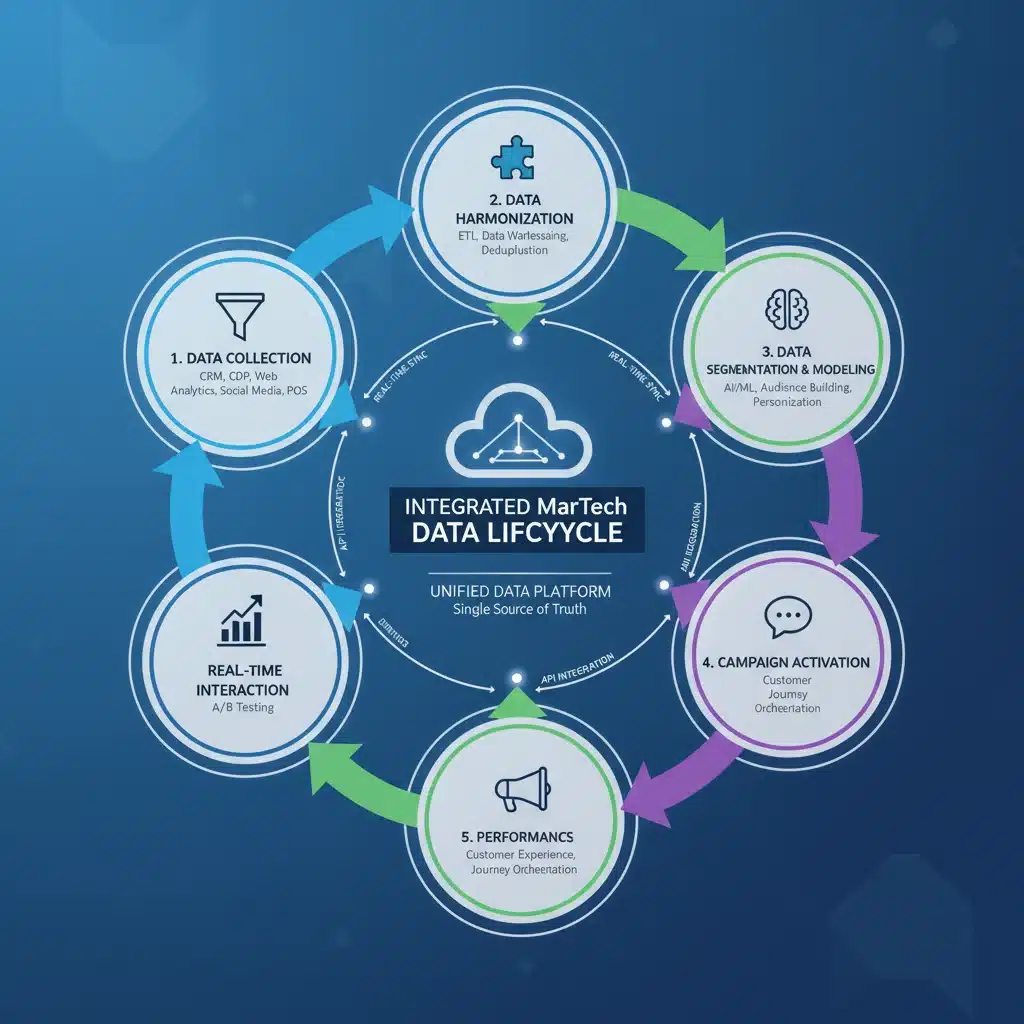
- Unified Customer View (Single Source of Truth): By connecting CRM, marketing automation, analytics, and sales platforms, businesses can create a comprehensive, real-time customer profile. This ‘single source of truth’ enables highly personalized marketing efforts and improves customer service.
- Enhanced Data Analytics and Insights: Integrated data from all touchpoints provides richer, more accurate insights into customer behavior, campaign performance, and market trends. This empowers data-driven decision-making.
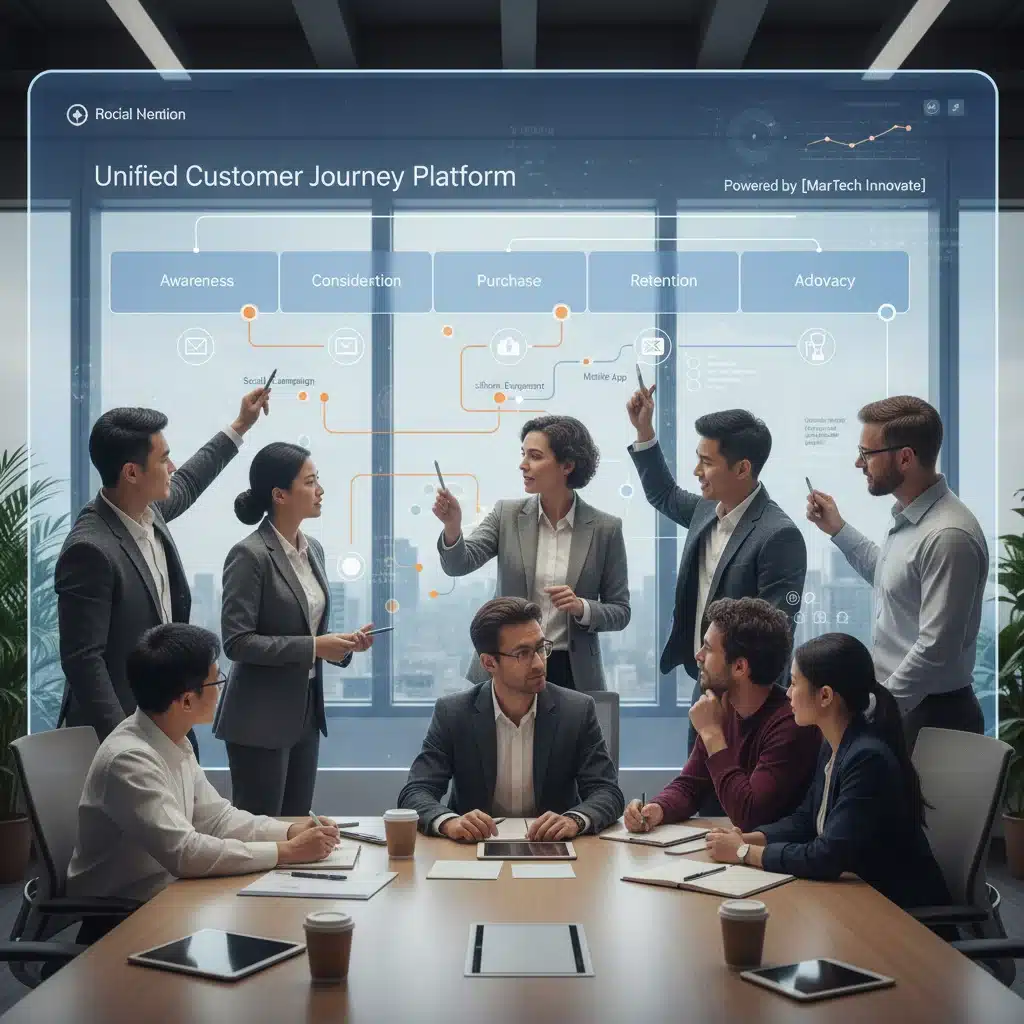
- Improved Collaboration: When marketing, sales, and service teams share access to the same integrated platforms and data, collaboration improves significantly, leading to better alignment and a more cohesive customer journey.
- Faster Time-to-Market: Streamlined processes and automated tasks accelerate campaign development and deployment, allowing businesses to respond more quickly to market opportunities.
- Optimized Resource Allocation: With clearer insights into what’s working (and what’s not), resources (budget, personnel) can be allocated more effectively to maximize ROI.
The path to achieving this 15% efficiency gain requires a deliberate and well-planned approach to MarTech Stack Integration, moving beyond ad-hoc connections to a truly strategic framework.
Key Pillars of Successful MarTech Stack Integration
Building an integrated MarTech stack is not a one-time project but an ongoing strategy. Several key pillars underpin successful integration efforts:
1. Strategic Planning and Audit
Before embarking on any integration, a thorough audit of your existing MarTech stack is crucial. This involves:
- Inventory Assessment: Document all current tools, their functionalities, and how they are currently being used.
- Gap Analysis: Identify missing functionalities or redundancies. Where are the data silos? Where are the manual processes creating bottlenecks?
- Define Business Objectives: Clearly articulate what you aim to achieve with integration. Is it better personalization, increased lead conversion, reduced operational costs, or all of the above? These objectives will guide your integration strategy.
- Future-Proofing: Consider scalability and flexibility. Choose solutions that offer robust APIs and connectors to facilitate future integrations.
A well-defined strategy ensures that every integration effort serves a clear business purpose and contributes to the overall efficiency goal.
2. Data Strategy and Governance
Data is the lifeblood of an integrated MarTech stack. A robust data strategy is paramount:
- Data Standardization: Establish common data definitions, formats, and taxonomies across all integrated systems. This ensures data consistency and accuracy.
- Master Data Management (MDM): Implement an MDM strategy to create a single, authoritative source of master data for critical entities like customers, products, and campaigns.
- Data Flow Mapping: Visualize how data flows between different systems. Identify potential bottlenecks, security risks, and opportunities for optimization.
- Data Security and Compliance: Ensure all integrations comply with relevant data privacy regulations (e.g., GDPR, CCPA) and maintain robust security protocols.
- Data Quality Management: Implement processes to monitor and maintain data quality, ensuring that integrated data is clean, accurate, and up-to-date.
Without a strong data foundation, even the most technically advanced MarTech Stack Integration will fall short of its potential.
3. Choosing the Right Integration Approach
Several approaches exist for MarTech Stack Integration, each with its pros and cons:
- Point-to-Point Integrations: Direct connections between two systems. Simple for a few integrations, but quickly becomes unmanageable (spaghetti architecture) as the number of systems grows.
- Integration Platform as a Service (iPaaS): Cloud-based platforms that provide tools and connectors to integrate various applications, data sources, and APIs. iPaaS solutions offer scalability, flexibility, and pre-built connectors, making them ideal for complex MarTech stacks.
- Customer Data Platforms (CDPs): Designed specifically to unify customer data from multiple sources, create persistent customer profiles, and make that data available to other MarTech tools. CDPs are becoming central to modern integrated stacks.
- Enterprise Service Bus (ESB): A software architecture model used for designing and implementing communication between interacting applications in a service-oriented architecture (SOA). More common in large enterprises with legacy systems.
- API-First Strategy: Prioritizing tools with robust, well-documented APIs (Application Programming Interfaces) allows for greater flexibility and custom integration possibilities.
The choice of approach depends on the complexity of your stack, your internal resources, and your specific integration goals. Often, a hybrid approach combining a CDP or iPaaS with strategic API integrations offers the best balance.
4. People and Processes
Technology alone is insufficient. Successful MarTech Stack Integration also requires:
- Cross-Functional Teams: Involve stakeholders from marketing, sales, IT, and data science. Integration is a team sport.
- Training and Adoption: Ensure users are adequately trained on new integrated workflows and understand the benefits. Change management is crucial.
- Documentation: Document all integrations, data flows, and processes. This is vital for maintenance, troubleshooting, and future scalability.
- Continuous Optimization: An integrated stack is never ‘finished’. Regularly review performance, gather feedback, and iterate on your integrations to ensure they continue to meet evolving business needs.
Investing in your people and refining your processes will significantly amplify the benefits of MarTech Stack Integration.
Emerging Trends Driving Future MarTech Stack Integration
Looking towards 2026, several trends will profoundly influence how businesses approach MarTech Stack Integration:
1. AI and Machine Learning at the Core
AI and ML are moving beyond individual tools to become foundational elements of integrated MarTech stacks. They will power:
- Predictive Analytics: Forecasting customer behavior, churn risk, and campaign success with greater accuracy.
- Hyper-Personalization: Delivering truly individualized content, offers, and experiences at scale across all channels.
- Automated Optimization: AI-driven algorithms will continuously optimize campaigns, ad spend, and content delivery in real-time.
- Natural Language Processing (NLP): Enhancing customer service chatbots, content generation, and sentiment analysis.
The integration of AI capabilities across the stack will be a major driver of efficiency gains, enabling marketers to achieve more with less manual effort.
2. Composable MarTech Architectures
The concept of ‘composable’ or ‘headless’ MarTech is gaining traction. This involves building a stack from best-of-breed, modular components that can be easily swapped out or added as needed, rather than relying on monolithic, all-in-one platforms. This approach prioritizes flexibility and agility, making MarTech Stack Integration even more critical for seamless operation.
3. Enhanced Customer Data Platforms (CDPs)
CDPs will continue to evolve as the central nervous system of the MarTech stack. They will offer more advanced capabilities for real-time data ingestion, identity resolution, segmentation, and activation across an even wider array of channels. Their ability to provide a unified, persistent customer profile will be indispensable for driving personalized experiences and measuring cross-channel performance.
4. Privacy-First Integration
With increasing data privacy regulations and consumer demands for transparency, future MarTech Stack Integration will prioritize privacy-by-design. This means building integrations that inherently protect user data, offer robust consent management, and comply with evolving legal frameworks. Trust will be a key differentiator.
5. Orchestration and Workflow Automation
Beyond simple automation, the focus will shift to ‘orchestration’ – coordinating complex, multi-step customer journeys across various integrated systems. Advanced workflow automation tools, often powered by AI, will ensure that every customer interaction is timely, relevant, and consistent, regardless of the channel.
Measuring the 15% Efficiency Gain: KPIs and Metrics
To truly achieve and demonstrate the 15% efficiency gain, it’s essential to define clear Key Performance Indicators (KPIs) and regularly measure progress. These might include:
- Reduced Time-to-Market for Campaigns: Track the time from campaign ideation to launch.
- Lower Customer Acquisition Cost (CAC): Improved targeting and personalization should lead to more efficient spending.
- Increased Customer Lifetime Value (CLTV): Better customer experiences and retention will boost CLTV.
- Improved Lead-to-Opportunity Conversion Rate: Streamlined lead nurturing and sales alignment will enhance conversions.
- Reduced Manual Data Entry/Transfer Time: Quantify the hours saved by automating tasks.
- Increased Marketing ROI: A holistic measure of overall marketing effectiveness.
- Faster Reporting Cycles: The ability to generate comprehensive reports more quickly.
- Higher Employee Productivity: Measure time saved on administrative tasks, allowing focus on strategic work.
Regularly reviewing these metrics will not only validate the success of your MarTech Stack Integration efforts but also identify areas for further optimization.
Overcoming Challenges in MarTech Stack Integration
While the benefits are clear, MarTech Stack Integration is not without its hurdles:
- Legacy Systems: Integrating older, proprietary systems can be complex and costly.
- Technical Debt: Poorly implemented past integrations can create a tangled mess that’s difficult to untangle.
- Vendor Lock-in: Relying too heavily on a single vendor’s ecosystem can limit flexibility.
- Lack of Internal Expertise: Many organizations lack the in-house skills to plan, execute, and maintain complex integrations.
- Budget Constraints: Integration projects can require significant investment in both technology and personnel.
- Organizational Resistance to Change: Employees may be comfortable with existing tools and processes, resisting new integrated workflows.
Addressing these challenges requires a pragmatic approach, often involving phased implementation, external expertise, and a strong change management strategy. Prioritizing integrations with the highest potential ROI can help build momentum and secure further investment.
Case Study Snippets: Realizing the Power of Integration
Consider a retail company struggling with abandoned carts. By integrating their e-commerce platform with their email marketing automation tool and a customer data platform, they achieved:
- Real-time Cart Abandonment Triggers: Automated emails sent within minutes of abandonment, personalized with items left in the cart.
- Dynamic Product Recommendations: Based on browsing history and past purchases, fueled by unified customer data.
- Measurable ROI: A significant increase in abandoned cart recovery rates and a clear uplift in sales directly attributable to the integrated strategy.
Another example is a B2B software company that integrated its CRM, marketing automation, and sales enablement platforms. This allowed them to:
- Seamless Lead Handoff: Marketing-qualified leads (MQLs) automatically pushed to sales with rich context and activity history.
- Personalized Sales Sequences: Sales reps could leverage marketing-generated content and insights to tailor their outreach.
- Accurate Attribution: A clear view of which marketing touches contributed to closed deals, optimizing future spend.
These examples highlight how effective MarTech Stack Integration translates directly into tangible business benefits and efficiency gains.
Conclusion: The Integrated Future of Marketing
The journey towards a 15% overall efficiency gain by 2026 through MarTech Stack Integration is not just a technological undertaking; it’s a strategic imperative. As the digital landscape continues to evolve, the ability to seamlessly connect, share data, and orchestrate customer experiences across diverse platforms will be the hallmark of leading organizations.
By focusing on strategic planning, robust data governance, selecting the right integration approaches, and empowering cross-functional teams, businesses can unlock the full potential of their MarTech investments. The future of marketing is integrated, intelligent, and hyper-efficient. Those who embrace this vision will not only survive but thrive, delivering exceptional customer experiences and achieving sustainable growth in an increasingly competitive world.
Start planning your MarTech Stack Integration strategy today to position your organization for unparalleled efficiency and success in the years to come.