
Maximizing Entrepreneurial Grants in 2026: A Deep Dive into U.S. Federal and State Programs
For aspiring and established business owners alike, securing funding is often the most critical hurdle to overcome on the path to success. While venture capital, angel investors, and traditional bank loans are well-known avenues, a powerful yet often underutilized resource lies in entrepreneurial grants 2026. These grants, offered by both federal and state governments, provide non-dilutive capital, meaning you don’t have to give up equity in your company. As we look towards 2026, understanding the landscape of these funding opportunities and how to effectively navigate them will be paramount for entrepreneurs seeking a significant edge.
The year 2026 promises a dynamic environment for entrepreneurial grants 2026, with evolving priorities reflecting national economic goals, technological advancements, and social initiatives. From supporting innovative startups in critical sectors to bolstering small businesses in underserved communities, federal and state agencies are continually allocating funds to foster economic growth and job creation. This comprehensive guide will equip you with the knowledge and strategies necessary to identify, apply for, and ultimately secure these invaluable entrepreneurial grants in 2026, propelling your business forward without the burden of repayment.
Understanding the Grant Landscape: Federal vs. State Entrepreneurial Grants 2026
Before diving into specific programs, it’s crucial to grasp the fundamental differences between federal and state entrepreneurial grants. While both aim to stimulate economic activity, their scope, funding amounts, eligibility criteria, and application processes can vary significantly.
Federal Entrepreneurial Grants 2026: Broad Reach and Significant Impact
Federal grants typically originate from various U.S. government agencies, each with its own mission and funding priorities. These grants are often substantial in size and can support a wide range of activities, from scientific research and development to job training and economic development in specific industries. Key agencies to monitor for entrepreneurial grants in 2026 include:
- Small Business Administration (SBA): While the SBA doesn’t directly award grants for starting or expanding a business (with a few exceptions for specific research or veteran programs), they are a crucial gateway. They offer grant programs to non-profit organizations and educational institutions that, in turn, provide technical assistance and training to small businesses. They also administer the Small Business Innovation Research (SBIR) and Small Business Technology Transfer (STTR) programs, which are direct grant opportunities for businesses engaged in R&D.
- National Institutes of Health (NIH): For biotech, healthcare, and life sciences startups, the NIH offers significant funding through SBIR/STTR and other research grants. These are highly competitive but can provide substantial capital for groundbreaking innovations.
- National Science Foundation (NSF): Similar to NIH, the NSF funds early-stage research and development in science and engineering through its SBIR/STTR programs, targeting high-impact technological innovations.
- Department of Energy (DOE): Businesses focused on renewable energy, energy efficiency, and advanced manufacturing can find grants from the DOE, often through SBIR/STTR or other specific solicitations related to energy innovation.
- Department of Agriculture (USDA): Rural businesses, agricultural innovations, and food system enterprises can access grants through various USDA programs, including those focused on rural development, value-added producer grants, and sustainable agriculture research.
- Department of Commerce (DOC): Agencies within the DOC, such as the Economic Development Administration (EDA), offer grants to promote economic development in distressed communities, which can indirectly benefit entrepreneurs through infrastructure improvements or business support programs.
The application process for federal entrepreneurial grants in 2026 is often rigorous, requiring detailed proposals, comprehensive budgets, and a clear demonstration of how your project aligns with the agency’s objectives. Patience and meticulous attention to detail are vital.
State Entrepreneurial Grants 2026: Localized Support and Targeted Growth
State-level entrepreneurial grants in 2026 are typically smaller in scale than federal grants but can be less competitive and more tailored to specific local economic needs. These grants often focus on:
- Economic Development: Many states offer grants to attract new businesses, encourage job creation, or support businesses in specific industries deemed critical for state growth (e.g., advanced manufacturing, clean energy, tourism).
- Small Business Assistance: State agencies often fund programs that provide direct financial assistance, training, or technical support to small businesses, especially those in disadvantaged areas or owned by underrepresented groups.
- Innovation and Technology: States frequently have their own versions of SBIR/STTR matching programs or direct innovation grants to foster homegrown technological advancements.
- Specific Industry Support: Grants might be available for businesses in agriculture, arts and culture, historic preservation, or other sectors important to the state’s economy and identity.
- Workforce Development: Grants aimed at training employees or upskilling the local workforce can indirectly benefit businesses by reducing their training costs or providing access to skilled labor.
Searching for state entrepreneurial grants 2026 requires exploring your state’s economic development agencies, commerce departments, and specific industry-focused commissions. Local chambers of commerce and Small Business Development Centers (SBDCs) are also excellent resources for identifying state-specific opportunities.
Key Strategies for Securing Entrepreneurial Grants in 2026
Winning a grant is not just about having a great idea; it’s about effectively communicating that idea and aligning it with the grantor’s objectives. Here are essential strategies for maximizing your chances of securing entrepreneurial grants in 2026:
1. Thorough Research and Identification of Opportunities
The first step is always research. Don’t just look for any grant; look for the right grant. This means:
- Utilizing Government Portals: For federal grants, Grants.gov is the primary database. For state grants, search your state’s official government websites, specifically departments of commerce, economic development, or specific industry task forces.
- Leveraging Local Resources: Small Business Development Centers (SBDCs), Women’s Business Centers (WBCs), and SCORE mentors often have localized knowledge of available grants and can provide invaluable guidance.
- Setting Up Alerts: Many grant portals and organizations allow you to set up email alerts for new funding opportunities that match your criteria.
- Networking: Attend industry events, join professional associations, and connect with other entrepreneurs. Sometimes the best leads come from word-of-mouth.
Focus your search on entrepreneurial grants in 2026 that directly align with your business’s mission, industry, and project goals. A shotgun approach is rarely effective.
2. Understanding Eligibility and Requirements
Every grant has specific eligibility criteria. Before investing significant time in an application, carefully review:
- Business Type: Is the grant for for-profit businesses, non-profits, or specific entity structures?
- Industry Focus: Does your business operate within a targeted industry (e.g., clean energy, biotech, rural agriculture)?
- Geographic Location: Is the grant restricted to businesses in a particular state, county, or even zip code?
- Business Size: Are there revenue, employee count, or years-in-business limitations?
- Demographic Focus: Some grants target businesses owned by women, minorities, veterans, or individuals with disabilities.
- Project Scope: Does your proposed project align with what the grant is designed to fund?
Missing a single eligibility requirement can lead to immediate disqualification. Be honest and thorough in your self-assessment.

3. Crafting a Compelling Grant Proposal
The grant proposal is your opportunity to tell your story, demonstrate your project’s merit, and convince the grantor that your business is the ideal recipient. A strong proposal for entrepreneurial grants in 2026 will typically include:
- Executive Summary: A concise, engaging overview of your project, its goals, and why it deserves funding. This is often the first (and sometimes only) section read by reviewers.
- Problem Statement: Clearly articulate the problem your business or project is addressing. Use data and statistics to support your claims.
- Solution/Project Description: Detail your proposed solution or project. How will it solve the identified problem? What are the key activities and milestones?
- Goals and Objectives: Define specific, measurable, achievable, relevant, and time-bound (SMART) goals for your project.
- Methodology: Explain how you will implement your project, including strategies, timelines, and resources.
- Organizational Capacity: Highlight your team’s expertise, experience, and ability to successfully execute the project. Include resumes or bios of key personnel.
- Budget: Provide a detailed, realistic, and justified budget that clearly shows how grant funds will be used. Be transparent about other funding sources.
- Evaluation Plan: How will you measure the success and impact of your project? What metrics will you use?
- Sustainability Plan: For projects that extend beyond the grant period, how will they continue to be funded or sustained?
- Letters of Support (if applicable): Endorsements from community leaders, partners, or experts can strengthen your application.
Tailor every section of your proposal to the specific grant’s objectives and language. Avoid generic templates. Emphasize the impact your business will have, whether it’s job creation, technological innovation, environmental benefit, or community improvement – aspects highly valued by agencies offering entrepreneurial grants in 2026.
4. Demonstrating Financial Prudence and Viability
Grantors want to ensure their investment is well-managed. Even though grants are non-dilutive, they are still an investment. Present a clear and comprehensive financial plan, including:
- Current Financial Statements: Profit and loss statements, balance sheets, and cash flow projections.
- Projected Financials: Forecasts that demonstrate the long-term viability and sustainability of your business, especially how it will operate beyond the grant funding.
- Detailed Budget for Grant Funds: Break down exactly how every dollar of the grant will be spent, aligning it directly with your project activities. Justify each line item.
- Cost-Share or Matching Funds (if required): Some grants require you to contribute a certain percentage of the project cost yourself. Clearly outline how you will meet this requirement.
A well-prepared financial section instills confidence in the grantor that you are a responsible steward of public funds, a critical factor for securing entrepreneurial grants in 2026.
5. Building Relationships and Seeking Assistance
While many grant applications are submitted online, building relationships can be beneficial, especially for larger or more complex federal grants:
- Contacting Grant Officers: If permitted by the solicitation, consider reaching out to the designated grant officer with specific, well-thought-out questions about the grant. This can provide clarity and demonstrate your serious interest.
- Engaging with Support Organizations: SBDCs, SCORE, and other local business development organizations often provide free or low-cost assistance with grant writing, business planning, and financial projections. Their expertise can be invaluable for navigating the complexities of entrepreneurial grants in 2026.
- Attending Webinars and Workshops: Many agencies offer webinars or workshops specifically designed to help applicants understand their grant programs and application processes.
Navigating Specific Federal Grant Programs for 2026
Let’s delve deeper into some of the most prominent federal programs that offer entrepreneurial grants in 2026, or provide crucial support for obtaining them.
Small Business Innovation Research (SBIR) & Small Business Technology Transfer (STTR) Programs
Often referred to as ‘America’s Seed Fund,’ SBIR and STTR are highly competitive programs designed to stimulate technological innovation. They provide non-dilutive funding to small businesses to engage in federal R&D with commercial potential. For entrepreneurial grants in 2026, these programs remain a cornerstone for tech-driven startups.
- SBIR: Focuses on small businesses directly conducting R&D.
- STTR: Requires a formal collaboration between a small business and a non-profit research institution (e.g., a university).
Both programs have three phases: Phase I (feasibility study), Phase II (full R&D), and Phase III (commercialization, typically without federal funding). Agencies participating include the Department of Defense, NIH, NSF, NASA, DOE, and others. If your business is innovative and research-intensive, these are critical entrepreneurial grants for 2026 to explore.
USDA Rural Development Grants
The U.S. Department of Agriculture offers a variety of programs aimed at improving the economic vitality of rural communities. For entrepreneurs operating in or planning to establish businesses in rural areas, these are significant sources of entrepreneurial grants in 2026.
- Rural Business Development Grants (RBDG): Provides grant funds for target technical assistance and training for small rural businesses, and for planning and equipping facilities.
- Value-Added Producer Grants (VAPG): Helps agricultural producers develop new products, create and expand marketing opportunities, and increase producer income.
- Rural Energy for America Program (REAP): Offers grants and loan guarantees to agricultural producers and rural small businesses to purchase or install renewable energy systems or make energy efficiency improvements.
Understanding the definition of ‘rural’ for USDA purposes is crucial, as it often refers to specific population thresholds.
Economic Development Administration (EDA) Grants
The EDA, part of the Department of Commerce, offers grants to support economic development in economically distressed communities. While not always direct grants to individual businesses, EDA funding can create an environment conducive to entrepreneurship by supporting infrastructure, workforce development, and innovation centers. Entrepreneurs should monitor EDA projects in their regions, as these can open doors to local resources and partnerships relevant to entrepreneurial grants in 2026.
Exploring State and Local Entrepreneurial Grants in 2026
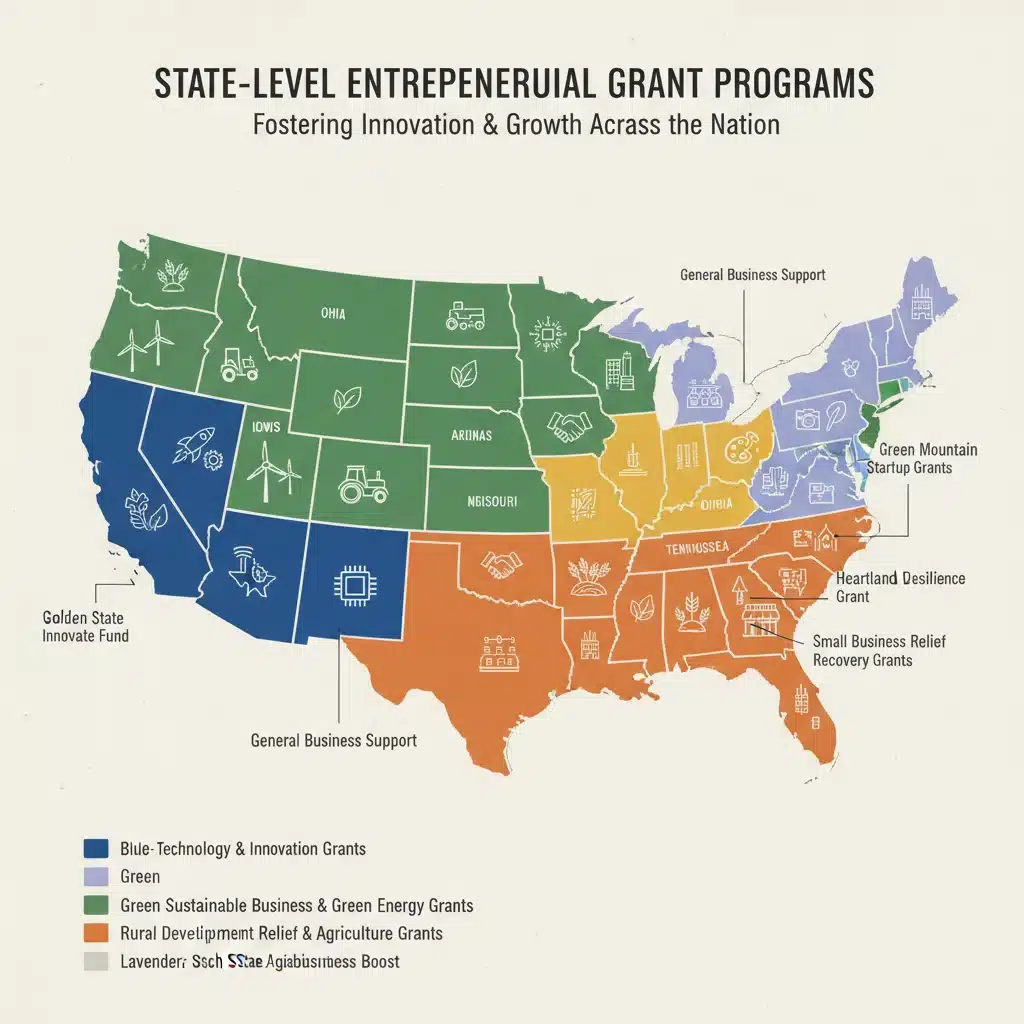
Beyond the federal level, states and even local municipalities are keen to foster entrepreneurship within their borders. These grants can be highly specific and often easier to secure due to less national competition.
State Economic Development Agencies
Almost every state has an economic development agency (e.g., Department of Economic Development, Commerce Department) that administers various programs. These often include:
- Innovation Funds: Grants for startups developing new technologies or products.
- Job Creation Grants: Incentives for businesses that commit to creating a certain number of new jobs.
- Incubator/Accelerator Support: Funding for programs that nurture startups, which can indirectly benefit participating entrepreneurs.
- Industry-Specific Grants: Support for key industries within the state, such as advanced manufacturing, biotechnology, tourism, or film production.
- Capital Access Programs: While not always direct grants, these programs help small businesses access capital through loan guarantees or interest rate subsidies.
For entrepreneurial grants in 2026, regularly check your state’s economic development website and subscribe to their newsletters.
Local Business Development Programs
Don’t overlook local opportunities! Cities and counties often have their own economic development offices or non-profit organizations that offer grants for:
- Façade Improvement: Grants for businesses to improve their storefronts, especially in downtown revitalization areas.
- Small Business Start-Up/Expansion: Direct grants or micro-grants for new businesses or those looking to expand within the locality.
- Specific Zone Incentives: Grants or tax credits for businesses locating in designated enterprise zones or opportunity zones.
Your local chamber of commerce is an excellent starting point for discovering these hyper-local entrepreneurial grants in 2026.
Grants for Underrepresented Entrepreneurs
Many federal, state, and private organizations offer grants specifically aimed at fostering diversity in entrepreneurship. These include grants for:
- Women-Owned Businesses: Organizations like the Cartier Women’s Initiative, Amber Grant, and various state programs.
- Minority-Owned Businesses: The Minority Business Development Agency (MBDA) provides business development services, and various private foundations offer grants.
- Veteran-Owned Businesses: Programs through the SBA, Department of Veterans Affairs, and private organizations.
- Businesses Owned by Individuals with Disabilities: Specific grants and resources are available to support these entrepreneurs.
If you fall into one of these categories, actively seek out these specialized entrepreneurial grants in 2026, as they often have less competition and greater support resources.
The Application Process: Tips for Success in 2026
Successfully navigating the grant application process requires diligence and strategic thinking. Here are additional tips for securing entrepreneurial grants in 2026:
- Start Early: Grant applications are complex and time-consuming. Give yourself ample time to write, gather supporting documents, and review.
- Read the Guidelines Carefully (and then read them again): Every grant has specific instructions. Deviating from them can lead to disqualification. Pay close attention to word counts, formatting, required attachments, and submission methods.
- Align with Grantor’s Mission: Understand the grantor’s core mission and values. Frame your project in a way that clearly demonstrates how it contributes to their goals.
- Be Specific and Data-Driven: Avoid vague statements. Provide concrete details, measurable outcomes, and relevant data to support your claims.
- Proofread Meticulously: Errors in grammar, spelling, or punctuation can undermine your credibility. Have multiple people review your application.
- Seek Feedback: If possible, have someone experienced in grant writing or your industry review your proposal before submission.
- Don’t Be Discouraged by Rejection: Grant funding is highly competitive. Learn from any feedback received, refine your proposal, and apply again.
- Maintain Accurate Records: If you receive a grant, meticulous record-keeping of expenditures and progress is essential for reporting and future funding opportunities.
Beyond the Grant: Sustaining Your Business
While entrepreneurial grants in 2026 can provide a significant boost, they are rarely a permanent solution. Think of them as a catalyst to help you achieve specific milestones or develop a new product/service. Always have a long-term sustainability plan that includes diversified revenue streams, efficient operations, and a clear path to profitability. Grants can open doors, but your business model must ultimately stand on its own.
Conclusion: Your Path to Entrepreneurial Grants in 2026
The landscape of entrepreneurial grants 2026, encompassing both federal and state programs, offers a wealth of opportunities for businesses ready to innovate, grow, and contribute to their communities. Success hinges on diligent research, a deep understanding of eligibility requirements, and the ability to craft a compelling, well-supported proposal that resonates with the grantor’s mission.
By strategically identifying the right grants, meticulously preparing your application, and leveraging available support resources, you can significantly enhance your chances of securing non-dilutive capital. Remember that grants are more than just money; they are an endorsement of your vision and potential. Start your research today, prepare comprehensively, and position your business to thrive with the support of entrepreneurial grants in 2026. Your innovation and hard work deserve this critical funding to turn your business dreams into reality.