Bootstrapping Tactics: Launching U.S. Startups with Limited Capital in 2026

Bootstrapping Tactics: Launching U.S. Startups with Limited Capital in 2026
In the dynamic and often challenging world of entrepreneurship, securing funding is frequently cited as one of the biggest hurdles for aspiring business owners. This challenge is particularly acute for U.S. startups, where competition for venture capital and angel investments can be fierce. However, a growing number of entrepreneurs are proving that significant external funding isn’t always a prerequisite for success. Instead, they are embracing the philosophy of bootstrapping – building a company from the ground up using only personal savings, initial revenues, and minimal outside capital.
As we look towards 2026, the landscape for bootstrapping U.S. startups continues to evolve, presenting both new obstacles and innovative opportunities. Economic shifts, technological advancements, and changing consumer behaviors all play a role in shaping how new businesses can effectively launch and scale without relying on traditional funding rounds. This comprehensive guide will delve into six powerful bootstrapping tactics that U.S. startups can leverage to thrive with limited capital, ensuring sustainable growth and long-term viability.
Bootstrapping isn’t just about saving money; it’s a mindset that prioritizes resourcefulness, efficiency, and customer-centric development. It forces founders to be intimately familiar with every aspect of their business, from product development to sales and marketing. This hands-on approach often leads to stronger foundational businesses, more resilient to market fluctuations, and with a clearer path to profitability. For U.S. entrepreneurs aiming to make their mark in 2026, understanding and implementing these tactics will be crucial.
The Bootstrapping Advantage for U.S. Startups in 2026
Before diving into specific tactics, it’s important to understand why bootstrapping remains such a compelling strategy for bootstrapping U.S. startups. In an era where ‘unicorn’ valuations often dominate headlines, the quiet success of bootstrapped companies often goes unnoticed, yet their impact is profound. For starters, maintaining full ownership and control is a significant draw. Without external investors, founders retain complete decision-making power, allowing them to steer the company according to their vision without external pressure to prioritize rapid, often unsustainable, growth.
Furthermore, bootstrapping instills a deep sense of financial discipline. Every dollar spent is carefully considered, fostering a culture of frugality and efficiency that can be incredibly beneficial in the long run. This discipline often translates into a more sustainable business model, where profitability is a core focus from day one, rather than an afterthought. For bootstrapping U.S. startups operating in a competitive market like the United States, this inherent efficiency can be a powerful differentiator.
The year 2026 brings its own set of unique circumstances. The digital economy continues to expand, offering unprecedented opportunities for online businesses to reach global audiences with minimal overhead. The rise of no-code/low-code platforms, affordable cloud computing, and sophisticated digital marketing tools has significantly lowered the barrier to entry for many industries. These technological advancements are tailor-made for bootstrapped ventures, enabling them to build, launch, and market products and services without the need for large engineering teams or extensive marketing budgets. Therefore, the strategic application of bootstrapping principles is more relevant than ever for those looking to launch and scale bootstrapping U.S. startups.
Tactic 1: Embrace the Lean Startup Methodology and MVP Development
One of the foundational principles for any bootstrapping U.S. startup is the lean startup methodology. This approach advocates for iterative product development, validated learning, and rapid experimentation. Instead of spending months or years perfecting a product in isolation, bootstrapped founders should focus on building a Minimum Viable Product (MVP).
What is an MVP?
An MVP is a version of a new product with just enough features to satisfy early customers and provide feedback for future product development. The goal is to release it quickly, gather real-world data, and iterate based on user input. This significantly reduces development costs and risks associated with building a product nobody wants.
For bootstrapping U.S. startups, an MVP allows you to:
- Validate market demand: Before investing heavily, you can confirm if there’s a genuine need for your solution.
- Reduce development costs: By focusing on core features, you minimize initial expenditure on coding, design, and infrastructure.
- Generate early revenue: An MVP can often be monetized, providing crucial cash flow to fund further development.
- Learn from real users: Direct feedback from early adopters is invaluable for shaping the product’s future, ensuring it solves actual problems.
Think about Dropbox, which famously started with a simple video demonstrating its file-sharing concept before building out the full product. Or Airbnb, which began by renting out air mattresses in a shared apartment. These examples highlight the power of starting small, validating, and growing organically. In 2026, with abundant tools for rapid prototyping and user testing, creating an effective MVP is more accessible than ever for bootstrapping U.S. startups.
Tactic 2: Prioritize Revenue Generation from Day One
Unlike venture-backed companies that often prioritize user acquisition and market share over immediate profitability, bootstrapping U.S. startups must focus on generating revenue from the earliest possible stage. This isn’t just about financial survival; it’s about proving your business model and creating a self-sustaining engine for growth.
Strategies for Early Revenue:
- Pre-sales or crowdfunding: Before your product is even fully built, you can solicit pre-orders or run a crowdfunding campaign. This not only provides capital but also validates demand and builds an initial customer base.
- Consulting or freelance services: If your startup is based on a specific expertise, consider offering consulting services related to your core business. This generates income, builds credibility, and helps you understand customer pain points more deeply.
- Tiered pricing models: Offer a basic, affordable version of your product or service that generates immediate income, with premium tiers for more advanced features as you grow.
- Focus on high-value customers: Identify and target customers who are willing to pay more for your solution, even if it means starting with a smaller customer base. Their revenue can fund growth.
Every dollar earned through sales is non-dilutive capital, meaning you don’t give up equity. This is a critical advantage for bootstrapping U.S. startups. By prioritizing cash flow, you gain the freedom to make long-term decisions that align with your vision, rather than being beholden to investor expectations for quick returns. This focus on profitability from the outset sets bootstrapped companies apart and builds a stronger financial foundation.

Tactic 3: Leverage Digital Marketing and Community Building
In 2026, the digital landscape offers unparalleled opportunities for bootstrapping U.S. startups to reach their target audience without a massive advertising budget. Traditional marketing can be prohibitively expensive, but digital strategies, when executed smartly, can deliver significant ROI for minimal cost.
Key Digital Marketing Strategies:
- Content Marketing: Create valuable blog posts, videos, podcasts, or infographics that address your target audience’s pain points. This builds authority, drives organic traffic, and nurtures leads over time.
- Social Media Marketing: Identify the platforms where your target audience spends their time. Focus on building genuine engagement, sharing valuable content, and fostering a community around your brand.
- Search Engine Optimization (SEO): Optimize your website and content to rank higher in search engine results. This drives free, high-quality traffic to your site. Regularly update your SEO strategy to keep up with algorithm changes in 2026.
- Email Marketing: Build an email list from day one. Email remains one of the most effective channels for direct communication, nurturing leads, and driving sales at a very low cost.
- Community Building: Engage directly with your potential customers through online forums, dedicated groups, or even hosting virtual events. Building a loyal community not only provides valuable feedback but also turns customers into advocates.
The beauty of digital marketing for bootstrapping U.S. startups lies in its measurability and scalability. You can start small, track your results, and double down on what works best. Tools for analytics and automation are more sophisticated than ever, allowing even small teams to execute powerful campaigns. Focus on authenticity and providing value, and your community will become your most effective marketing channel.
Tactic 4: Cultivate Strategic Partnerships and Alliances
For bootstrapping U.S. startups, strategic partnerships can be a game-changer, providing access to resources, markets, and expertise that would otherwise be out of reach. These alliances can take many forms, from co-marketing agreements to technology integrations or even joint ventures.
Benefits of Strategic Partnerships:
- Expanded Reach: Partnering with a complementary business allows you to tap into their existing customer base, significantly expanding your market reach without incurring direct advertising costs.
- Resource Sharing: You might share office space, equipment, or even personnel, reducing overhead for both parties.
- Credibility Boost: Aligning with established brands or respected organizations can instantly enhance your credibility and trustworthiness in the market.
- Knowledge Exchange: Partnerships offer opportunities to learn from others’ experiences, gain insights into different markets, and refine your own strategies.
- Reduced Development Costs: If your product integrates with another service, a partnership can streamline development and accelerate time to market.
When seeking partners, look for businesses that serve a similar target audience but offer non-competing products or services. A software startup, for instance, might partner with a consulting firm that targets the same small businesses. Or a local food producer might team up with a popular restaurant. The key is to find mutually beneficial relationships that help both parties grow without requiring significant capital investment. For bootstrapping U.S. startups, these collaborations are often the fastest path to scaling impact and reach.
Tactic 5: Ruthless Cost Management and Operational Efficiency
This tactic is perhaps the most fundamental for bootstrapping U.S. startups: every expenditure must be scrutinized. Operating with limited capital means making every dollar count. This isn’t about being cheap; it’s about being smart and strategic with your spending.
Strategies for Cost Management:
- Outsource Non-Core Activities: Don’t try to do everything yourself. Outsource tasks like accounting, legal, or even some aspects of customer support. This is often more cost-effective than hiring full-time employees and provides access to specialized expertise.
- Leverage Technology: Utilize cloud-based software (SaaS) for everything from project management to CRM. Many platforms offer free tiers or affordable plans for startups. Automate repetitive tasks wherever possible to save time and labor costs.
- Flexible Workspace Solutions: Avoid expensive long-term leases. Consider co-working spaces, virtual offices, or allowing employees to work remotely. This significantly reduces overhead.
- Negotiate Everything: From supplier contracts to software subscriptions, always negotiate for better terms, discounts, or longer payment cycles.
- Hire Smart: When you do hire, focus on multi-talented individuals who can wear multiple hats. Consider contractors or part-time employees before committing to full-time hires.
- Delay Non-Essential Purchases: Ask yourself if a purchase is absolutely critical to launching or growing the business. If not, put it off.
Operational efficiency goes hand-in-hand with cost management. Streamline your processes, eliminate waste, and continuously look for ways to do more with less. This lean approach to operations is a hallmark of successful bootstrapping U.S. startups and builds a strong foundation for future scalability. Being mindful of every expense creates a culture of accountability and resourcefulness that permeates the entire organization.
Tactic 6: Focus on Customer Retention and Upselling
Acquiring new customers can be significantly more expensive than retaining existing ones. For bootstrapping U.S. startups, maximizing the lifetime value (LTV) of each customer is paramount. A strong focus on customer satisfaction and loyalty can turn existing users into repeat buyers and powerful advocates.
Strategies for Retention and Upselling:
- Exceptional Customer Service: Provide outstanding support that makes customers feel valued. Happy customers are more likely to stay and recommend your product.
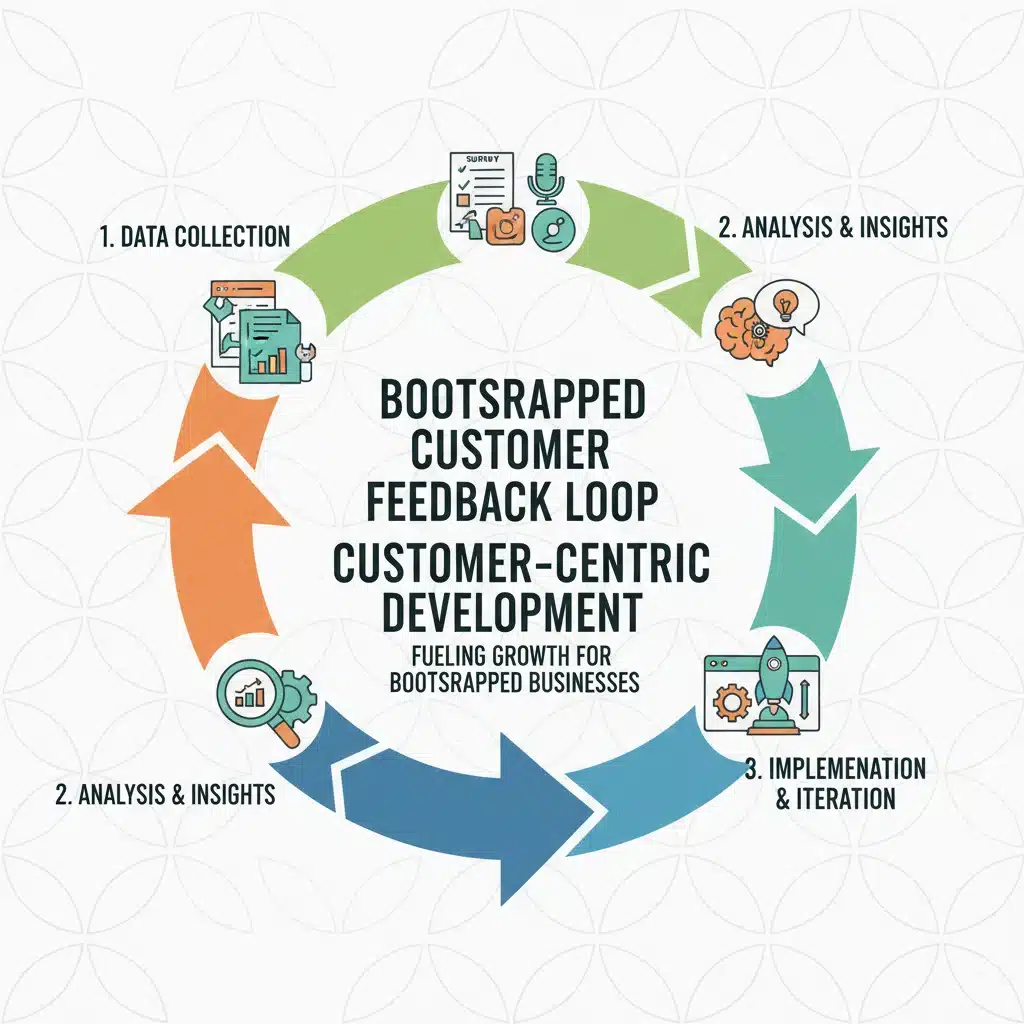
- Gather and Act on Feedback: Actively solicit customer feedback through surveys, interviews, and direct communication. Use this feedback to improve your product or service, showing customers that their opinions matter.
- Build a Community: As mentioned earlier, a strong community fosters loyalty. Encourage users to connect with each other and with your brand.
- Personalization: Tailor communications and offers to individual customer needs and preferences.
- Upselling and Cross-selling: Once customers are satisfied with your core offering, introduce them to premium features, complementary products, or higher-tier services. This increases revenue from your existing base.
- Loyalty Programs: Reward long-term customers with exclusive benefits, discounts, or early access to new features.
For bootstrapping U.S. startups, a high churn rate can be devastating. By investing in customer success and fostering strong relationships, you create a stable revenue stream and reduce the constant pressure of new customer acquisition. Word-of-mouth marketing from satisfied customers is also incredibly powerful and free, making retention a cornerstone of any successful bootstrapped venture.
The Future of Bootstrapping U.S. Startups in 2026 and Beyond
The landscape for bootstrapping U.S. startups in 2026 is ripe with potential for those willing to embrace creativity, discipline, and a relentless focus on value. While the allure of venture capital can be strong, the path of bootstrapping offers a unique blend of freedom, resilience, and sustainable growth. It forces entrepreneurs to build businesses with strong fundamentals, a clear understanding of their market, and a deep connection with their customers. The tactics outlined above are not just theoretical concepts; they are actionable strategies that have been proven to work for countless successful companies.
As technology continues to democratize access to tools and markets, the ability to launch and scale a business with limited capital will only become more pronounced. From AI-powered marketing tools to no-code development platforms, the resources available to lean startups are expanding at an incredible pace. This means that more entrepreneurs than ever before have the opportunity to turn their ideas into thriving businesses without sacrificing ownership or compromising their vision.
For any aspiring founder in the U.S. looking to start a business in 2026, the message is clear: don’t wait for external funding. Start now, use what you have, and build a business that is inherently strong, profitable, and customer-focused. Embrace the challenge of limited resources as an opportunity for innovation, and you’ll be well on your way to building a successful and sustainable enterprise.