Q1 2026 U.S. Venture Capital: Trends, Outlook, and Startup Investment Strategies

Navigating the Q1 2026 U.S. Venture Capital Landscape: A Founder’s Guide
The venture capital landscape is a dynamic ecosystem, constantly evolving with technological advancements, economic shifts, and changing investor sentiments. For startups, understanding these nuances is not just beneficial but essential for securing the funding needed to scale and innovate. As we look ahead to Q1 2026, the U.S. venture capital market presents a complex yet intriguing picture, shaped by recent global events and emerging trends that will define investment priorities and opportunities.
This comprehensive guide delves into the anticipated trends for US Venture Capital Q1 2026, offering founders and entrepreneurs a strategic roadmap to navigate this competitive environment. We will explore the macroeconomic factors influencing investment, highlight key sectors attracting significant capital, and provide actionable advice on how to position your startup for success in the coming quarter.
The Macroeconomic Context Shaping US Venture Capital Q1 2026
To truly grasp the dynamics of US Venture Capital Q1 2026, one must first consider the broader macroeconomic environment. Interest rates, inflation, geopolitical stability, and consumer spending patterns all play pivotal roles in influencing investor confidence and capital allocation. As we approach Q1 2026, several key economic indicators are expected to shape the venture capital market:
Interest Rates and Monetary Policy
The trajectory of interest rates set by the Federal Reserve will remain a critical factor. Higher interest rates typically increase the cost of capital, making investors more risk-averse and often leading to a slowdown in venture funding as traditional, less risky investments become more attractive. Conversely, a stable or declining interest rate environment can foster greater liquidity and a willingness to fund early-stage, growth-oriented companies. Analysts predict that by Q1 2026, the Federal Reserve will likely have a clearer long-term strategy for interest rates, which will provide some stability and predictability for venture capitalists.
Inflationary Pressures and Economic Growth
Inflation, while potentially moderating, will still be a consideration. Persistent inflation can erode the purchasing power of capital, making investors more discerning about the valuation of companies. Economic growth, on the other hand, fuels consumer demand and corporate spending, creating fertile ground for innovative startups. A strong GDP growth forecast for Q1 2026 would signal a robust market, encouraging venture capitalists to deploy capital into promising ventures that can capitalize on this expansion.
Geopolitical Stability and Global Supply Chains
Geopolitical events continue to introduce an element of uncertainty. Conflicts, trade disputes, and shifts in international relations can disrupt supply chains, impact market access, and create unforeseen risks. Venture capitalists, being inherently risk-aware, will factor these global dynamics into their investment decisions. Startups that demonstrate resilience, diversified supply chains, or solutions that mitigate geopolitical risks may find themselves more attractive to investors.
Key Sector Trends Expected in Q1 2026
The allocation of venture capital is heavily influenced by prevailing technological trends and societal needs. For US Venture Capital Q1 2026, certain sectors are poised to attract significant attention and funding, driven by innovation, market demand, and strategic importance.
Artificial Intelligence (AI) and Machine Learning (ML)
The AI revolution is far from over; in fact, it’s just accelerating. Q1 2026 will likely see continued massive investment in AI across all verticals. This includes not only foundational AI models but also specialized AI applications in healthcare, finance, manufacturing, and creative industries. Startups leveraging AI for efficiency gains, personalized experiences, and complex problem-solving will be highly sought after. Areas like ethical AI, explainable AI, and AI security will also gain prominence as the technology matures and its impact becomes more widespread.
Sustainable Technologies and Climate Tech
The urgency of climate change and the global push for sustainability will keep climate tech at the forefront of venture investment. This encompasses renewable energy solutions, carbon capture technologies, sustainable agriculture, electric vehicles (EVs) and charging infrastructure, circular economy models, and advanced materials. Investors are increasingly looking for companies that offer both environmental impact and strong financial returns, driven by government incentives, corporate ESG mandates, and growing consumer awareness.
Biotechnology and Health Innovation
The pandemic underscored the critical importance of health innovation, and this momentum is expected to carry into Q1 2026. Venture capital will flow into areas like precision medicine, gene therapies, digital health platforms, remote patient monitoring, diagnostics, and novel drug discovery. Startups that can demonstrate clear clinical utility, scalability, and a pathway to regulatory approval will be particularly attractive. The integration of AI with biotech will also be a major theme, leading to accelerated research and development.
Cybersecurity
As digital transformation accelerates across all industries, the threat landscape continues to expand. Cybersecurity remains a top priority for businesses and governments alike. Investment in Q1 2026 will focus on advanced threat detection, identity and access management (IAM), cloud security, data privacy, and solutions for securing IoT devices and critical infrastructure. Startups offering innovative, robust, and scalable cybersecurity solutions will find a receptive investor base.
Web3, Blockchain, and Decentralized Technologies
While the exuberance around Web3 and blockchain has somewhat tempered, smart money is still flowing into foundational infrastructure, enterprise blockchain solutions, and applications that demonstrate real-world utility beyond speculative assets. Q1 2026 may see a renewed focus on regulatory clarity, interoperability, and user-friendly interfaces that can bring decentralized technologies to a broader audience. Gaming, supply chain management, and digital identity are areas where significant innovation and investment are anticipated.
Funding Stages and Investment Sweet Spots for Q1 2026
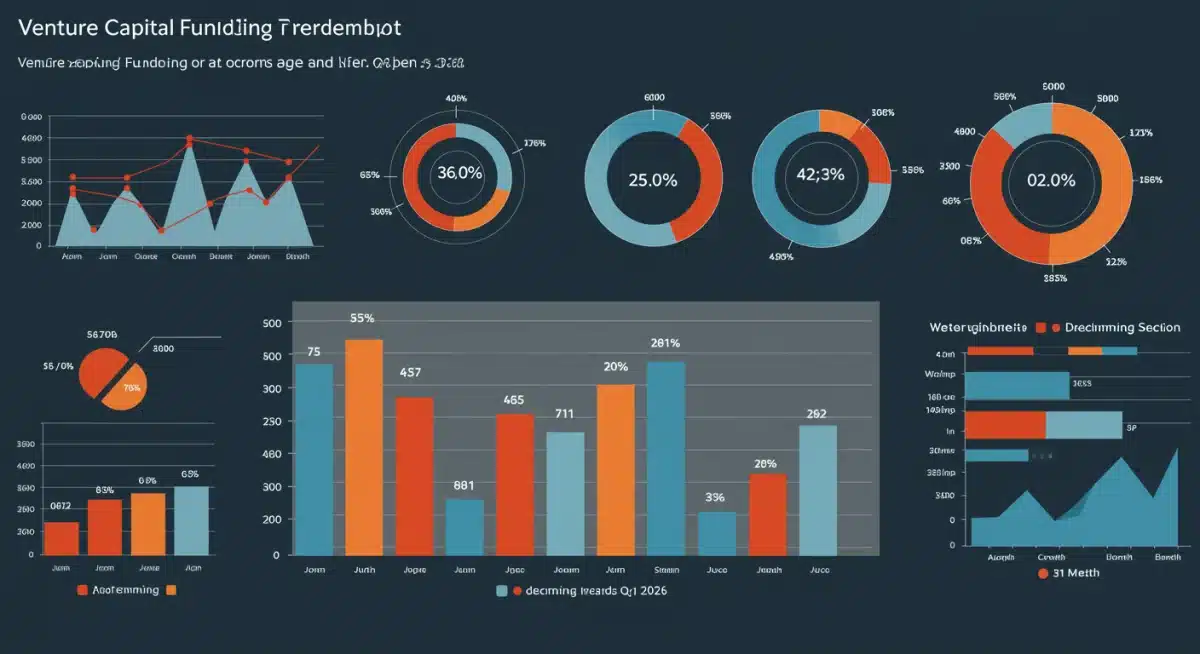
The venture capital market in Q1 2026 will likely continue to show a preference for certain funding stages, influenced by market maturity and investor appetite for risk. Understanding where the capital is flowing can help founders tailor their fundraising strategy.
Seed and Early-Stage Funding
Seed and early-stage funding will remain robust, albeit with increased scrutiny. Investors are looking for strong founding teams, clear problem-solution fit, demonstrable market potential, and early traction (e.g., pilot programs, initial user adoption). The emphasis will be on capital-efficient growth and a clear path to product-market fit. While valuations may have normalized from the peaks of previous years, innovative ideas with solid execution plans will always find backing.
Growth-Stage Funding (Series A, B, C)
Growth-stage funding rounds will likely be more selective. Investors in these rounds will demand strong metrics, including consistent revenue growth, healthy unit economics, clear customer acquisition costs (CAC), and a defensible market position. Profitability or a clear path to it will be a significant differentiator. Companies that have navigated previous funding rounds efficiently and shown resilience will be well-positioned for follow-on investments in US Venture Capital Q1 2026.
Late-Stage and Pre-IPO Funding
Late-stage funding will continue to be influenced by the IPO market and M&A activity. With a more cautious public market, investors in late-stage rounds will seek companies with strong fundamentals, proven business models, and a clear exit strategy. The focus will be on sustainable growth and profitability, rather than hyper-growth at all costs. This segment may see fewer mega-rounds compared to previous years, but strategic investments in market leaders will persist.
How to Position Your Startup for Investment in Q1 2026
Securing venture capital in a competitive market requires more than just a great idea. It demands a strategic approach, meticulous preparation, and a deep understanding of investor expectations. Here’s how to effectively position your startup for funding in US Venture Capital Q1 2026:
1. Build a Stellar Team
Investors fund teams as much as ideas. A strong, complementary founding team with relevant experience, a proven track record, and a shared vision is paramount. Highlight your team’s expertise, commitment, and ability to execute. Demonstrate that you have the right people to tackle challenges and capitalize on opportunities.
2. Demonstrate Clear Problem-Solution Fit and Market Opportunity
Articulate the problem you are solving with utmost clarity and conviction. How significant is this problem? Who are your target customers? How does your solution uniquely address their pain points? Provide compelling evidence of market demand and the size of the addressable market. Investors want to see that your product or service isn’t just innovative but also addresses a real, quantifiable need.
3. Show Traction and Metrics
Data speaks volumes. Whether it’s early user adoption, successful pilot programs, revenue growth, or strong engagement metrics, demonstrate tangible progress. For earlier-stage companies, traction might involve successful product development milestones or positive feedback from early users. For later-stage companies, robust financial metrics, customer retention rates, and unit economics are crucial. Provide clear, verifiable data that showcases your startup’s potential for scaling.
4. Develop a Robust Business Model and Path to Profitability
Gone are the days when growth at all costs was the sole focus. Investors in Q1 2026 will scrutinize your business model for sustainability and a clear path to profitability. How do you generate revenue? What are your margins? What are your customer acquisition costs and lifetime value? A well-thought-out financial model that demonstrates capital efficiency and a realistic timeline to profitability will be highly attractive.
5. Craft a Compelling Narrative and Pitch Deck
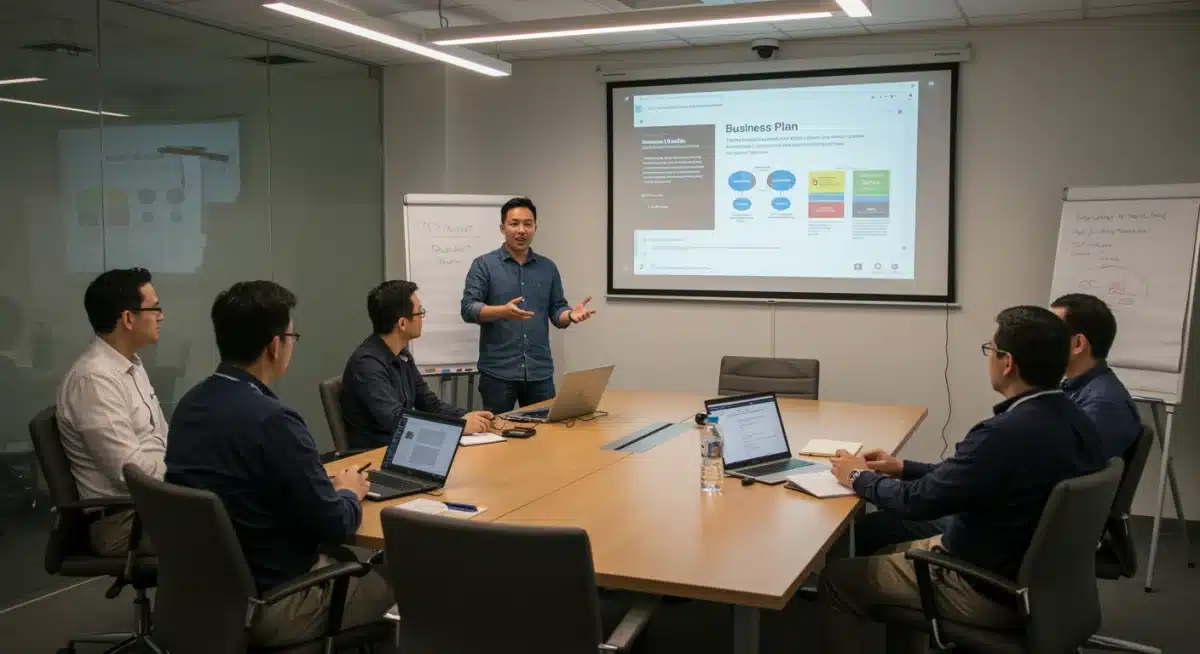
Your pitch deck is your startup’s story. It needs to be concise, visually appealing, and emotionally resonant. Clearly communicate your vision, mission, problem, solution, market opportunity, team, traction, and financial projections. Practice your pitch until it’s flawless and engaging. Remember, investors hear hundreds of pitches; yours needs to stand out.
6. Understand Investor Priorities and Tailor Your Approach
Research potential investors thoroughly. Understand their investment thesis, their portfolio companies, and their preferred stage and sector. Tailor your outreach and pitch to align with their specific interests. A personalized approach demonstrates diligence and respect for their time.
7. Focus on Capital Efficiency
In a potentially tighter funding environment, capital efficiency is paramount. Investors want to see that you can achieve significant milestones with less capital. Highlight how you are optimizing resources, managing burn rate, and achieving impactful results without excessive spending. This demonstrates financial prudence and a mature approach to business building.
8. Build a Strong Network
Networking remains a cornerstone of fundraising. Attend industry events, connect with mentors, advisors, and other founders. Warm introductions are significantly more effective than cold outreach. A strong network can open doors to potential investors and provide invaluable insights.
The Role of Due Diligence in Q1 2026
As the venture capital market matures, the rigor of due diligence is intensifying. Investors are conducting more thorough examinations of every aspect of a startup before committing capital. Founders must be prepared for this scrutiny.
Financial Due Diligence
Expect detailed requests for financial records, projections, cap tables, and revenue models. Be transparent and have all your financial data organized and readily accessible. Discrepancies or lack of clarity can be red flags.
Legal Due Diligence
This includes reviewing incorporation documents, intellectual property (IP) registrations, contracts with employees and customers, and compliance with regulations. Ensure all legal documentation is in order and that your IP is properly protected.
Technical Due Diligence
For tech startups, investors will often bring in technical experts to evaluate your product, architecture, security, and development roadmap. Be prepared to showcase your technology, explain your technical debt, and demonstrate scalability.
Market Due Diligence
Investors will independently verify your market assumptions, competitive landscape, and customer feedback. Be honest about your competitive advantages and potential challenges. Provide evidence of customer validation and testimonials.
Team Due Diligence
Beyond resumes, investors will assess team dynamics, leadership qualities, and cultural fit. Be ready to articulate your team’s strengths and how you plan to address any gaps.
Emerging Challenges and Opportunities in Q1 2026
While the outlook for US Venture Capital Q1 2026 is generally positive for well-positioned startups, certain challenges and opportunities will define the landscape.
Challenges:
- Valuation Compression: While some sectors may see robust valuations, a general trend of valuation compression from the frothy periods of 2020-2021 is expected to continue. Founders must be realistic about their company’s worth.
- Increased Competition: The sheer volume of innovative startups means competition for venture capital remains fierce. Differentiation and a compelling value proposition are more critical than ever.
- Economic Volatility: Despite projections, unforeseen economic shocks or policy changes could impact investor sentiment and capital availability. Startups need to build resilience into their models.
- Talent Acquisition: The war for top talent, especially in specialized fields like AI and cybersecurity, will continue. Attracting and retaining skilled employees can be a significant challenge.
Opportunities:
- Deep Tech Advancements: Breakthroughs in areas like quantum computing, advanced materials, and synthetic biology offer immense long-term potential and attract significant patient capital.
- Regional Hub Growth: While Silicon Valley remains dominant, other U.S. cities are emerging as strong venture hubs, offering new pools of capital and talent.
- Corporate Venture Capital (CVC): Corporations are increasingly engaging in venture investments, providing not just capital but also strategic partnerships, market access, and industry expertise.
- Impact Investing: A growing segment of venture capital is dedicated to impact investing, where investors seek both financial returns and positive social or environmental impact. Startups with a strong ESG (Environmental, Social, Governance) framework can tap into this growing pool of capital.
The Importance of Long-Term Vision and Adaptability
For startups seeking funding in US Venture Capital Q1 2026, it’s crucial to balance immediate fundraising goals with a long-term vision. Investors are not just looking for short-term gains; they want to back companies that can become market leaders and create lasting value.
Demonstrate your ability to adapt to changing market conditions, pivot when necessary, and maintain a clear focus on your core mission. The venture capital journey is often a marathon, not a sprint, and investors favor founders who exhibit resilience, strategic thinking, and a commitment to building a sustainable business.
Conclusion: Seizing the Moment in US Venture Capital Q1 2026
The US Venture Capital Q1 2026 landscape promises to be a period of strategic investment, where innovation, strong fundamentals, and a clear path to profitability will be key differentiators. While challenges remain, the opportunities for well-prepared and visionary startups are abundant.
By understanding the macroeconomic context, identifying key sector trends, and meticulously preparing your startup for investor scrutiny, you can significantly enhance your chances of securing the capital needed to fuel your growth. Focus on building a strong team, demonstrating clear traction, articulating a compelling business model, and communicating your vision effectively.
The venture market is constantly evolving, but the core principles of building a great company endure. For founders, Q1 2026 is not just another quarter; it’s an opportunity to transform innovative ideas into impactful realities with the right investment partners. Prepare diligently, pitch passionately, and position your startup to thrive in the exciting world of U.S. venture capital.