B2B Marketing Strategies 2026: 20% Lead Increase

Advanced B2B marketing strategies for 2026 leverage AI-driven personalization, robust intent data utilization, and community-led growth to achieve a significant 20% increase in qualified leads.
The business-to-business (B2B) marketing arena is in a constant state of evolution, demanding continuous adaptation and innovation. To stay competitive and achieve substantial growth, particularly a 20% increase in qualified leads, businesses must embrace the latest methodologies. This article delves into the three most impactful B2B marketing strategies for 2026, offering insights into their implementation and expected outcomes.
The Rise of Hyper-Personalization through AI and Machine Learning
In 2026, generic marketing messages are largely ineffective. B2B buyers expect content and experiences tailored specifically to their unique challenges, industry, and stage in the buying journey. Hyper-personalization, powered by advanced AI and machine learning, is no longer a luxury but a necessity for driving engagement and converting leads.
Leveraging AI for Predictive Personalization
AI algorithms can analyze vast datasets, including past interactions, behavioral patterns, firmographic data, and public company information, to predict a prospect’s needs and preferences. This allows marketers to deliver highly relevant content, product recommendations, and sales outreach at precisely the right moment.
- Dynamic Content Delivery: AI-driven platforms can automatically adjust website content, email campaigns, and ad creatives based on individual user profiles and real-time behavior.
- Personalized Account-Based Marketing (ABM): AI enhances ABM by identifying ideal target accounts with greater precision and personalizing outreach at scale for each key stakeholder within those accounts.
- Predictive Lead Scoring: Machine learning models predict which leads are most likely to convert, allowing sales teams to prioritize their efforts on the highest-potential prospects.
The ability to anticipate needs rather than react to them transforms the buyer experience, fostering trust and significantly accelerating the sales cycle. This strategic shift is central to achieving a 20% increase in qualified leads by ensuring marketing efforts are always on target.
Hyper-personalization, driven by intelligent automation, ensures that every interaction feels bespoke, resonating deeply with the B2B buyer. This level of tailored engagement dramatically improves lead quality and conversion rates, making it a cornerstone of effective B2B marketing strategies for 2026.
Intent Data: Unlocking Buyer Behavior and Purchase Signals
Understanding buyer intent is paramount for B2B marketers aiming to capture qualified leads efficiently. In 2026, the sophistication of intent data collection and analysis has reached new heights, allowing businesses to identify prospects actively researching solutions and exhibiting strong purchase signals.
Distinguishing Between Types of Intent Data
Intent data can be broadly categorized into first-party and third-party data, each offering unique insights into a prospect’s buying journey.
- First-Party Intent Data: This includes data collected directly from a company’s own assets, such as website visits, content downloads, email engagement, and CRM interactions. It provides deep insights into how prospects interact with your specific brand.
- Third-Party Intent Data: Sourced from external platforms, this data tracks a prospect’s research activities across the broader internet, including content consumption on industry sites, forum discussions, and competitor website visits. It reveals a prospect’s broader interests and challenges, regardless of direct interaction with your brand.
By combining these data sources, marketers gain a holistic view of a prospect’s intent, enabling them to intervene with relevant solutions at critical moments. The strategic use of intent data facilitates more timely and targeted outreach, which is essential for any B2B marketing strategy aiming for significant lead growth.
Identifying prospects who are actively in-market for solutions dramatically reduces wasted marketing spend and shortens sales cycles. This targeted approach ensures that marketing resources are allocated to the most promising opportunities, directly contributing to a 20% increase in qualified leads.
Community-Led Growth: Fostering Engagement and Advocacy
In an increasingly interconnected world, B2B buyers often turn to their peers and trusted communities for recommendations and insights before making purchasing decisions. Community-led growth (CLG) has emerged as a powerful strategy, leveraging these networks to drive brand awareness, build trust, and generate high-quality leads.
Building and Nurturing a Thriving B2B Community
A successful community is more than just a forum; it’s a dynamic ecosystem where customers and prospects can connect, share knowledge, and feel a sense of belonging. Marketers play a crucial role in facilitating these interactions and providing value.
- Dedicated Platforms: Create online spaces, such as private forums, Slack channels, or industry-specific social groups, where members can engage with each other and with your brand.
- Expert Content and Resources: Provide exclusive access to webinars, whitepapers, and expert Q&A sessions that address common challenges and offer valuable solutions.
- Advocacy Programs: Encourage satisfied customers to become brand advocates, sharing their positive experiences and referring new business.
The authenticity of peer recommendations within a community carries significant weight, often surpassing traditional marketing messages. This organic form of validation not only generates new leads but also nurtures existing ones, fostering loyalty and reducing churn.
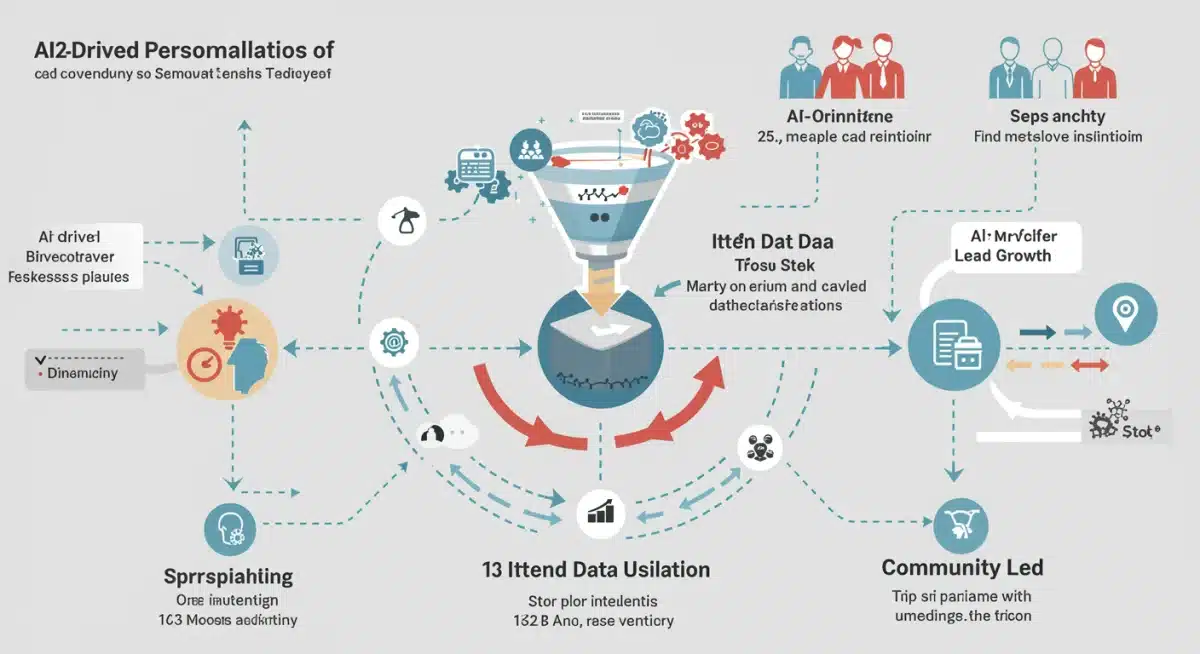
Community-led growth builds a strong foundation of trust and credibility, which is invaluable in the B2B landscape. It transforms prospects into engaged participants and loyal customers into vocal advocates, directly supporting a sustained 20% increase in qualified leads.
Integrating Strategies for Maximum Impact
While each of these strategies — hyper-personalization, intent data, and community-led growth — offers significant benefits independently, their true power is unleashed when integrated. A cohesive approach ensures that data flows seamlessly between systems, creating a unified and highly effective marketing ecosystem.
Creating a Synergistic Marketing Framework
Imagine a scenario where intent data identifies a prospect actively researching a specific solution. This triggers an AI-powered personalization engine to deliver tailored content and ads. Subsequently, the prospect is invited to a relevant community forum where they can engage with peers and product experts, reinforcing their trust and accelerating their decision-making process.
- Unified Data Platforms: Invest in platforms that can centralize and analyze data from all marketing touchpoints, providing a single source of truth for prospect insights.
- Automated Workflows: Implement automation tools that connect different strategy components, ensuring timely and relevant interactions based on real-time data.
- Cross-Functional Collaboration: Foster strong collaboration between marketing, sales, and customer success teams to align on goals and share insights, optimizing the entire customer journey.
This integrated approach ensures that every marketing effort is optimized for relevance and impact, leading to a more efficient lead generation process. The seamless transition from awareness to consideration and conversion is crucial for achieving the ambitious goal of a 20% increase in qualified leads.
By breaking down silos between these powerful strategies, businesses can create a more agile and responsive marketing operation. This holistic view provides a competitive edge, allowing for dynamic adjustments and continuous improvement in lead generation and conversion.
Measuring Success: Metrics for Lead Growth
To truly understand the effectiveness of these B2B marketing strategies for 2026, robust measurement and analytics are essential. Beyond simple lead counts, focusing on the quality and conversion rates of leads provides a clearer picture of ROI and helps refine future efforts.
Key Performance Indicators for Lead Generation
Monitoring a range of metrics allows marketers to assess the health of their lead generation efforts and identify areas for optimization.
- Marketing Qualified Leads (MQLs) to Sales Qualified Leads (SQLs) Conversion Rate: This metric indicates how effectively marketing is delivering truly sales-ready leads.
- Customer Acquisition Cost (CAC): Understanding the cost associated with acquiring each new customer helps evaluate the efficiency of marketing spend.
- Lead Velocity Rate: Measures the growth of qualified leads month-over-month, indicating the speed at which the sales pipeline is expanding.
- Opportunity Win Rate: Tracks the percentage of sales opportunities that result in closed deals, reflecting the quality of leads and the effectiveness of sales enablement.
Regular analysis of these KPIs, combined with A/B testing and iterative improvements, ensures that marketing strategies remain optimized for performance. This data-driven approach is fundamental to not just achieving, but sustaining, a 20% increase in qualified leads.
Effective measurement provides the feedback loop necessary for continuous improvement. By focusing on metrics that reflect actual business outcomes, marketers can demonstrate the tangible value of their strategies and secure ongoing investment in these critical areas.
Overcoming Challenges in B2B Marketing for 2026
Implementing these advanced B2B marketing strategies for 2026 is not without its challenges. Data privacy concerns, the complexity of integration, and the need for specialized talent are significant hurdles that organizations must address to succeed.
Addressing Common Obstacles
Proactive planning and investment in the right resources can help mitigate these challenges, paving the way for successful strategy execution.
- Data Governance and Privacy: With increasing regulations like CCPA and evolving consumer expectations, ensuring ethical data collection and usage is paramount. Implement robust data governance frameworks and prioritize transparency with prospects.
- Technology Integration Complexity: Integrating disparate AI, intent data, and community platforms requires technical expertise and careful planning. Consider phased rollouts and leverage API-first solutions where possible.
- Talent Gap: The demand for skilled professionals in AI, data science, and community management is high. Invest in training existing teams or recruit specialized talent to effectively manage and optimize these strategies.
Navigating these complexities requires a strategic mindset and a willingness to invest in both technology and human capital. Organizations that successfully overcome these challenges will be well-positioned to capitalize on the opportunities presented by these advanced marketing approaches.
By anticipating and addressing these potential roadblocks, businesses can ensure a smoother transition to more sophisticated B2B marketing models. This foresight is crucial for maintaining momentum and achieving the desired 20% increase in qualified leads.
| Key Strategy | Brief Description |
|---|---|
| Hyper-Personalization with AI | Delivering tailored content and experiences using AI to predict prospect needs and preferences. |
| Intent Data Utilization | Identifying and engaging prospects actively researching solutions through first and third-party data. |
| Community-Led Growth | Fostering online communities for peer-to-peer engagement, advocacy, and organic lead generation. |
| Integrated Approach | Combining all three strategies for synergistic effects, unified data, and automated workflows. |
Frequently Asked Questions About B2B Marketing in 2026
Hyper-personalization uses AI and machine learning to deliver highly customized content, product recommendations, and sales outreach based on a B2B prospect’s unique behaviors, firmographics, and predicted needs, significantly enhancing engagement and conversion rates.
Intent data identifies prospects actively researching solutions by tracking their online behavior across various platforms. This allows B2B marketers to engage with potential buyers at the precise moment they are most receptive, leading to higher quality leads and faster sales cycles.
Community-led growth fosters trust and advocacy by creating spaces where B2B buyers can connect, share insights, and get recommendations from peers. This organic validation builds brand credibility, generates high-quality referrals, and nurtures prospects effectively.
Yes, integrating hyper-personalization, intent data, and community-led growth creates a powerful synergistic effect. When combined, they enable a more cohesive and efficient marketing ecosystem, ensuring targeted outreach and improved lead conversion across the entire customer journey.
Challenges include navigating data privacy regulations, complex technology integrations, and a potential talent gap for specialized skills in AI, data science, and community management. Strategic planning and investment in resources are crucial for overcoming these hurdles.
Conclusion
The landscape of B2B marketing in 2026 is defined by sophistication, data-driven insights, and a profound understanding of the buyer’s journey. By strategically adopting hyper-personalization through AI, leveraging advanced intent data, and cultivating robust community-led growth initiatives, businesses can not only meet but exceed their lead generation goals. These three pillars, when integrated effectively, form a powerful framework capable of delivering a sustainable 20% increase in qualified leads, positioning companies for unparalleled success in a competitive market.