Hyper-Personalization: Boost Customer Engagement 25% by 2026
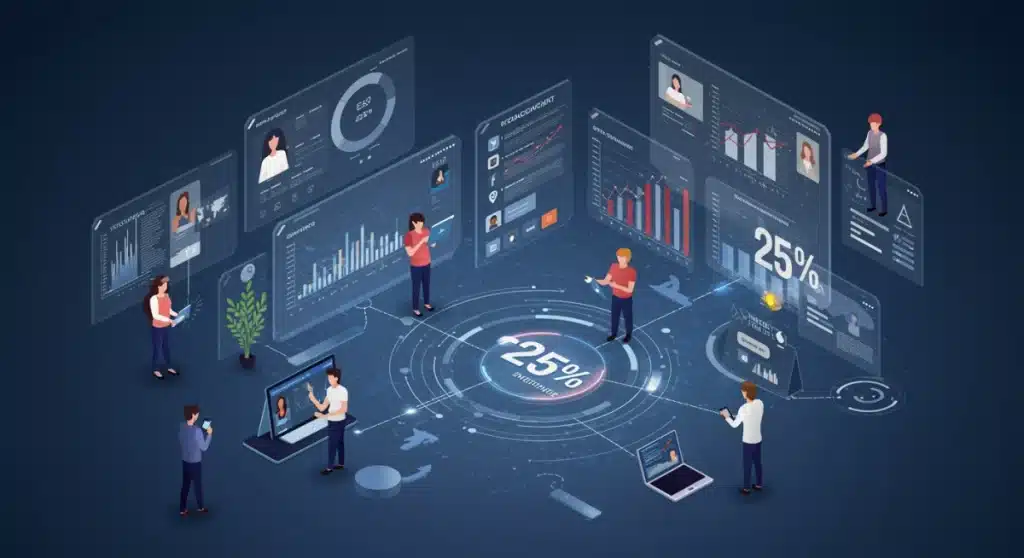
Leveraging hyper-personalization technologies is essential for businesses to significantly boost customer engagement by 25% by 2026, offering tailored experiences that foster loyalty and drive conversions.
In today’s rapidly evolving digital landscape, simply personalizing customer interactions is no longer enough. To truly stand out and achieve significant growth, businesses must embrace hyper-personalization customer engagement. This guide delves into how advanced technologies can help you achieve an ambitious 25% boost in customer engagement by 2026, transforming how your audience connects with your brand.
Understanding Hyper-Personalization in 2026
Hyper-personalization takes traditional personalization to an entirely new level, moving beyond basic segmentation to deliver highly individualized experiences in real-time. By 2026, this means leveraging granular data, artificial intelligence (AI), and machine learning (ML) to predict customer needs and preferences with unparalleled accuracy. It’s about creating a one-to-one marketing approach that feels intuitive and anticipatory.
This advanced approach allows brands to craft unique journeys for each customer, adapting content, offers, and interactions based on their real-time behavior, past purchases, demographic data, and even emotional cues. The goal is to make every touchpoint feel uniquely crafted for the individual, fostering deeper connections and increasing satisfaction.
The Shift from Personalization to Hyper-Personalization
- Data Depth: Moving from broad demographic data to individual behavioral and psychographic insights.
- Real-time Adaptation: Content and offers adjust instantly based on current user actions, not just historical data.
- Predictive Analytics: Utilizing AI to anticipate future needs and proactively offer relevant solutions.
- Omnichannel Consistency: Ensuring a seamless, personalized experience across all platforms and devices.
The distinction is critical because consumers in 2026 expect more than just their name in an email. They anticipate brands understanding their context, preferences, and even their current mood to deliver truly relevant and valuable interactions. Ignoring this shift risks falling behind competitors who are already investing heavily in these advanced technologies.
Ultimately, understanding hyper-personalization in 2026 means recognizing its foundational role in building lasting customer relationships and driving measurable business outcomes. It’s no longer a luxury but a necessity for competitive advantage.
Key Technologies Driving Hyper-Personalization
The ambitious goal of boosting customer engagement by 25% through hyper-personalization by 2026 relies heavily on a sophisticated stack of marketing technologies. These tools and platforms work in concert to collect, analyze, and act upon vast amounts of customer data, enabling real-time, individualized experiences that resonate deeply with users. Without these technological advancements, hyper-personalization would remain an aspiration rather than an achievable strategy.
At the core of this technological ecosystem are AI and machine learning algorithms, which are responsible for processing complex data patterns and making predictive recommendations. These algorithms learn from every customer interaction, continuously refining their understanding of individual preferences and behaviors. This iterative learning process is what makes hyper-personalization so dynamic and effective.
AI and Machine Learning for Predictive Insights
AI and ML are the brains behind hyper-personalization. They analyze enormous datasets to identify patterns, predict future behaviors, and automate decision-making processes. This includes everything from recommending products to personalizing website layouts in real-time.
- Behavioral Analytics Platforms: Tools that track and interpret user actions across all digital touchpoints.
- Customer Data Platforms (CDPs): Centralized systems that unify customer data from various sources, creating a single, comprehensive customer view.
- Real-time Decision Engines: AI-powered systems that make instant recommendations for content, offers, and interactions.
Additionally, advancements in natural language processing (NLP) and computer vision are enhancing conversational AI and visual personalization. Chatbots can now understand nuanced customer queries, and image recognition can tailor visual content based on user preferences. These technologies are not just about efficiency; they are about creating richer, more intuitive customer experiences that feel genuinely human-centric.
The synergy between these technologies allows businesses to move beyond simple automation to intelligent automation, where every customer interaction is optimized for relevance and impact. Investing in the right technology stack is paramount for any brand serious about achieving significant engagement improvements by 2026.
Crafting Personalized Customer Journeys
The essence of hyper-personalization lies in its ability to craft bespoke customer journeys, moving away from a one-size-fits-all approach. By 2026, successful brands will meticulously map out every possible customer touchpoint and dynamically adjust the experience based on individual signals. This involves understanding the customer’s intent, context, and historical interactions to deliver the most relevant experience at each stage.
This process begins with robust data collection and segmentation, but it quickly evolves into real-time decision-making powered by AI. Imagine a customer browsing a product on your website; a hyper-personalized journey might involve showing them related items, offering a specific discount based on their loyalty status, or even adjusting the website’s layout to highlight information most relevant to their inferred needs. The journey is not linear but adaptive, responding to every click, scroll, and pause.
Mapping Touchpoints for Individualized Paths
Effective journey mapping requires identifying all potential interaction points and understanding how to personalize them. This includes:
- Website Interactions: Dynamic content, personalized recommendations, and adaptive layouts.
- Email Marketing: Tailored content, send times, and offers based on past engagement.
- Mobile App Experiences: In-app notifications, personalized dashboards, and location-based promotions.
- Social Media Engagement: Customized ad targeting and content delivery based on user profiles and behavior.
Each touchpoint must be integrated into a cohesive strategy, ensuring that the personalized experience is consistent across channels. A customer should feel recognized and understood, whether they are interacting with your brand on a desktop, a mobile device, or through a smart speaker. This seamless integration is critical for building trust and reinforcing the feeling of a truly individualized relationship.
Ultimately, crafting personalized customer journeys is about empathy at scale. It’s about using technology to understand each customer’s unique story and responding to it in a way that provides genuine value and fosters a deeper connection with the brand.
Measuring and Optimizing Engagement Metrics
Achieving a 25% boost in customer engagement by 2026 through hyper-personalization isn’t just about implementing new technologies; it’s also about rigorously measuring and continuously optimizing the impact of these efforts. Without clear metrics and a commitment to iterative improvement, even the most advanced personalization strategies can fall short. Businesses must establish key performance indicators (KPIs) that directly reflect engagement and use data to refine their approach.
The challenge lies in moving beyond vanity metrics to truly understand how personalized experiences are influencing customer behavior and loyalty. This often involves a blend of quantitative data, such as conversion rates and time spent on site, and qualitative insights derived from customer feedback and sentiment analysis. The goal is to create a feedback loop where insights from engagement metrics inform and improve future personalization efforts.

Key Engagement Metrics to Track
To effectively measure the impact of hyper-personalization, marketers should focus on a comprehensive set of metrics:
- Conversion Rates: Measuring how personalized experiences drive desired actions, such as purchases or sign-ups.
- Customer Lifetime Value (CLTV): Assessing the long-term revenue generated by engaged, loyal customers.
- Retention Rates: Tracking how personalized content helps keep customers coming back.
- Time on Site/App: Indicating how engaging and relevant the content is to individual users.
- Click-Through Rates (CTR): Evaluating the effectiveness of personalized calls to action and content.
- Customer Satisfaction Scores (CSAT) & Net Promoter Score (NPS): Gauging overall sentiment and willingness to recommend.
Beyond these traditional metrics, businesses should also look at less direct indicators like reduced customer service inquiries, increased social media mentions, and higher rates of user-generated content. These can all signal a heightened sense of connection and satisfaction resulting from hyper-personalized interactions. Regular A/B testing of different personalization tactics is also crucial for identifying what resonates most effectively with various customer segments.
Ultimately, measuring and optimizing engagement is an ongoing process that requires agility and a data-driven mindset. By continually analyzing the impact of hyper-personalization, brands can fine-tune their strategies and ensure they are on track to achieve their 25% engagement boost by 2026.
Ethical Considerations and Data Privacy
As hyper-personalization becomes more sophisticated, so too do the ethical responsibilities associated with data collection and usage. By 2026, customers will be more aware and protective of their personal data, making transparency and trust paramount for any brand employing advanced personalization techniques. Achieving a 25% boost in customer engagement cannot come at the expense of privacy; in fact, ethical data practices will be a cornerstone of truly effective hyper-personalization.
The balance between delivering highly relevant experiences and respecting individual privacy is delicate. Brands must ensure they are compliant with evolving data protection regulations like GDPR and CCPA, but also go beyond mere compliance to build genuine trust with their audience. This means clearly communicating how data is collected, what it’s used for, and giving customers control over their information. A breach of trust can quickly undo any gains in engagement.
Building Trust Through Transparent Data Practices
- Clear Consent Mechanisms: Obtaining explicit consent for data collection and usage, avoiding hidden clauses.
- Data Anonymization: Employing techniques to protect individual identities while still gleaning valuable insights.
- User Control: Providing accessible dashboards where users can view, manage, and delete their data.
- Regular Audits: Conducting internal and external audits to ensure data security and privacy compliance.
Furthermore, businesses must be mindful of potential biases in AI algorithms. If not carefully monitored, these biases can lead to discriminatory or exclusionary personalized experiences, damaging brand reputation and alienating customer segments. Ethical AI development, along with diverse teams overseeing personalization strategies, is essential to mitigate these risks. The goal is to personalize responsibly, ensuring that technology serves the customer without compromising their rights or well-being.
By prioritizing ethical considerations and data privacy, brands can build a foundation of trust that not only enables hyper-personalization but also strengthens customer loyalty, contributing significantly to the overall engagement goals for 2026.
Future Trends in Hyper-Personalization for 2026
Looking ahead to 2026, the landscape of hyper-personalization is set to evolve even further, driven by emerging technologies and shifting consumer expectations. Brands aiming for a 25% increase in customer engagement must stay ahead of these trends, integrating them into their strategies to maintain a competitive edge. The future promises even more immersive, proactive, and contextually aware personalized experiences that will redefine customer relationships.
One significant trend is the increasing integration of hyper-personalization with augmented reality (AR) and virtual reality (VR). Imagine trying on clothes virtually with personalized recommendations based on your body shape and style preferences, or receiving tailored product demonstrations in a VR environment. These immersive experiences will offer unprecedented levels of engagement and decision-making support, blurring the lines between physical and digital interactions.
Emerging Technologies Shaping the Future
- Contextual AI: AI that understands not just *what* a user is doing, but *why* and *where*, providing hyper-relevant suggestions.
- Voice and Conversational Interfaces: Personalized interactions via smart speakers and voice assistants, offering proactive assistance.
- Predictive Personalization: Moving beyond reacting to past behavior to anticipating future needs and desires before the customer expresses them.
- Emotional AI: Technologies that can detect and respond to customer emotions, tailoring interactions for greater empathy and impact.
The rise of the metaverse also presents a unique opportunity for hyper-personalization. Brands will be able to create personalized avatars, virtual storefronts, and experiences within these digital worlds, offering entirely new avenues for customer engagement. The data generated within these environments will further enrich customer profiles, enabling even more precise personalization across all touchpoints.
Ultimately, the future of hyper-personalization in 2026 is about creating a truly intuitive and anticipatory customer experience. Brands that embrace these emerging trends will not only meet but exceed customer expectations, fostering deeper connections and achieving their ambitious engagement goals.
Implementing a Hyper-Personalization Strategy
Successfully implementing a hyper-personalization strategy to achieve a 25% boost in customer engagement by 2026 requires more than just acquiring advanced technology; it demands a holistic approach that integrates people, processes, and platforms. It starts with a clear vision, a phased implementation plan, and a commitment to continuous learning and adaptation. Without a well-defined strategy, even the most powerful tools can fail to deliver their full potential.
The initial phase involves a thorough audit of existing data infrastructure, identifying gaps, and ensuring data quality. This foundational step is critical because hyper-personalization is only as good as the data it relies upon. Once data readiness is established, organizations need to define their personalization objectives, focusing on specific customer segments and desired outcomes. This clarity guides technology selection and content creation.
Steps for Strategic Implementation
- Data Audit and Integration: Consolidate data from all sources into a unified Customer Data Platform (CDP).
- Define Clear Objectives: Set specific, measurable goals for engagement, conversions, and customer satisfaction.
- Phased Rollout: Start with a pilot program on a specific segment or channel, learning and iterating before scaling.
- Content Strategy Alignment: Develop dynamic content that can be easily personalized and deployed across channels.
- Team Training: Equip marketing, sales, and customer service teams with the skills to leverage personalization tools effectively.
Furthermore, establishing a culture of experimentation and continuous improvement is vital. Hyper-personalization is not a one-time project but an ongoing journey. Regular A/B testing, analysis of engagement metrics, and gathering customer feedback will provide invaluable insights for refining strategies and optimizing performance. This iterative process ensures that the personalization efforts remain relevant and impactful as customer behaviors and market conditions evolve.
By following a structured implementation plan and fostering a data-driven culture, businesses can effectively deploy hyper-personalization technologies, driving significant increases in customer engagement and achieving their strategic objectives by 2026.
| Key Aspect | Brief Description |
|---|---|
| Hyper-Personalization Defined | Real-time, individualized customer experiences driven by granular data, AI, and ML, moving beyond basic segmentation. |
| Core Technologies | AI, Machine Learning, CDPs, and behavioral analytics platforms for predictive insights and real-time decision-making. |
| Ethical Data Use | Prioritizing transparency, consent, and user control over data to build and maintain customer trust. |
| Future Trends | Integration with AR/VR, contextual AI, voice interfaces, and emotional AI for immersive experiences. |
Frequently Asked Questions About Hyper-Personalization
The main difference lies in depth and real-time adaptation. Personalization uses broad segments, while hyper-personalization leverages individual, granular data, AI, and machine learning to deliver unique, real-time experiences that predict needs rather than just reacting to past actions.
By delivering highly relevant content, offers, and interactions tailored to each customer’s real-time context and preferences, hyper-personalization significantly increases perceived value, leading to deeper connections, higher satisfaction, and increased interaction rates across all touchpoints.
Key technologies include Artificial Intelligence (AI) and Machine Learning (ML) for predictive insights, Customer Data Platforms (CDPs) for data unification, and advanced behavioral analytics platforms. These tools enable real-time decision-making and dynamic content delivery.
Ethical considerations involve ensuring data privacy and security, obtaining clear consent, providing user control over data, and mitigating AI biases. Transparency in data usage builds trust and is crucial for sustainable hyper-personalization strategies.
By 2026, hyper-personalization will integrate more deeply with AR/VR, contextual AI, voice interfaces, and emotional AI. This will lead to more immersive, proactive, and anticipatory customer experiences across an expanding range of digital and virtual environments.
Conclusion
The journey towards achieving a 25% boost in customer engagement by 2026 through hyper-personalization is both strategic and technological. It demands a deep understanding of customer needs, a robust data infrastructure, and a commitment to ethical practices. By embracing the advanced capabilities of AI, machine learning, and integrated data platforms, businesses can move beyond generic interactions to create truly individualized and impactful customer journeys. The future of marketing is undeniably personal, and those who master hyper-personalization will not only meet but exceed the expectations of an increasingly discerning consumer base, securing a significant competitive advantage in the years to come.