Untapped Niche Markets US 2025: Entrepreneurial Wins
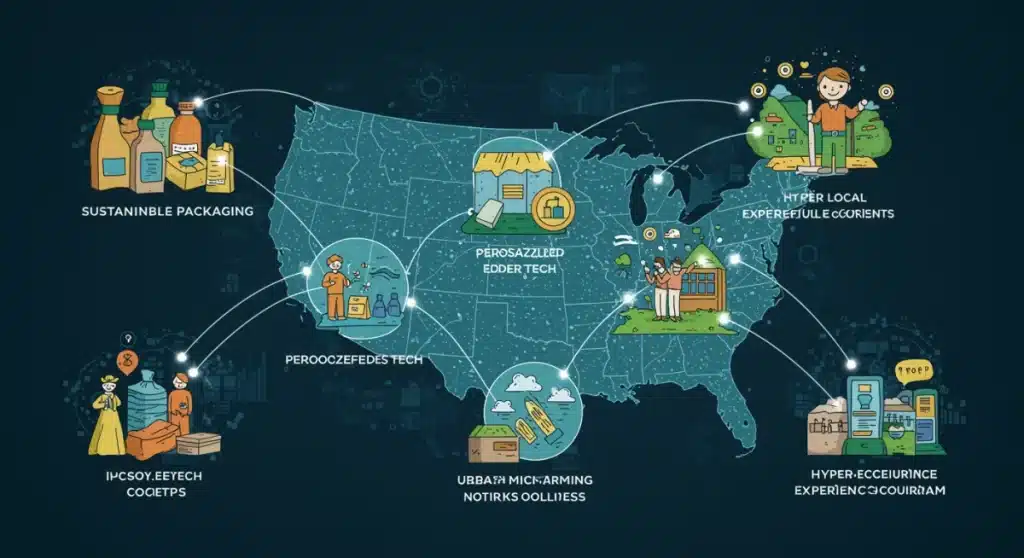
Identifying untapped niche markets in the US for 2025 is crucial for entrepreneurs aiming to achieve significant growth by sidestepping saturation and catering to specialized, unmet consumer demands.
As the entrepreneurial landscape evolves, savvy business owners are looking beyond saturated sectors to find their next big opportunity. The key to sustainable success often lies in identifying and capitalizing on untapped niche markets, especially in a dynamic economy like that of the United States. In 2025, several specialized segments are poised for significant growth, offering fertile ground for innovative ventures.
The Rise of Sustainable Packaging Solutions
The global shift towards environmental consciousness has propelled sustainability from a trend into a fundamental business imperative. Consumers and corporations alike are increasingly scrutinizing the environmental footprint of products, with packaging often being a primary concern. This escalating demand for eco-friendly alternatives has opened a significant, yet still largely untapped niche market within the US: advanced sustainable packaging solutions.
This market segment isn’t just about recycled materials; it encompasses a wide array of innovations designed to minimize waste, reduce carbon emissions, and promote circular economies. Entrepreneurs focusing on this area can explore biodegradable materials, compostable plastics, edible packaging, and reusable container systems. The challenge lies in developing solutions that are not only environmentally sound but also cost-effective, durable, and appealing to diverse industries, from food and beverage to cosmetics and e-commerce.
Innovating Biodegradable Materials
Developing new materials that break down harmlessly in the environment is a cornerstone of this niche. This involves significant research and development to create alternatives to traditional plastics.
- Plant-based polymers derived from corn, sugarcane, or algae.
- Fungus-based packaging that decomposes naturally.
- Materials using agricultural waste products.
- Water-soluble films for single-use applications.
The potential for intellectual property and market leadership in this space is immense. Companies that can offer scalable and affordable biodegradable options will be well-positioned for success. Furthermore, the regulatory landscape is likely to become more stringent regarding single-use plastics, further boosting the demand for these innovative solutions.
Reusable and Refillable Systems
Beyond single-use alternatives, the concept of reusable and refillable packaging is gaining traction. This involves creating robust, attractive, and convenient systems that encourage consumers to return or refill their product containers, drastically reducing waste.
- Subscription models for reusable containers.
- Automated refill stations in retail environments.
- Standardized returnable packaging for e-commerce.
- Smart packaging with tracking capabilities for reuse programs.
Entrepreneurs can focus on specific industries or develop cross-industry platforms. The logistical challenges associated with collection, cleaning, and redistribution offer opportunities for innovative supply chain solutions and tech integration. The sustainable packaging market, while growing, still has vast areas that remain underdeveloped, presenting a fertile ground for entrepreneurial exploration and significant impact.
Personalized Elder Tech and Wellness
The demographic landscape of the United States is rapidly aging, creating an unprecedented demand for products and services tailored to the needs of the elderly population. While general elder care is a well-established industry, the segment of personalized elder tech and wellness remains a significantly untapped niche market. This area focuses on leveraging technology to enhance the independence, safety, and quality of life for seniors, moving beyond basic medical alert systems to truly integrated and personalized solutions.
This niche includes everything from smart home devices designed for accessibility and fall prevention to AI-powered companions and personalized health monitoring systems. The key differentiator is the emphasis on customization and integration, recognizing that each senior has unique needs, preferences, and health profiles. Entrepreneurs entering this space must prioritize user-friendliness, privacy, and the ability to seamlessly blend technology into daily routines without being intrusive.
Smart Home Solutions for Seniors
Creating environments that adapt to the changing needs of older adults is a critical component of this market. This involves smart devices that can automate tasks, monitor safety, and provide peace of mind for both seniors and their families.
- Voice-activated assistants for reminders and communication.
- Smart lighting systems with motion detection for fall prevention.
- Automated medication dispensers with alerts.
- Remote monitoring systems for fall detection and emergency response.
The integration of these technologies requires a deep understanding of senior living challenges, ensuring that solutions are intuitive and genuinely beneficial. There’s a strong demand for systems that are easy to install and manage, often requiring minimal technical expertise from the end-user.
AI-Powered Companionship and Cognitive Support
Social isolation and cognitive decline are significant concerns for many seniors. AI-powered solutions can offer companionship, stimulate cognitive function, and provide personalized support.
- AI chatbots offering conversational interaction and mental stimulation.
- Robotic pets providing emotional comfort and reducing loneliness.
- Personalized cognitive training apps tailored to individual needs.
- Virtual reality experiences for reminiscence therapy and exploration.
Developing these technologies requires a delicate balance between advanced AI and empathetic design. The goal is to enhance well-being and engagement without replacing human interaction, focusing on augmenting existing care networks. This market segment promises significant growth as technology becomes more sophisticated and accepted within the senior community, addressing deeply personal and often overlooked needs.
Urban Micro-Farming and Hyper-Local Produce
As urbanization continues and consumers increasingly demand fresh, locally sourced food, the concept of urban micro-farming and hyper-local produce has emerged as a promising, yet largely untapped niche market in the US. This involves cultivating food within city limits, often in unconventional spaces like rooftops, vertical farms, and community gardens, to supply nearby restaurants, farmers’ markets, and direct-to-consumer models. The appeal lies in reduced transportation costs, minimized environmental impact, and the superior freshness and quality of the produce.
Entrepreneurs in this space can leverage innovative agricultural techniques such as hydroponics, aquaponics, and aeroponics to maximize yield in limited urban footprints. The market is driven by a desire for transparency in food sourcing, a preference for organic and pesticide-free options, and a growing interest in supporting local economies. This niche requires a blend of agricultural expertise, business acumen, and a deep understanding of urban logistics.
Vertical Farming Technologies
Vertical farming allows for significant food production in minimal space, making it ideal for urban environments. This method offers controlled environments, reducing vulnerability to weather and pests.
- Hydroponic systems for leafy greens and herbs.
- Aeroponic towers for efficient water and nutrient delivery.
- Controlled environment agriculture (CEA) for year-round production.
- Modular and scalable vertical farm designs for various urban spaces.
The development and implementation of efficient vertical farming systems, coupled with smart technology for monitoring and automation, represent a substantial opportunity. Businesses can focus on selling fresh produce directly to consumers or wholesale to local businesses, creating a resilient and sustainable food supply chain within cities.

Direct-to-Consumer (D2C) Local Delivery
Connecting urban farms directly with consumers through efficient delivery models is another key aspect of this niche. This minimizes intermediaries, ensuring freshness and potentially higher profit margins.
- Subscription boxes for weekly produce delivery.
- Online platforms for ordering hyper-local ingredients.
- Partnerships with local restaurants and cafes for fresh supplies.
- Community Supported Agriculture (CSA) programs for urban residents.
Logistics and cold chain management are crucial here, ensuring that produce arrives fresh and quickly. The demand for personalized, convenient access to high-quality local produce is strong, and businesses that can streamline this process will find a receptive market. Urban micro-farming not only addresses food security but also creates green jobs and enhances community engagement, making it a multifaceted entrepreneurial win.
Experiential Learning and Skill-Based Tourism
In an increasingly digital world, consumers are seeking authentic, immersive experiences that offer personal growth and skill development. This desire has given rise to the largely untapped niche market of experiential learning and skill-based tourism in the US. Moving beyond traditional sightseeing, this niche focuses on travel that incorporates hands-on workshops, masterclasses, and immersive cultural or wilderness experiences, allowing travelers to acquire new skills or deepen existing ones while exploring new destinations.
This market appeals to a wide demographic, from digital nomads seeking unique learning opportunities to retirees pursuing new hobbies and families looking for educational vacations. Entrepreneurs can curate experiences around diverse interests, such as traditional crafts, culinary arts, sustainable living, adventure sports, or historical reenactments. The key is to provide high-quality instruction, unique local insights, and a seamless travel experience that combines learning with leisure.
Curated Workshops and Retreats
Designing specialized workshops and retreats that offer intensive learning in unique settings is central to this niche. These programs often combine expert instruction with opportunities for exploration and relaxation.
- Culinary retreats focusing on regional cuisine and local ingredients.
- Art and craft workshops with local artisans in scenic locations.
- Survival skills training in wilderness environments.
- Wellness and mindfulness retreats with expert practitioners.
The success of these offerings hinges on the expertise of the instructors and the authenticity of the local experience. Marketing these curated programs to specific interest groups, often through social media and niche travel platforms, is essential. The demand for highly specialized, transformative travel experiences is growing, offering significant potential for innovative entrepreneurs.
Adventure and Eco-Tourism with a Learning Focus
Combining adventure or eco-tourism with an educational component adds depth and value to travel experiences. This appeals to those who want to do more than just observe nature or participate in thrilling activities.
- Wildlife photography expeditions with professional guidance.
- Geology or botany tours led by expert naturalists.
- Sustainable farming immersion programs in rural communities.
- Indigenous culture and history tours with local storytellers.
These types of tours require careful planning to ensure safety, environmental responsibility, and educational integrity. Partnerships with local conservation groups, indigenous communities, and academic institutions can enhance the authenticity and impact of these experiences. As consumers become more conscious travelers, the demand for meaningful and enriching journeys will continue to fuel this untapped market, providing entrepreneurs with a wealth of creative opportunities.
AI-Powered Content Personalization for Small Businesses
In the digital age, content is king, but personalized content is royalty. While large corporations have long leveraged AI for sophisticated content personalization, this capability remains a largely untapped niche market for small and medium-sized businesses (SMBs) in the US. SMBs often lack the resources, expertise, or budget to implement complex AI solutions for tailoring marketing messages, product recommendations, and customer service interactions. This creates a significant opportunity for entrepreneurs to develop and offer accessible, affordable, and easy-to-integrate AI-powered personalization tools specifically designed for the SMB market.
This niche is driven by the undeniable fact that personalized content significantly boosts engagement, conversion rates, and customer loyalty. Entrepreneurs can focus on developing solutions that automate the creation of dynamic website content, personalized email campaigns, targeted social media ads, and intelligent chatbots. The key is to simplify the complexity of AI, providing SMBs with user-friendly platforms that deliver tangible results without requiring extensive technical knowledge or a large data science team.
Simplified AI Tools for Dynamic Website Content
Many SMB websites are static, missing opportunities to engage visitors with relevant content. AI tools can change this by dynamically adapting website elements based on user behavior and preferences.
- AI-driven content recommendations for e-commerce sites.
- Personalized landing page generators based on referral source.
- Dynamic calls-to-action (CTAs) tailored to visitor segments.
- Automated A/B testing for content optimization.
The aim is to provide SMBs with plug-and-play solutions that seamlessly integrate with existing website platforms. These tools should offer intuitive dashboards and actionable insights, empowering business owners to optimize their online presence without needing a web developer or data analyst on staff. The market for such accessible AI solutions is vast and growing rapidly.
Personalized Email and Social Media Automation
Email marketing and social media are powerful tools for SMBs, but generic messaging often falls flat. AI can transform these channels into highly effective personalized communication streams.
- AI-powered email subject line and content generation.
- Automated segmentation of email lists based on engagement.
- Predictive analytics for optimal email send times.
- AI-driven social media content scheduling and ad targeting.
By automating personalization across these critical channels, entrepreneurs can help SMBs build stronger customer relationships and drive sales more effectively. The focus should be on creating integrated platforms that manage multiple touchpoints, providing a holistic view of customer interactions. This untapped niche market offers immense potential for growth, as SMBs increasingly recognize the competitive advantage of personalized communication but require simplified tools to achieve it.
Micro-Logistics for E-commerce Returns
The explosive growth of e-commerce has brought with it an equally significant challenge: returns. Managing product returns is a complex, costly, and often inefficient process for businesses of all sizes, but particularly for small to medium-sized online retailers. This logistical headache represents a substantial, yet largely untapped niche market for specialized micro-logistics solutions in the US. Entrepreneurs can step in to streamline the reverse supply chain, offering services that make returns easier for consumers and more cost-effective for businesses.
This niche isn’t just about shipping labels; it encompasses a range of services from localized collection points and efficient processing centers to intelligent inventory management for returned goods. The goal is to reduce the environmental impact of returns, minimize financial losses for retailers due to damaged or unsellable items, and enhance the overall customer experience. Businesses in this space must focus on speed, reliability, and technological integration to offer a competitive edge.
Localized Collection and Aggregation Points
Making returns convenient for consumers is paramount. Establishing easily accessible local collection points can significantly improve the return experience and streamline the first leg of the reverse logistics process.
- Partnerships with local small businesses (e.g., coffee shops, dry cleaners) as drop-off points.
- Automated locker systems in residential areas or public spaces.
- Mobile collection services for high-density urban areas.
- Consolidation centers for aggregating returns from multiple retailers.
By creating a dense network of collection points, entrepreneurs can reduce the individual shipping costs for retailers and simplify the process for consumers. This localized approach also contributes to a more sustainable model by optimizing transportation routes.
Smart Processing and Re-commerce Solutions
Once returned, items need efficient processing to determine their next destination. This involves inspection, repair, repackaging, and potentially re-selling through secondary markets.
- AI-powered inspection systems for quick damage assessment.
- Specialized repair and refurbishment services for returned products.
- Integration with re-commerce platforms for selling open-box or refurbished items.
- Automated inventory management for returned goods.
Entrepreneurs can offer end-to-end solutions that transform returns from a cost center into a potential revenue stream. By leveraging technology to efficiently process and re-market returned items, businesses in this untapped niche market can provide invaluable services to the e-commerce sector, addressing a critical pain point and fostering greater sustainability in online retail.
| Niche Market | Key Opportunity |
|---|---|
| Sustainable Packaging | Developing biodegradable materials and reusable systems for eco-conscious consumers. |
| Personalized Elder Tech | Tech solutions enhancing independence, safety, and quality of life for the aging population. |
| Urban Micro-Farming | Hyper-local produce cultivation and direct-to-consumer models within urban environments. |
| Micro-Logistics for E-commerce Returns | Streamlining reverse supply chain for online retailers with localized collection and smart processing. |
Frequently Asked Questions About Niche Markets
An untapped niche market is a specialized segment within a larger industry that has significant unmet demand, limited competition, and strong growth potential. It often caters to specific needs or preferences of a well-defined customer group, allowing entrepreneurs to establish a unique market position before mainstream competition.
They offer a pathway to sustainable growth by avoiding direct competition in saturated markets. Entrepreneurs can build strong customer loyalty, command premium pricing, and innovate more freely in these specialized areas. Identifying and serving these specific needs leads to higher profitability and market resilience in the long term.
Look for emerging trends, demographic shifts, technological advancements, and persistent customer pain points that are not adequately addressed by existing solutions. Conduct thorough market research, analyze online communities, observe lifestyle changes, and consider problems you or others experience that could be solved with a specialized product or service.
While offering high potential, niche markets can have limited customer bases, making scalability challenging. There’s also the risk of misjudging demand or facing rapid entry from larger competitors once the niche gains traction. Careful validation and adaptable strategies are crucial to mitigate these risks and ensure sustained growth.
Opportunities exist across the entire US, but specific regions may be more conducive to certain niches. Tech-forward areas like Silicon Valley and Austin are ideal for AI-powered solutions. Environmentally conscious states like California and the Pacific Northwest suit sustainable packaging. Densely populated urban centers are great for micro-farming and elder tech innovation.
Conclusion
Exploring untapped niche markets in the US offers a compelling strategy for entrepreneurial success in 2025 and beyond. By focusing on specialized needs within sustainable packaging, personalized elder tech, urban micro-farming, and micro-logistics for e-commerce returns, entrepreneurs can carve out unique market positions and avoid the pitfalls of overcrowded industries. These emerging sectors not only promise significant financial returns but also provide opportunities to create meaningful impact, addressing critical societal and environmental challenges. The key lies in thorough research, innovative thinking, and a commitment to serving specific customer segments with tailored solutions.