From Idea to Market: 90-Day Blueprint for US Venture in 2025

Launching a profitable US-based venture in 2025 within 90 days demands a strategic, agile blueprint, encompassing meticulous market validation, lean development, and targeted market entry to ensure sustainable growth.
Embarking on an entrepreneurial journey is both exhilarating and challenging. For those aiming to launch a profitable US-based venture in 2025, the prospect of achieving market entry within a mere 90 days might seem ambitious. However, with a meticulously crafted blueprint and unwavering execution, this timeline is not just feasible but highly advantageous in today’s fast-paced economy. This guide will walk you through a strategic framework designed to transform your innovative idea into a thriving business, leveraging efficiency and precision at every step.
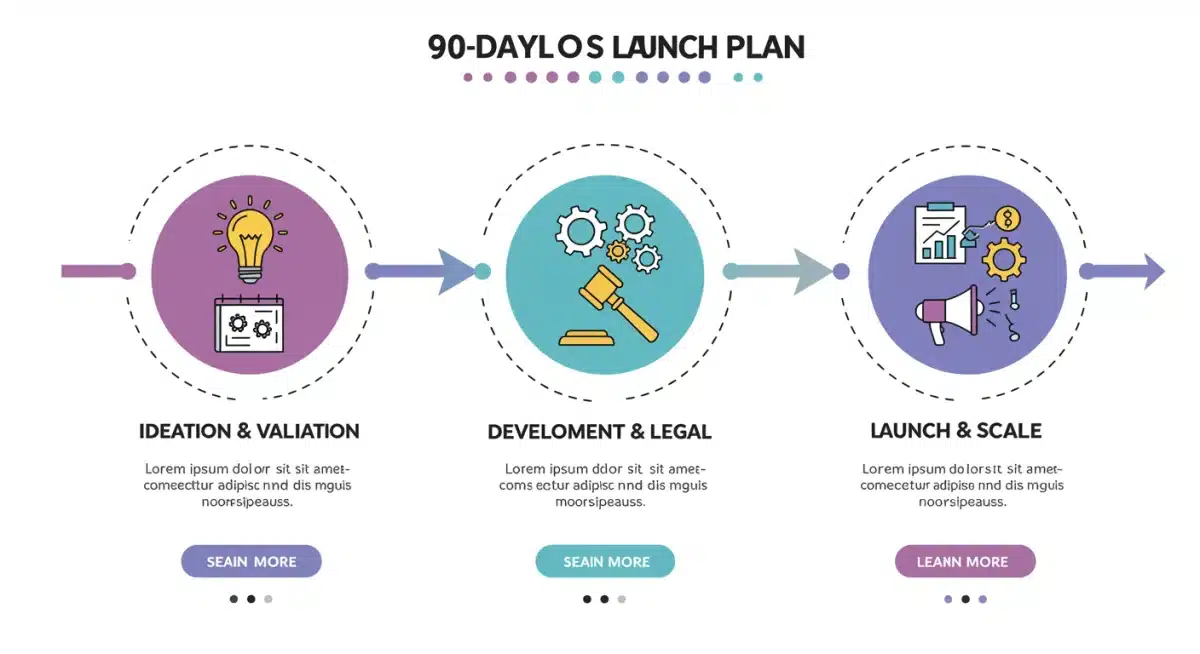
Phase 1: Ideation and Validation (Days 1-30)
The initial 30 days are critical for laying a solid foundation for your venture. This phase focuses on refining your core idea and rigorously validating its market potential. Skipping these steps often leads to significant setbacks later, making thorough preparation paramount for any aspiring entrepreneur.
Defining your unique value proposition
Before investing substantial resources, it’s essential to clearly articulate what makes your product or service stand out. This involves identifying a specific problem your venture solves, defining your target audience, and understanding their needs and pain points.
- Identify specific market gaps your idea addresses.
- Clearly define your ideal customer profile.
- Articulate the unique benefits your solution offers.
Market research and competitive analysis
Understanding the landscape in which you plan to operate is non-negotiable. Comprehensive market research helps you gauge demand, identify existing competitors, and pinpoint opportunities for differentiation. This intelligence is vital for positioning your venture effectively.
Engage in both primary and secondary research. Primary research might involve surveys, interviews, and focus groups with potential customers. Secondary research includes analyzing existing reports, industry trends, and competitor websites. Look for white spaces or underserved niches.
Minimum viable product (MVP) conceptualization
The MVP is the simplest version of your product or service that can be released to the market, providing just enough functionality to satisfy early customers and gather feedback for future development. It’s about learning fast and iterating quickly.
- Outline core features essential for initial value delivery.
- Prioritize features based on user need and technical feasibility.
- Plan for rapid iteration based on early user feedback.
By the end of this phase, you should have a validated idea, a clear understanding of your market, and a well-defined concept for your MVP. This structured approach minimizes risk and maximizes the potential for a successful launch, ensuring your venture is built on a strong, data-backed premise.
Phase 2: Development and Legal Framework (Days 31-60)
With a validated idea, the next 30 days are dedicated to bringing your MVP to life and establishing the necessary legal and operational structures. This phase requires a blend of technical execution and meticulous planning to ensure compliance and scalability.
Lean MVP development
Focus on developing only the essential features identified in Phase 1. The goal is to build a functional product quickly, not a perfect one. Utilize agile methodologies to maintain flexibility and respond to emerging insights during the development cycle.
Consider outsourcing development if you lack in-house expertise or to accelerate the process. Platforms like Upwork or Toptal can connect you with skilled developers. Ensure clear communication and set realistic milestones to keep the project on track.
Establishing legal and financial foundations
Setting up the correct legal structure is crucial for protecting your assets and ensuring compliance. This includes choosing a business entity (LLC, C-Corp, S-Corp), registering your business, and securing necessary licenses and permits.
- Consult with a legal expert to choose the appropriate business entity.
- Register your business name and secure relevant intellectual property.
- Open a dedicated business bank account and set up basic accounting systems.
Building your core team and partnerships
Even for a lean launch, a small, dedicated team is vital. Identify key roles that need to be filled, whether by co-founders, employees, or contractors. Seek individuals who share your vision and possess complementary skills.
Strategic partnerships can significantly accelerate your growth. Look for collaborators who can provide access to new markets, specialized expertise, or essential resources. These alliances should be mutually beneficial and align with your long-term objectives.
At the close of this phase, your MVP should be nearing completion, and your venture should be legally established with a foundational team in place. This groundwork primes your business for a smooth transition into market entry, minimizing potential compliance issues and fostering a collaborative environment.
Phase 3: Pre-Launch and Market Entry (Days 61-90)
The final 30 days are a whirlwind of activity, culminating in your official market launch. This phase demands strategic marketing, rigorous testing, and a readiness to pivot based on early feedback. The goal is to make a strong initial impression and begin building a loyal customer base.
Developing a go-to-market strategy
Your go-to-market strategy outlines how you will reach your target customers and persuade them to adopt your product or service. This includes defining your messaging, choosing appropriate marketing channels, and setting initial pricing.
- Craft compelling messaging that highlights your unique value proposition.
- Select optimal marketing channels (e.g., social media, email, content marketing).
- Determine a competitive and sustainable pricing model.
Beta testing and feedback integration
Before a full public launch, conduct thorough beta testing with a small group of target users. This allows you to identify bugs, gather usability feedback, and refine your product based on real-world interactions. Actively listen to your beta testers and implement critical improvements.
The insights gained from beta testing are invaluable. They can help you fine-tune features, improve user experience, and ensure your product meets market expectations. A smooth user experience is paramount for positive early adoption and word-of-mouth growth.
Official launch and initial marketing push
Execute your launch plan with precision. This might involve a press release, social media campaign, email marketing, or targeted advertising. The objective is to generate initial buzz and drive early adopters to your platform or service.
Monitor your marketing efforts closely and be prepared to adjust your strategy based on performance data. Track key metrics such as website traffic, conversion rates, and customer acquisition costs. Initial days post-launch are critical for gathering actionable data.
By the end of these 90 days, your venture will be live, generating revenue, and poised for growth. This rapid deployment strategy allows you to gain market traction quickly, learn from real customer interactions, and iterate faster than competitors, setting the stage for long-term profitability.
Post-Launch: Iteration and Scaling
Launching is just the beginning. The 90-day blueprint sets the stage, but sustained success hinges on continuous iteration and strategic scaling. The market is dynamic, and your venture must be agile enough to adapt and evolve. This ongoing process ensures your business remains relevant and competitive, expanding its reach and deepening its market penetration over time.
Customer feedback and product refinement
Establish robust channels for collecting customer feedback immediately post-launch. This could include in-app surveys, customer support interactions, social media monitoring, and direct interviews. Analyze this feedback to identify areas for improvement and new feature opportunities.
Implement a continuous development cycle, releasing regular updates and new features based on customer needs and market trends. This iterative approach keeps your product fresh and ensures it continues to solve real problems for your users. Prioritize changes that offer the highest impact for the least effort in the early stages.
Performance analytics and data-driven decisions
Leverage analytics tools to track key performance indicators (KPIs) relevant to your business goals. Monitor user engagement, sales conversions, customer churn rates, and marketing campaign effectiveness. Data provides objective insights into what’s working and what isn’t.
- Regularly review website and app analytics.
- Track sales funnels and conversion rates.
- Analyze customer acquisition costs and lifetime value.
Strategic scaling and growth opportunities
Once you have a stable product and a growing customer base, begin exploring strategic scaling opportunities. This might involve expanding into new geographical markets within the US, developing complementary products or services, or targeting new customer segments.
Scaling requires careful planning to avoid overextending resources. Focus on sustainable growth, ensuring your infrastructure, team, and financial resources can support increased demand. Consider partnerships or strategic alliances that can facilitate expansion without significant upfront investment. This phase is about smart growth, not just rapid growth.
The journey from idea to a profitable venture is continuous. Post-launch, dedication to understanding your customers, making data-driven decisions, and thoughtfully pursuing growth opportunities will define your long-term success. This iterative mindset is crucial for navigating the competitive US market.
Financial Planning and Funding Strategies
Securing appropriate funding and managing finances effectively are paramount for any new venture, especially when aiming for rapid market entry. A solid financial plan not only supports operations but also signals credibility to potential investors and partners.
Initial bootstrapping and lean operations
For a 90-day launch, bootstrapping is often the most viable initial funding strategy. This means funding your business primarily through personal savings, pre-sales, or minimal external debt. It enforces a lean operational mindset, minimizing unnecessary expenses and maximizing efficiency.
Focus on generating revenue as quickly as possible, even if it’s modest, to reinvest into the business. This approach reduces reliance on external capital and allows you to retain greater control over your venture.
Exploring seed funding and angel investors
If your venture requires more capital than bootstrapping can provide, consider seeking seed funding from angel investors or early-stage venture capitalists. These investors typically provide capital in exchange for equity and often bring valuable mentorship and industry connections.
- Prepare a compelling pitch deck highlighting your market opportunity, team, and financial projections.
- Network with angel investor groups and attend startup events.
- Clearly articulate your funding needs and how the capital will be utilized.
Financial projections and burn rate management
Develop realistic financial projections that include revenue forecasts, operational expenses, and cash flow statements. Understand your burn rate—the speed at which your company is spending its capital—and implement strategies to manage it effectively.
Regularly review your financial performance against your projections. This allows for timely adjustments to your strategy, ensuring you maintain financial stability and can extend your runway when needed. Accurate financial management is a cornerstone of sustainable growth.
Effective financial planning and strategic funding are not just about securing capital; they are about fostering financial discipline and making informed decisions that support your venture’s growth trajectory. A well-managed budget and a clear funding strategy are critical components of a successful launch and scaling effort.
Navigating US Regulations and Compliance
Launching a venture in the US market requires a thorough understanding of its complex regulatory landscape. Compliance is not just a legal necessity but also a fundamental aspect of building trust and credibility with customers and partners. Ignoring regulations can lead to significant penalties and reputational damage.
Business registration and licensing
The first step is to correctly register your business at both the state and federal levels. This involves obtaining an Employer Identification Number (EIN) from the IRS and registering your business name with the appropriate state authorities. Depending on your industry and location, various local licenses and permits may also be required.
Research the specific requirements for your industry. For instance, a food service business will have different regulations than a software company. Utilize resources from the Small Business Administration (SBA) and state business development agencies to ensure all requirements are met.
Understanding tax obligations
US tax laws can be intricate. As a business owner, you will be responsible for federal, state, and potentially local taxes. This includes income tax, payroll tax, sales tax, and property tax. Understanding these obligations from the outset is crucial for accurate financial planning and avoiding legal issues.
- Consult with a tax professional to understand your specific tax liabilities.
- Set up systems for accurate record-keeping of all financial transactions.
- Familiarize yourself with quarterly tax payment requirements.
Data privacy and consumer protection laws
In the digital age, data privacy and consumer protection are paramount. Businesses operating in the US must comply with various federal and state laws, such as the California Consumer Privacy Act (CCPA) and forthcoming national regulations. Protecting customer data builds trust and prevents legal challenges.
Develop clear privacy policies and terms of service. Ensure your data collection, storage, and usage practices are transparent and compliant with applicable laws. Investing in cybersecurity measures is also critical to safeguard sensitive information.
Navigating the regulatory environment can be daunting, but it is an essential part of launching a successful and sustainable business in the US. Proactive engagement with legal and financial experts can mitigate risks and ensure your venture operates within the bounds of the law, fostering a strong foundation for future growth.
| Key Phase | Description & Goal |
|---|---|
| Ideation & Validation | Refine idea, validate market fit, and define MVP within 30 days. |
| Development & Legal | Develop MVP, establish legal structure, and build core team in 30 days. |
| Pre-Launch & Entry | Execute marketing, beta test, and officially launch the venture in 30 days. |
| Post-Launch Strategy | Focus on iteration, scaling, and continuous customer feedback for sustained growth. |
Frequently Asked Questions
Yes, a 90-day launch is realistic with a lean approach, focusing on a Minimum Viable Product (MVP), strategic planning, and rapid execution. It requires intense dedication and careful resource allocation but offers significant first-mover advantages in the competitive US market.
The most critical step in the first 30 days is thorough market validation and defining your Unique Value Proposition (UVP). Without a clear understanding of market need and competitive differentiation, subsequent development efforts risk being misdirected and inefficient.
Legal compliance is critically important. It protects your business from potential penalties, builds trust with customers, and ensures smooth operations. Early consultation with legal professionals for business registration, licenses, and tax obligations is highly recommended.
An MVP is fundamental for a rapid launch, allowing entrepreneurs to quickly introduce a core product, gather essential user feedback, and iterate efficiently. It minimizes initial development costs and risks, enabling faster market entry and learning.
Securing funding within 90 days often involves bootstrapping or seeking early-stage seed funding from angel investors. Focus on demonstrating a clear path to profitability and a strong team. A compelling pitch deck and a well-defined financial plan are essential for attracting capital quickly.
Conclusion
Launching a profitable US-based venture in 2025 within a 90-day window is an ambitious but entirely achievable goal for entrepreneurs equipped with a strategic blueprint and an agile mindset. This comprehensive guide, broken down into meticulous phases from ideation to market entry, emphasizes the critical role of market validation, lean development, robust legal frameworks, and continuous iteration. By adhering to this structured approach, prioritizing efficiency, and making data-driven decisions, aspiring business owners can successfully navigate the complexities of the US market. The journey demands relentless dedication and adaptability, but the rewards of a well-executed rapid launch can be transformative, setting a strong foundation for sustained growth and profitability in the dynamic entrepreneurial landscape.