Scale Sales Teams: $50K Monthly Revenue Per Rep Blueprint

A 3-month blueprint for scaling sales teams effectively by 2025 focuses on increasing monthly revenue per representative by $50,000 through strategic planning, advanced training, and technological integration, ensuring significant financial impact and sustainable business growth.
In today’s competitive landscape, the ability to effectively grow your sales force is not just an advantage; it’s a necessity. This article delves into a comprehensive 3-month blueprint for scaling sales teams, designed to boost monthly revenue by a significant $50,000 per representative by 2025. We will explore the critical financial impacts and practical solutions needed to transform your sales operations, ensuring sustainable growth and maximizing return on investment.
Understanding the Financial Impact of Scaling Sales Teams
Scaling a sales team isn’t merely about adding headcount; it’s a strategic investment with profound financial implications. The goal is to ensure each new hire, and indeed each existing team member, contributes substantially to the bottom line. This requires a clear understanding of the costs involved versus the potential revenue gains.
The financial impact begins with recruitment costs, which include sourcing, interviewing, and onboarding. Beyond these initial outlays, there are ongoing expenses such as salaries, commissions, benefits, and sales enablement tools. However, when executed correctly, these costs are quickly overshadowed by the increased revenue generated by a more efficient and productive sales force. A well-scaled team can unlock new market segments, deepen existing customer relationships, and shorten sales cycles, all contributing to a healthier financial outlook.
Calculating ROI in Sales Scaling
To truly grasp the financial benefits, organizations must meticulously track their return on investment (ROI). This involves comparing the total investment in scaling (recruitment, training, tools) against the incremental revenue generated. A target of $50,000 extra monthly revenue per rep provides a tangible benchmark against which to measure success.
- Recruitment Costs: Include advertising, recruiter fees, and internal HR time.
- Training & Onboarding: Costs associated with initial and ongoing education, mentorship programs.
- Technology & Tools: CRM subscriptions, sales automation platforms, communication tools.
- Compensation & Benefits: Base salary, variable compensation, health insurance, retirement plans.
By carefully monitoring these metrics, businesses can adjust their scaling strategies in real-time, ensuring that every dollar spent on growth translates into a measurable increase in profitability. This data-driven approach is crucial for validating the blueprint’s effectiveness and securing buy-in from stakeholders.
The financial impact of scaling sales teams extends beyond immediate revenue. It also includes improved customer lifetime value, enhanced brand reputation, and the ability to outpace competitors. Understanding these multifaceted benefits is key to justifying the upfront investment and sustaining long-term growth.
Month 1: Foundation and Strategic Alignment
The first month of our 3-month blueprint is dedicated to laying a solid foundation. This involves a thorough assessment of current sales operations, defining clear objectives, and ensuring strategic alignment across all departments. Without a robust foundation, any scaling effort is likely to crumble under pressure.
During this initial phase, it’s crucial to analyze existing sales processes, identify bottlenecks, and determine what has worked well in the past. This diagnostic approach helps in understanding the current state and what needs to be optimized before significant expansion. Strategic alignment means ensuring that sales goals are in harmony with the overall business objectives, and that all teams, from marketing to product development, support the sales effort.
Current State Assessment and Gap Analysis
Begin by conducting a comprehensive audit of your current sales team’s performance, processes, and technological stack. This involves examining conversion rates, average deal size, sales cycle length, and individual rep performance. Identify critical gaps in skills, resources, and technology that could hinder future growth.
- Performance Metrics Review: Analyze historical data to identify top performers and areas for improvement.
- Process Mapping: Document current sales workflows from lead generation to close, pinpointing inefficiencies.
- Technology Audit: Assess the effectiveness of existing CRM, sales enablement, and communication tools.
- Skill Set Evaluation: Identify common skill gaps across the team and individual training needs.
This detailed analysis provides the necessary insights to develop a targeted scaling strategy. Understanding where you are is the first step toward determining where you need to go.
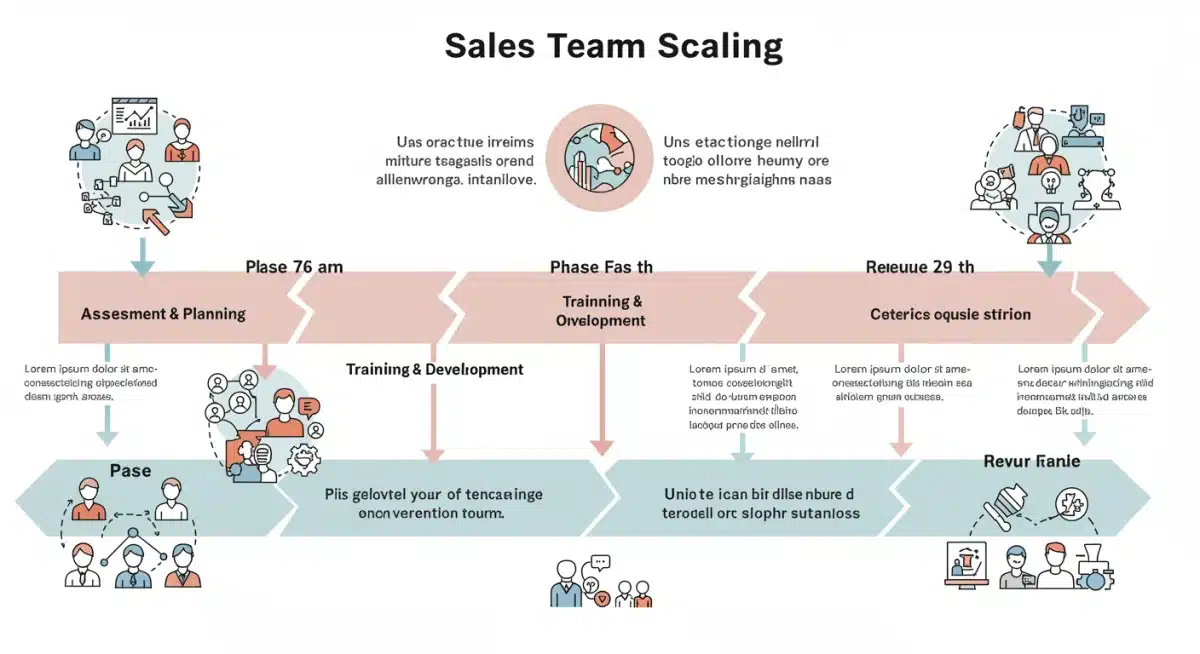
Following the assessment, establish clear, measurable, achievable, relevant, and time-bound (SMART) goals for the scaling initiative. These goals should directly support the target of increasing monthly revenue per rep by $50,000. This foundational month sets the stage for rapid, yet controlled, expansion.
Month 2: Talent Acquisition and Advanced Training
With the foundation firmly in place, Month 2 shifts focus to acquiring top talent and equipping both new and existing sales representatives with advanced skills. This is where the rubber meets the road in terms of expanding your sales capacity and capability.
Recruiting the right individuals is paramount. This isn’t just about filling seats; it’s about finding individuals who align with your company culture, possess the necessary aptitude, and are eager to learn and grow. Simultaneously, existing team members need access to continuous learning opportunities that hone their skills, introduce new techniques, and keep them ahead of market trends. The synergy between new hires and seasoned professionals, all operating with a shared, elevated skill set, is key to achieving the ambitious revenue targets.
Strategic Recruitment and Onboarding
Develop a robust recruitment strategy that targets candidates with a proven track record of success and a growth mindset. Leverage diverse sourcing channels, conduct structured interviews, and implement practical assessments to evaluate selling capabilities. A comprehensive onboarding program is essential to integrate new hires quickly and effectively.
- Define Ideal Candidate Profile: Outline essential skills, experience, and cultural fit.
- Multi-Channel Sourcing: Use LinkedIn, industry job boards, referrals, and recruitment agencies.
- Structured Interview Process: Implement behavioral and situational questions to assess competencies.
- Accelerated Onboarding: Provide initial training, mentorship, and early sales opportunities.
Effective onboarding reduces time to productivity, ensuring new reps contribute to revenue faster. It also fosters a sense of belonging and commitment, reducing early attrition rates.
Continuous Skill Enhancement and Coaching
For both new and existing reps, invest in advanced training programs. These should cover product knowledge, advanced negotiation tactics, objection handling, and effective use of sales technology. Regular coaching sessions and performance reviews are vital for continuous improvement.
Focus on personalized development plans, recognizing that each sales rep has unique strengths and areas for improvement. Utilize role-playing, simulated sales calls, and peer feedback to create an immersive learning environment. The goal is to cultivate a team of highly skilled, confident, and adaptable sales professionals capable of consistently exceeding their targets.
Month 3: Implementation, Optimization, and Accountability
The final month of the blueprint focuses on putting the expanded team and enhanced skills into action, continuously optimizing processes, and establishing a strong culture of accountability. This is the integration phase where all previous efforts coalesce into measurable results.
During this period, initial strategies are refined based on real-world performance data. It’s about a continuous feedback loop where performance is monitored, analyzed, and used to inform adjustments. Accountability mechanisms are crucial to ensure that every team member understands their contribution to the overall revenue goal and is empowered to achieve it.
Leveraging Technology for Sales Efficiency
Maximize the use of sales technology to streamline operations and boost efficiency. This includes optimizing your CRM for better lead management and pipeline visibility, implementing sales automation tools, and utilizing AI-powered analytics for predictive insights.
- CRM Optimization: Ensure data integrity, automate routine tasks, and customize dashboards for actionable insights.
- Sales Automation: Utilize tools for email sequencing, meeting scheduling, and proposal generation.
- AI & Analytics: Employ predictive analytics to identify high-potential leads and optimize sales strategies.
- Communication Platforms: Integrate tools that facilitate seamless internal and external communication.
Technology should serve as an enabler, freeing up sales reps to focus on high-value activities like relationship building and closing deals. The right tools can significantly amplify the efforts of a growing sales team.
Performance Tracking and Iterative Improvement
Establish clear key performance indicators (KPIs) and implement a robust system for tracking individual and team performance. Regular performance reviews, coupled with constructive feedback and additional training where needed, are essential for continuous improvement.
Foster a culture of data-driven decision-making. Encourage sales leaders to use performance data to identify trends, celebrate successes, and address areas of concern proactively. The iterative process of setting goals, executing, measuring, and refining is fundamental to achieving and sustaining the $50,000 monthly revenue increase per rep. This constant refinement ensures that the scaling efforts remain agile and responsive to market dynamics.
Building a Sustainable Sales Culture
Beyond the immediate revenue targets, a critical component of successful scaling is cultivating a sustainable sales culture. This culture should be characterized by continuous learning, collaboration, and a relentless focus on customer success. A strong culture ensures that the growth achieved is not just a temporary spike but a lasting transformation.
A sustainable sales culture emphasizes not just individual achievement but also team success. It promotes knowledge sharing, peer mentorship, and a supportive environment where challenges are met with collective problem-solving. This approach reduces burnout, increases job satisfaction, and ultimately leads to higher retention rates among top performers. Investing in culture is investing in the long-term health and productivity of your sales organization.
Fostering Collaboration and Knowledge Sharing
Encourage cross-functional collaboration between sales, marketing, and product teams. This ensures that sales reps have the most up-to-date information, marketing campaigns are aligned with sales efforts, and product development is informed by customer feedback. Internally, create platforms for sales reps to share best practices and insights.
- Cross-Functional Meetings: Schedule regular check-ins to align strategies and share updates.
- Internal Knowledge Base: Create a centralized repository for sales collateral, competitive analysis, and success stories.
- Peer Mentorship Programs: Pair experienced reps with newer hires to facilitate knowledge transfer.
- Recognition Programs: Acknowledge and reward collaborative efforts and successful team initiatives.
A collaborative environment not only improves performance but also enhances job satisfaction, making your organization a more attractive place for top sales talent.
Leadership Development and Empowerment
Invest in developing strong sales leaders who can inspire, motivate, and guide their teams. Empower them to make decisions, take ownership of their results, and continuously seek ways to improve. Effective leadership is the linchpin of a high-performing sales culture.
Provide leadership training that focuses on coaching skills, strategic planning, and change management. Encourage leaders to lead by example, demonstrating the values and behaviors expected of the team. Empowering leaders to innovate and adapt ensures that the sales organization remains agile and resilient in the face of market changes. This proactive approach to leadership development is crucial for maintaining momentum and achieving sustained growth.
Mitigating Risks and Overcoming Challenges
Scaling a sales team, while promising immense rewards, also comes with its share of risks and challenges. These can range from difficulties in hiring the right talent to maintaining consistent performance across a larger team. Proactive identification and mitigation of these issues are essential for a smooth and successful scaling journey.
One common challenge is the potential dilution of company culture as new members join. Another is ensuring that training and onboarding processes remain effective as the volume of new hires increases. Moreover, market dynamics can shift unexpectedly, requiring the sales team to adapt quickly. Addressing these potential pitfalls head-on is crucial for maintaining momentum and achieving desired outcomes. A well-prepared organization anticipates these challenges and develops strategies to navigate them.
Addressing Talent Retention and Burnout
High turnover rates can significantly undermine scaling efforts. Implement strategies to retain top talent, such as competitive compensation packages, career development opportunities, and a supportive work environment. Monitor for signs of burnout and offer resources to maintain employee well-being.
- Competitive Compensation: Regularly review and adjust salaries and commission structures.
- Career Pathing: Provide clear opportunities for advancement and skill development.
- Work-Life Balance Initiatives: Promote healthy boundaries and offer wellness programs.
- Regular Feedback: Conduct stay interviews and act on employee feedback to improve satisfaction.
Investing in employee well-being and career growth not only reduces turnover but also boosts morale and productivity across the entire sales organization.
Adapting to Market Changes and Competition
The business environment is constantly evolving. Your sales strategy must be flexible enough to adapt to new market trends, competitive pressures, and technological advancements. Regular market analysis and competitor benchmarking are vital for staying ahead.
Encourage sales reps to be lifelong learners, constantly updating their knowledge of industry shifts and customer needs. Foster an agile mindset within the sales team, enabling them to pivot strategies quickly when necessary. This continuous adaptation ensures that the scaled sales team remains relevant and effective, consistently delivering value to customers and revenue to the company.
Measuring Success and Future Growth
The ultimate goal of this blueprint is to achieve a significant, measurable increase in revenue per rep. However, success isn’t just about hitting the $50,000 monthly target; it’s also about establishing a framework for continuous growth and improvement. Measuring success involves a holistic view of financial metrics, team performance, and strategic alignment, paving the way for future expansion.
Once the 3-month blueprint is completed, the focus shifts to sustaining the gains and planning for the next phase of growth. This requires ongoing monitoring of KPIs, regular strategic reviews, and a commitment to investing in the sales team’s development. The insights gained from this scaling initiative will inform future decisions, allowing the organization to replicate and build upon its success. The journey of scaling is continuous, and establishing robust measurement practices ensures every step is purposeful and impactful.
Key Performance Indicators (KPIs) for Success
Beyond the $50,000 revenue target, track a range of KPIs to get a comprehensive view of performance. These include conversion rates at each stage of the funnel, average deal size, customer acquisition cost, and customer lifetime value. Analyze both individual and team metrics.
- Revenue Per Rep: Direct measure of productivity and the primary goal.
- Sales Cycle Length: Indicates efficiency in moving deals through the pipeline.
- Win Rate: Percentage of opportunities converted into closed deals.
- Customer Churn Rate: Essential for understanding long-term revenue stability.
These KPIs provide a clear picture of what’s working and what needs further attention, allowing for data-driven adjustments to optimize performance.
Planning for Continuous Iteration and Expansion
Scaling is an ongoing process, not a one-time event. Use the insights gained from the first three months to refine your strategies, identify new growth opportunities, and plan for the next phase of expansion. Regularly review your market position, competitive landscape, and technological advancements.
Establish a culture of continuous learning and adaptation within the sales organization. Encourage experimentation with new sales methodologies, tools, and market approaches. By embracing an iterative approach, your sales team can maintain its competitive edge and continue to deliver impressive revenue growth year after year, solidifying its position as a key driver of business success.
| Key Aspect | Brief Description |
|---|---|
| Financial Impact | Strategic investment in sales team growth for significant revenue increase. |
| 3-Month Blueprint | Structured plan covering foundation, talent, and optimization for rapid scaling. |
| Revenue Target | Aim for $50,000 monthly revenue increase per sales representative. |
| Sustainable Growth | Focus on culture, leadership, and continuous adaptation for long-term success. |
Frequently Asked Questions About Scaling Sales Teams
Scaling sales teams means strategically expanding your sales capacity and capabilities to achieve disproportionate revenue growth without a linear increase in costs. It involves optimized processes, technology, and talent development, ensuring each new hire significantly boosts profitability.
Achieving a $50,000 monthly revenue increase per rep is ambitious but realistic with the right blueprint. It requires a combination of targeted training, efficient technology utilization, clear performance metrics, and a highly motivated sales culture, especially in high-value B2B sales environments.
Key risks include hiring the wrong talent, inadequate training leading to low productivity, cultural dilution, and failing to adapt to market changes. Mitigating these requires robust recruitment, continuous development, strong leadership, and agile strategies.
Technology is critically important. CRM systems, sales automation, and AI-powered analytics streamline operations, provide actionable insights, and free up reps to focus on selling. It ensures efficiency and scalability, turning sales efforts into measurable results.
In the first month, prioritize foundation and strategic alignment. Conduct a thorough assessment of current operations, identify gaps, define clear SMART goals, and ensure all departments are aligned with the sales scaling objectives. This sets the stage for effective expansion.
Conclusion
Successfully scaling sales teams is a complex yet highly rewarding endeavor that demands a strategic, disciplined approach. The 3-month blueprint outlined here provides a clear roadmap for achieving a significant $50,000 monthly revenue increase per representative by 2025. By focusing on foundational strength, strategic talent acquisition, advanced training, and continuous optimization, businesses can transform their sales operations. Moreover, fostering a sustainable sales culture, mitigating risks proactively, and rigorously measuring success are paramount for long-term growth. Embracing these principles will not only boost immediate revenue but also build a resilient, high-performing sales organization ready to meet future market demands and secure a lasting competitive advantage.